
Write something
17h •
Farming for Freedom
On this 250th Anniversary of our American Founding I feel an immense sense of importance and timeliness. As we celebrate how far we've come as a People and all that we've accomplished, we are also faced with many trials, social challenges, and waves of despair through our society. I too may feel the tug to get sucked under in a sometimes overwhelming amount of tribulation in this Time. I would, except for the abundance of Hope that is coming through our Agricultural Revolution. While there are certainly many important contributors to this turning tide across the globe, I sense a distinctly American flavor to this transformation of Food. This makes sense, as we exported the Green Revolution in tandem with the cementing of the American Empire, it comes to bear that We must resolve this contention in how farming is conducted across the world. This crescendo within agriculture, the balance of Society and Nature, of Man and his Place in the world, has been a theme long before the American endeavor. Empires have risen and fallen around their agricultural practices. We currently engage a global folly of exporting "fertility" (urea) from Persia - the origin of the historical context of destroying arable land through the agricultural practices that feed us. Is this a little too "on the nose"? What I see as New is that we now have the Opportunity for American ingenuity, innovation, tenacity, and brilliance to come to bear on this human existential conundrum - and indeed when we have nowhere left to discover and farm. America is a country built from farming. Laura Ingalls Wilder attributes these words to her father-in-law as he was speaking about the expansion to the West. "all the land our forefathers had was a little strip of country, here between the mountains and the ocean. All the way from here west was Indian country, and Spanish and French and English country. It was farmers that took all that country and made it America.” “How?” Almanzo asked. “Well, son, the Spaniards were soldiers, and high-and-mighty gentlemen that only wanted gold. And the French were fur-traders, wanting to make quick money. And England was busy fighting wars. But we were farmers, son; we wanted the land. It was farmers that went over the mountains, and cleared the land, and settled it, and farmed it, and hung on to their farms."
0
0
18d •
Welcome Seed Chat attendees!
It was great to interact with you all today. Please share any further questions here.
0
0
25d •
Full Circle Approach to Agriculture
Contemporary agriculture (often called conventional) was built on a premise of directly feeding a plant the nutrition it needs. This ignored the soil. The counter-movement to this often says "Feed the soil to feed the plant." But modern breakthroughs and the cutting edge of learning about plant physiology - rhizophagy, gene modulation, biophotonics - and well as field trials has revealed a somewhat ironic truth. For true regeneration our strongest pathway is "Feed the plant to feed the soil." Cover cropping, seed treatment, and foliar application are time and again seen to be our greatest leverage points in the field. Contemporary ag actually had the correct ordering of priorities in a very limited respect without a proper set of holistic goals. "Organic" had the right goals with a reversed set of priorities. (And in the reciprocity of nature this old-school organic approach can have results, but it can end up that you're going the long way.) Now we can have a convergence using our humility and curiosity. The toolkits and infrastructure of contemporary agriculture are better poised to be adapted to restoring and regenerating life. The preparations and mindset of "organic" approaches can be more readily adapted to the tasks at hand. We as thoughtful stewards can transcend categories and align ourselves and our food back to Nature. That, to me, is the core of the Regenerative approach.
3
0
May 24 •
Great Event!
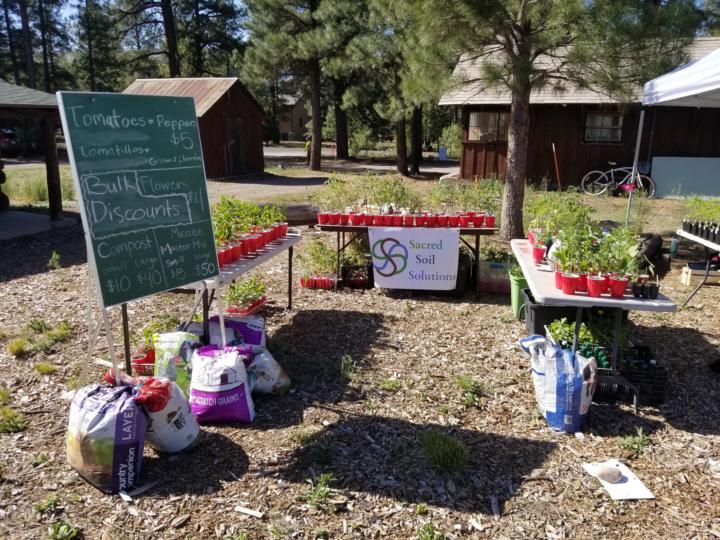
Grateful for fantastic local events and the opportunity to connect with local growers. I had lots of great conversations about soil and microbiology while offering the surplus from my plant sale.
May 17 •
Just One Year?!
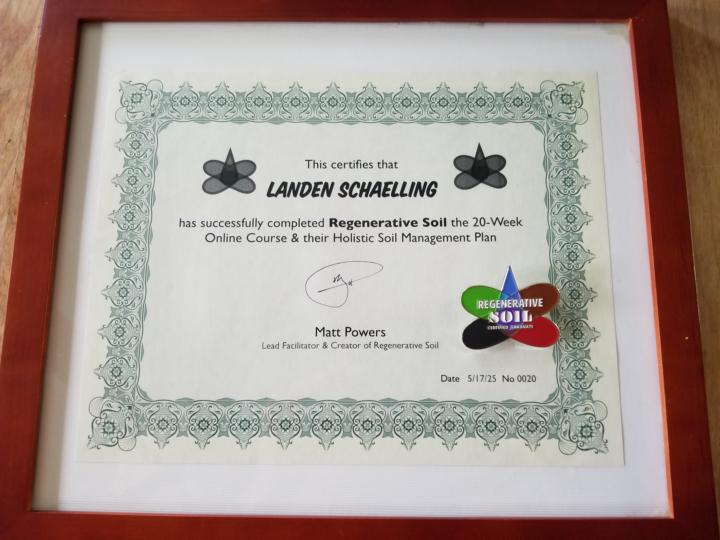
The one year anniversary of my Regenerative Soil Certification seems like a great time to share about the coursework that launched me on my current trajectory. A huge thank you to Matt Powers for putting all of this material in a format that is able to hold both the breadth and depth of Soil Science in our most current and expansive understanding. Regenerative Soil and Regenerative Soil Microscopy are certainly the most thorough, practical, and applicable educational sets currently available for soil practitioners, consultants, farmers, and anyone who cares about healing soil. Not only am I immanently pleased with the understanding and skillsets this coursework has given me, but I'm also immensely proud of this achievement and feel it offers more credibility to my practice than any graduate degree could. (Plus look at how cool my new pin is!!) It's an honor to be an ongoing member of the Regenerative Soil community and continue my learning with the cutting edge of the soil obsessed. A huge thank you to all of you who continue to push the envelope of our collective understanding.(Honorable mentions to Igro Soil, Rich Johns, The Soil Guys, Derek Preece, Richard A Simmons, and my dear anonymous friend who tolerates my shenanigans most, and many more.) Thank you to everyone who has supported me on this journey. The best is yet to come!!
1-30 of 48
powered by

skool.com/sacred-soil-solutions-5162
Learn how to use the power of Soil Microbiology and Regenerative Techniques to bring abundance and resilience to your farm, garden, or homestead.
Suggested communities
Powered by