User
Write something
Pinned
Welcome Everybody!
I'm so glad to have you here! If you're seeking more information on your newly purchased Microbe MasterMix, you'll find that in the Classroom tab at the top of your page. Otherwise, please share a little bit about your garden, your homestead, your animals, or whatever makes you passionate about soil and biological health! What are your dreams and goals for working with soil or microbial mixes? What do you need help with to unlock your next level of abundance? We want to hear from you!
Mildew, Mites, and Immunity
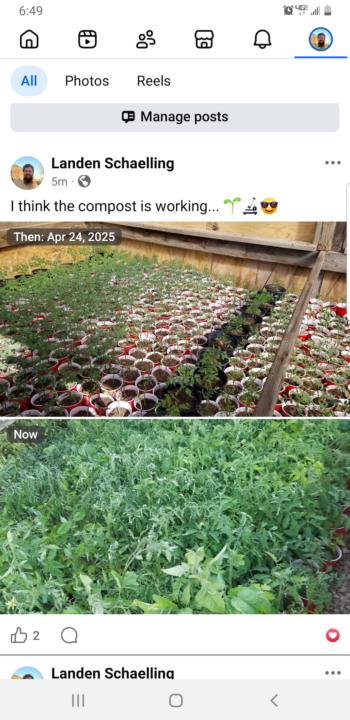
There's very few things more frustrating than going through the effort of getting plants in the ground, watching them start to take off, and... the troubles arrive. Our squash starts getting some powdery mildew and maybe a few squash bugs before the first fruit even arrives. Where did all these aphids come from and why do they love my brassicas?! The mealy bugs won't leave my wife's succulents alone! We try all the little deterrents. Soapy water on the aphids, but they still come back if I forget for a day or two. Picking off squash bugs every evening, and heaven forbid I forget or the plant will be half wilted in the morning. Maybe I use some neem to extend the protection for a couple days. If we're really diligent, our plants survive... just to have a lackluster performance when it comes to fruiting. They look fairly big and healthy, I added nutrition before or even after planting, I might even be getting squash and tomato blossoms - but nothing (or very little) is converting to the FOOD that I so greatly desire from this experience. But what can I actually DO to fix this? To answer this question, we need to get down to the root (ha) of the problem. That problem is poor plant nutrition, and a resulting poor performance of plant immune systems. One of the main functions of a healthy plant is to repel pests and disease - just like your own body. Those quick (or slow) fixes of BT, neem, soapy water, and the like, are all band-aids. They don't bring the missing nutritional pieces, the plant continues to signal for pests to eat it. (Yes, really. The plants GLOW for insects when they have compounds the plants can eat. That's why they keep "magically showing up".) Some of this may sound familiar. It might sound too good to be true. I thought the same thing for a long time. I thought "maybe full plant health and pest resistance can happen in easier climates, but not the southwest." But I'm here to tell you it IS TRUE and it CAN BE DONE - even in the Southwest!
3
0
How do plants eat?!
Two Nutrition Pathways When we look at how plants are able to intake nutrition, we find a very simple truth - they drink, and they eat. When a plant drinks, it also drinks whatever is inside the water. In a way, these things can be considered nutrition. We all enjoy some electrolytes on a consistent basis. But nobody thinks that replaces eating. But often times that's how we expect plants to get enough to eat. The most amazing thing is, many of them can survive very near to that state of only drinking to get their nutritional input. What's universally clear is that plants want to eat and we had no idea how they did it. Now we do know. We call it rhizophagy (root-eating). Rhizophagy is the process by which roots funnel microbial life through themselves in order to harvest protein and complex nutritional compounds, and generally provide the building blocks of strong plant tissues. Haven't heard about it? Neither has anybody else. The original white paper on it - Published in 2019 by Dr. James F. White. So this is super new information. It also helps us with a lot of puzzles we were trying to figure out in the world of compost. Like why compost tea has such a near immediate response in a plant. What rhizophagy shows is that it wasn't just an errant protozoa poop that was soluble enough for the plant to slurp up in the water table. At the tip of the root, the plant is intaking bacteria and yeast in bulk to run through corral systems in order to be processed. My favorite analogy is that they're ranching microbes. Some will survive and repopulate at the root hairs where they're expelled. (Some will even live within the plant's tissue's for a more extended period, but that's a story for another day.) The result is that plants are intaking their proteins directly - NOT building the proteins themselves from water soluble minerals. They can do that to an extent, but it's much more energy intensive for the plant. It leaves the plant without enough sunlight to do other important functions, like make essential oils to repel pests or send more sugar to the fruits.
3
0
MMM receives positive feedback
This is a text from one of my earliest and most committed adopters of Microbe MasterMix. Months since the last application and still reaping rewards for setting the stage of properly cycling microbiology in an animal husbandry system. Because it's not just about "the smells". The lack of smells is an indicator that nutrients are cycling and held in complex forms. Pathogens are starved out. The microbiome the animals live in is fostering a more positive environment. This is just the beginning in discovering the downstream - and long term - benefits of restoring balanced microbiology. Do you want to see a qualitative shift in how your animals are living? I think you'll be surprised at just how easy it is.
3
0
MMM receives positive feedback
1-15 of 15
powered by
Sacred Soil Solutions
skool.com/sacred-soil-solutions-5162
Learn how to use the power of Soil Microbiology and Regenerative Techniques to bring abundance and resilience to your farm, garden, or homestead.
Build your own community
Bring people together around your passion and get paid.
Powered by