
Write something

3h •
Stay in Your Lane
Epictetus gives us one of the simplest—and hardest—rules for living well: know what belongs to you and what doesn’t. Much of our frustration comes from trying to control things that were never ours to command. What people think of us. Whether they understand us. What happened yesterday. What tomorrow brings. The actions of other people. Outcomes we can influence but never guarantee. We can spend an enormous amount of energy wrestling with these things and still change none of them. But there is another category—the things that remain ours no matter what happens around us. Our attitude. Our effort. Our choices. Our response. The kind of person we decide to be. That distinction is where freedom begins. This doesn’t mean becoming indifferent to outcomes or pretending difficult circumstances don’t matter. It means putting our energy where it can actually do some good. We prepare well, act with courage, treat people fairly, correct our mistakes, and then loosen our grip on the result. Today, when something frustrates me, I can ask a simple question: Is this mine to control? If it is, I will take responsibility for it. If it isn’t, I will stop carrying it. Daily Practice: Put your effort into what belongs to you. Let everything else unfold without allowing it to dictate your character. #ResilientDaily #Stoicism #DailyReflection #DichotomyOfControl #Sobriety
0
0

1d •
Face the Future
“There are more things, Lucilius, likely to frighten us than there are to crush us; we suffer more often in imagination than in reality itself.” — Seneca A resilient life requires two kinds of courage. The courage to look honestly at the past. And the courage to stop being ruled by the future we imagine. Looking backward has value when it helps us see where we were wrong, where we caused harm, and where we can still make things right. But reflection becomes dangerous when it turns into endless regret. We are not asked to live in yesterday. We are asked to learn from it. The same is true of tomorrow. So much of what unsettles us has not happened yet. We rehearse conversations, predict rejection, imagine failure, and suffer through outcomes that may never arrive. In sobriety, this matters. We can become trapped between two illusions: the belief that we must keep punishing ourselves for who we were, and the fear that we will not be able to handle what comes next. Neither helps us live well today. The Stoic path is simpler. Own what is yours. Repair what you can. Release what cannot be changed. Then meet the future when it actually arrives. We do not need to carry yesterday as a sentence or tomorrow as a threat. We need only enough courage to do the next right thing. Daily Practice: Ask yourself: What from my past still requires action? Then ask: What am I worrying about today that has not actually happened? Make the repair where you can. Let imagination loosen its grip. Look back for the lesson. Look forward without fear. Live here.
0
0

2d •
Nothing Added
“If you are distressed by anything external, the pain is not due to the thing itself, but to your estimate of it; and this you have the power to revoke at any moment.” — Marcus Aurelius Much of our suffering begins with what happens—but grows because of the story we attach to it. They shouldn’t have said that. This shouldn’t be happening. I can’t handle this. Things need to go my way before I can be okay. The Stoics remind us that between what happens and how we respond lies something powerful: our judgment. We may not control the event, the other person, the disappointment, or what tomorrow brings. But we can examine the meaning we’ve assigned to it. Sobriety teaches a similar lesson. For many of us, drinking became a way to escape uncomfortable circumstances and, even more often, uncomfortable thoughts about those circumstances. Anger, resentment, fear, rejection, frustration—we wanted the feeling gone, so we reached for something outside ourselves to change what was happening inside. Today we have another option. We can pause. We can question the story. We can ask what is actually within our control. This doesn’t mean pretending something doesn’t hurt. It means refusing to make the pain heavier by adding resentment, self-pity, fear, or the demand that reality be different than it is. The event may already have happened. But the verdict is still ours. Daily Practice: When something disturbs your peace today, ask: What happened—and what am I adding to it? Separate the facts from the story. Control what is yours. Release what isn’t. You may not be able to revoke the circumstance, but you can revoke the judgment that keeps you trapped in it. #ResilientDaily #DailyStoic #Sobriety #Stoicism #EmotionalSobriety
0
0

3d •
The Cost of Character
As we grow, we begin to see ourselves more clearly. But real self-awareness also changes the way we see everyone around us. The Stoics taught that we are not separate from one another. We are part of a larger whole, and how we treat another person is a reflection of our own character. Our mistakes were never merely mistakes. We didn’t just lose our temper—we lost it with someone. We didn’t just lie—we lied to someone. We didn’t just act selfishly—someone else carried the cost. There is a person on the other side of our actions. Growth requires us to stop hiding behind generalities and look honestly at the human cost of the way we’ve lived. Not to bury ourselves in guilt, but because responsibility is part of becoming useful again. We cannot rewrite yesterday. That lies outside our control. But what we do with yesterday is entirely ours. We can acknowledge the harm. We can make things right where possible. We can change our behavior. And most importantly, we can become the kind of person who no longer creates the same damage. Peace doesn’t come from pretending the past didn’t happen. It comes from facing it, owning our part, and living differently because of it. Daily Practice: Don’t ask only, What did I do wrong? Ask, Who did my actions affect—and what can I do differently today? Character is built when accountability becomes action.
0
0

1-30 of 65
skool.com/resilient
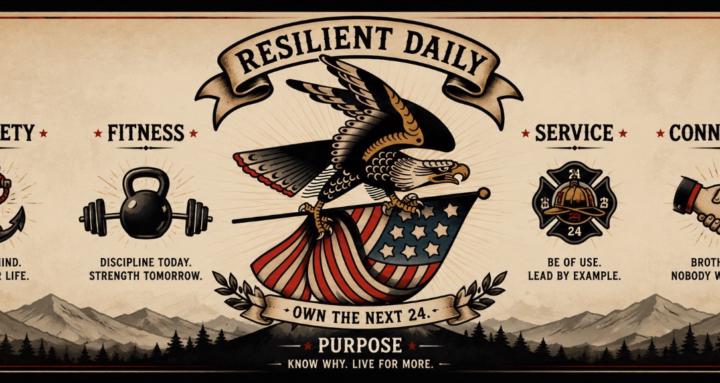
I help people get sober. Recovery is the foundation. Resilience is the goal. Sobriety, fitness, service, community, and purpose. Win the next 24.
Leaderboard (30-day)
1

+1
2

+1
Powered by