
Write something

20d •
Your First 90 Days in Bank-Owned Auction Properties
Most people think you need a ton of money or experience to get started in real estate investing. You don't. You need a plan — and the willingness to follow it. Here's the exact 90-day roadmap to go from complete beginner to placing your first bid at a bank-owned property auction. ✅ Month 1: Learn + Observe Your only job this month is to understand the room. Go to a bank-owned property auction just to watch. No checkbook, no bids — just show up and absorb. Pay attention to how fast bidding moves, what experienced investors do, and what properties actually sell for vs. the guide price. Also this month: - Research 2–3 local auction houses in your target area - Start learning ARV (After Repair Value) — this is how investors know if a deal is actually a deal - Ask the auctioneer what you'll need to register and participate next time Month 1 is about removing the fear of the unknown. You don't need to be ready to buy. You need to be ready to learn. ✅ Month 2: Analyze + Network Now you shift from observer to analyst. Pick 5 properties from upcoming listings and run the numbers on every single one. A good starting point is the 60% rule: Max Bid = ARV × 60% − Estimated Repair Costs This keeps you from overpaying. For each property, estimate the after-repair value, what repairs it needs, and whether the deal makes sense at the auction price. Equally important — start building your team: - A hard money lender. Meet one before you need one. Hard money lenders care about the property value, not your credit score. - A contractor. Someone who can walk a property and give you a fast repair estimate. - A title company or real estate attorney familiar with auction purchases in your state. You don't need a perfect team. You need to start building one. ✅Month 3: Bid with Confidence By Month 3, you've attended an auction, analyzed properties, and connected with a lender. You're more prepared than most people who say they want to invest in real estate. Now place a bid.
1
0
Jun 3 •
I wish someone told me these 5 things before my first auction deal🤦🏾♀️
Most people show up to their first auction nervous, underprepared, and leaving money on the table — not because they aren't smart, but because no one actually walks you through what to expect. In my latest video I cover 5 things that could save you from costly mistakes: ✅ The one thing about auction properties that catches most first-timers completely off guard ✅ Why you don't need all cash to compete (yes, you can finance it) ✅ The truth about competition that the "gurus" won't tell you ✅ What happens when a property doesn't sell — and why that's actually a hidden opportunity ✅ The extra cost that silently kills your margins if you don't plan for it If you're serious about getting into auctions, this one is worth the watch before you bid on anything. 📺 https://youtu.be/lOQEUhOGvAk And if you want to go beyond the videos and actually start making moves with someone in your corner — drop a comment below or book a call with me here to see if we’re a good fit 👉 https://calendly.com/tiiffxny/new-meeting?month=2025-08
2
0
May 28 •
What actually happens AFTER you win a property at auction?
Most people focus on the bidding — but winning is just the beginning. I just dropped a new video walking you through everything that comes next so you're not scrambling when the hammer falls. Here's what I cover: ✅ Signing the purchase agreement ✅ Sending your escrow deposit ✅ Scheduling your closing ✅ Getting a pre-approval from a hard money lender ✅ Uploading your documents & navigating the contracting process Knowing this process ahead of time is what separates confident investors from stressed ones. Watch the full video here 👇 https://youtu.be/3M_milQJ128 And if you're ready to start investing but want extra guidance, book a call with me to see if we're a good fit to work together 🔗 https://calendly.com/tiiffxny/new-meeting?month=2025-08
1
0
May 22 •
Fix & flips, DSCR loans, real numbers — watch the full breakdown
🎬 The replay is LIVE! If you missed our session with Devin Peterson from Pro Alpha Capital — or just want to watch it again — here you go 👇 We covered Fix & Flip / RTL loans, DSCR loans, full deal breakdowns with real numbers, and how new investors can strategically position themselves to get started. Honestly one of the most value-packed conversations we've had in this community. Watch it, share it, save it. 🙌 Drop a comment with your biggest takeaway! 👇
2
0
May 13 •
Buying an auction property for $25k (here's how)
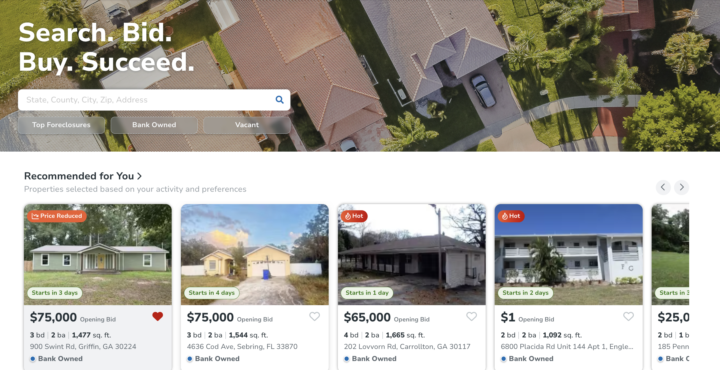
Most people think you need six figures sitting in the bank to buy investment properties. You don't. Here's the exact five-step process I used to acquire a deal at auction — and walk away with 90% of it financed. Step 1: Find the property on auction sites Start by browsing dedicated auction platforms — sites like Auction.com, Hubzu, or Xome. Step 2: Run your comp research before you bid Pull comps in the area and calculate your max bid based on the ARV (after repair value), factoring in rehab costs and your profit margin. Step 3: Show up every single week The investors winning deals are the ones who are there every week — building familiarity with the process, learning how other bidders behave, and staying ready when the right deal comes up. Step 4: Get pre-approved with a hard money lender Before auction day, line up your financing. A hard money lender like Kiavi https://try.kiavi.com/sczxcel2n5pp can move fast — which is exactly what auction deals require. Step 5: Finance 90% — pay only 10% down With a hard money lender financing 90% of the deal, your out-of-pocket is limited to the 10% down payment plus closing costs. Want me to walk you through this step by step? Inside my mentorship, I show you exactly how to find, analyze, and close auction deals — including how to build lender relationships, run comps the right way, and never overpay at auction. If you're serious about building your portfolio this year, this is the fastest path there. 👉 https://calendly.com/tiiffxny/new-meeting?month=2025-08
1
0
1-30 of 30
powered by
skool.com/real-estate-investing-101-7860
Welcome to Auction Property Academy — a community of real estate investors mastering the art of finding, analyzing, and landing off-market deals.
Suggested communities
Powered by