User
Write something
👋🏻Welcome to all the new members. Thanks for joining, let’s get to know each other
Hey everyone! 👋🏻 A huge welcome to all our new members joining the Peptide Biohack Research community! We’re thrilled to have you here—this is the spot for diving deep into peptide science, sharing biohacking tips, and supporting each other on our journeys to optimize health and performance. To kick things off and get the conversations flowing, we’d love to hear from you! Share in the comments: - Your peptide journey so far—what got you started? - Your current stack (what peptides are you experimenting with and why)? - Any burning questions you have for the group? - What are you goals for using peptides? - Share weight lifting and exercise tips - Share what’s working in your diet currently - Or anything else you want to add to the community - Let’s learn from each other and build some awesome connections. Can’t wait to read your stories!
🧬💉💸PEPTIDE DISCOUNT CODES🤑💉🧬
Hey Peptide Biohack Research Community, I’m curating a list of current discount codes from affiliate vendors I trust for quality peptides. Using these not only saves you money on your orders but also supports the backend costs of keeping this Skool group running. It’s a straightforward way to keep everything sustainable. Here’s what I’ve got right now: - Sunrise Bio Research: 10% off with code Biohack10 at https://sunrisebioresearch.com - JadeNexus: 20% off with code: JFcard or Welcome20 at jadenexus.net - Ameano Peptides: 10% off with code ohiosportstoday10 at ameanopeptides.com - EZ Peptides: 10% off with code ohiosportstoday10 at EZpeptides.com - BioLongevitylabs: 15% off with code ohiosportstoday15 at BioLongevitylabs.com I’ll keep adding codes as I vet new vendors that prove legit and reliable. The peptide space can be unpredictable—suppliers come and go—so having multiple solid options ensures we can always access what we need without interruptions. If you have a supplier you like that’s not listed here, drop it in the comments and I’ll try and get affiliated with them to save us all some money. If you’re grabbing some peptides from one of these vendors, let me know in the comments which vendor you’re checking out or if you have questions about stacks. Sharing experiences helps everyone here. And all feedback helps. Good luck researchers 🧪🧬💉
0
0
Welcome! Introduce yourself + share your stack 🧬💉🧬
Let's get to know each other! Comment below sharing where you are in the world and why you’re here. If you’re already using peptides, what does your stack look like?
🧬💉Understanding Peptides: A Beginner’s Guide💉🧬
Peptides: A Comprehensive Guide for Beginners to Advanced Biohackers Peptides are fascinating short chains of amino acids—typically 2 to 50 linked together—that serve as the fundamental building blocks of proteins in your body. Unlike full proteins, which can be massive and complex, peptides are smaller, more agile molecules that your body naturally produces through processes like enzymatic breakdown of proteins or direct synthesis in cells. They act as key players in a wide array of biological processes, such as cell signaling, hormone regulation, immune modulation, and tissue repair. You’ll find peptides in everyday foods like meat, fish, eggs, dairy, and even plant sources such as beans and grains, where they contribute to nutrition and health. In the medical and biohacking world, peptides have been studied extensively since the mid-20th century, with breakthroughs in the 1970s and 1980s leading to synthetic versions used in treatments for conditions like diabetes, growth disorders, and wound healing. They’re not some exotic or mysterious lab creation; rather, they’re an integral part of human biology, and supplemental or therapeutic peptides are designed to amplify or mimic your body’s innate mechanisms. For a newcomer, understanding peptides starts with recognizing them as targeted tools—think of them as “mini-messengers” that fine-tune your physiology without the broad, sometimes disruptive effects of larger drugs or hormones. Research from institutions like the National Institutes of Health (NIH) and peer-reviewed journals such as Peptides underscores their safety and efficacy when used properly, making them a cornerstone of modern wellness and performance optimization. How Peptides Work: The Science Behind Their Magic At their core, peptides function as highly specific signaling molecules, akin to keys that unlock particular doors in your cells. They bind to receptors on cell surfaces—proteins that act as docking stations—triggering a cascade of intracellular responses. For instance, a peptide might activate a G-protein-coupled receptor (GPCR), which then sets off secondary messengers like cyclic AMP (cAMP) or inositol trisphosphate (IP3), leading to changes in gene expression, enzyme activity, or ion channel function.
4
0
🧬💉Understanding Peptides: A Beginner’s Guide💉🧬
My lifelong struggle with my weight and body image
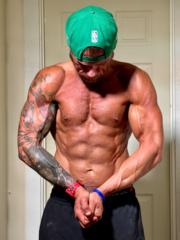
Hey everyone, posting these pics today is kinda tough for me because it brings back a lot of stuff I’ve dealt with my whole life. You know, from the time I was just a little kid in second or third grade, that’s when I first remember feeling really self-conscious about my weight. It was my birthday party in August—we were all playing some game outside, sitting in a circle with our shirts off like kids do, and someone pointed out my stomach, calling it fat. Man, that stuck with me hard. From then on, it was like this cloud hanging over me—I skipped out on pool parties all through school, avoided anything where I’d have to show skin, and just felt like everyone was judging me. It didn’t get better as I got older. In high school, as a junior, my gym teacher decided to make an example out of me in front of the whole class. He weighed me right there—205 pounds at 17—and mocked me about how fat I was. That humiliation just piled on, and it’s been a battle ever since. I stayed a bit overweight into adulthood, hitting my heaviest around 275 pounds back in 2005. That’s when I quit stepping on the scale altogether because I didn’t want to face it, but I probably packed on even more after that. Eventually, I got fed up and worked my way down to 200-215 pounds, and I held there for a long time. People would look at me and think I was just a bigger guy, maybe a little chubby, but I knew deep down I was still carrying too much. I could feel it in how I moved, how I felt about myself. I’ve been a Christian since I was a boy—my dad’s a preacher, and faith has always been part of who I am. But then, bam—February 21 hit me like a ton of bricks. I was in a head-on collision with an undocumented driver going 50 mph; she nearly killed me. My heart actually stopped on impact—I had a full-on cardiac arrest. My chest started filling up with blood, and it was a slow bleed that got worse over time. I ended up in the hospital for eight long days. At first, they tried draining it with a chest tube while I was wide awake (talk about painful), but that didn’t work. My right lung was filling up, so on day four, they had to do VATS surgery to fix it, and then I had drainage tubes in both lungs to keep things stable. It was scary, and recovering from all that was no joke—three of my ribs had to be plated, and they still hurt like hell sometimes.
My lifelong struggle with my weight and body image
1-12 of 12
powered by
Peptide Biohack Research Hub
skool.com/peptide-biohack-research-hub-9880
🧬Join Peptide Biohack Research Hub🧬Explore cutting-edge peptide research, biohacking strategies & protocols.Connect, learn, & optimize your health!
Build your own community
Bring people together around your passion and get paid.
Powered by