Activity
Mon
Wed
Fri
Sun
Jan
Feb
Mar
Apr
May
Jun
Jul
Aug
Sep
Oct
Nov
Dec
What is this?
Less
More

Owned by Lincoln

🧬Join Peptide Biohack Research Hub🧬Explore cutting-edge peptide research, biohacking strategies & protocols.Connect, learn, & optimize your health!

Memberships

Skoolers

179.3k members • Free

Peptides4Power

958 members • Free

Pep Talk - For Better Health

2.3k members • Free

Peptides & Pump Knowledge Base

536 members • Free

RP
Roco's Peptide Community

316 members • Free

19 contributions to Peptide Biohack Research Hub
💪🏻💉🧬 IGF-1 LR3 & PEG-MGF
https://youtu.be/ao0kdUySw_s?si=zahaiVdupYgB0A1A IGF-1 LR3 and PEG-MGF Injection Demo: Targeting Biceps and Delts for Growth Hey Peptide Bio Hack Research Hub community! In this video, I’m sharing my site-specific injection routine with IGF-1 LR3 and PEG-MGF, focusing on biceps and delts to test localized muscle growth. As always, these are research peptides—not for human use—so this is for educational purposes only. If you’re new to peptides, let’s break down what they do, why they might help, how they work, and the realities from studies. I’ll tie in my experience over the past month-plus. What is IGF-1 LR3 and Why Use It? IGF-1 LR3 is a modified version of insulin-like growth factor-1, a natural hormone the body produces in response to growth hormone (GH). The “LR3” extension makes it last longer (up to 20-30 hours vs. natural IGF-1’s minutes), allowing sustained effects. It promotes muscle growth by activating satellite cells (stem-like cells that fuse to muscle fibers for repair and enlargement) and boosting protein synthesis—the process where cells build new proteins for tissue. Studies in animal models show IGF-1 LR3 increases muscle mass by 10-20% over 4-6 weeks when injected locally, as it enhances nutrient uptake and cell proliferation right at the site. In human research (limited, mostly anecdotal from bodybuilding), it’s used pre/post-workout to amplify training gains without systemic sides like low blood sugar at low doses (20-50 mcg). Why? It mimics the body’s response to heavy lifting, potentially speeding hypertrophy (muscle size increase) in targeted areas—ideal if you’re addressing imbalances, like my right bicep lagging from a February car accident that sidelined it for months. What is PEG-MGF and Why Use It? PEG-MGF (pegylated mechano growth factor) is a variant of IGF-1 released during muscle stress, like after workouts. The “PEG” attachment extends its half-life (days vs. hours), making it more effective for recovery. It works by stimulating myoblast (young muscle cell) proliferation and reducing inflammation, helping repair micro-tears from training. Preclinical studies on rodents show PEG-MGF accelerates muscle healing by 15-25% post-injury, promoting fiber regeneration through pathways like PI3K/Akt for cell survival. In human contexts (mostly from athlete reports), it’s injected post-workout to localized sites for better rebuild—doses like 100-300 mcg per muscle support this without broad effects. Why? It targets mechanical damage, complementing IGF-1 LR3 for a “repair and grow” combo, potentially yielding 20-30% better gains in stacked protocols per muscle biopsy research.
0
0
🧬💉 6am Injections 💉🧬
My morning routine, every morning. Selank has helped me with my anxiety so much! Its amazing not feeling so overwhelmed all the time. If you experience regular anxiety, it’s worth giving it a try. Get yours below. They have a great price on Selank, along with all their other peptides. 10% off with code: Biohack10 👇🏻 www.sunrisebioresearch.com
0
0
🧬💉 6am Injections 💉🧬
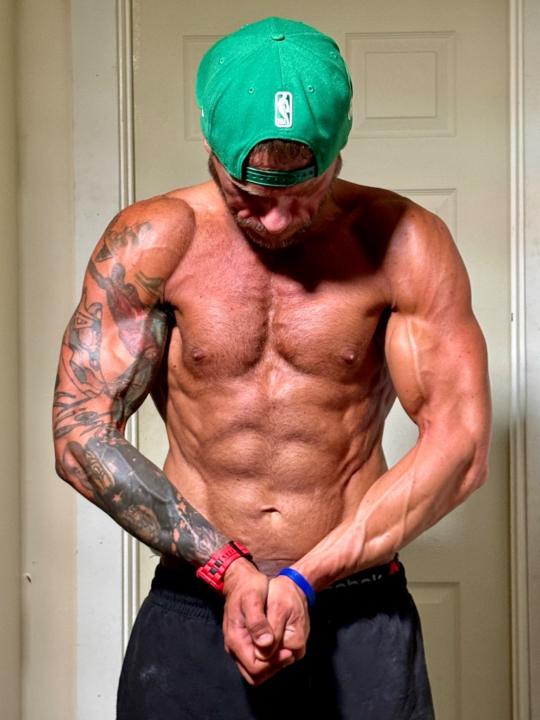
🧬💉 Day 50 Photo Update 💉🧬
Hey everyone! It’s been 50 days on this protocol, and today’s picture update shows some real transformation—especially over the last 7-8 days. I’ve never looked or felt like this before, but it is amazing! Starting from November 7 (left) to December 27 (right), the changes in leanness and muscle definition are finally kicking in strong. I’m dropping fat steadily while holding onto muscle, which is exactly what these peptides aim for. For context, retatrutide (a GLP-1/GIP/glucagon agonist) has been key here—trials show it can lead to 15-20% body weight loss over 26 weeks by curbing appetite and boosting metabolism, making calorie deficits easier without extreme hunger. Combined with GH peptides like tesamorelin and hexarelin, which pulse growth hormone to preserve lean mass (studies report 5-10% muscle retention during cuts), it’s creating that “recomp” effect where fat melts but strength holds. If you’re new to peptides, this combo mimics natural hormone signals to optimize body composition—safe when monitored, but always start low and get bloodwork. I’m surprised how lean it’s getting me—visceral fat down, abs emerging—but I want accurate metrics. Planning a DEXA scan soon to confirm body fat (aiming for 10% or less, as research suggests that’s where health benefits peak, like lower inflammation and better insulin sensitivity). Once there, I’ll ease off to maintain. What do you think of the progress? Share your protocols or questions below—let’s discuss!
🧬💉 Day 50 Photo Update 💉🧬
1 like • 17h
@Alex Carroll 🤣😂 I like the gif
Welcome! Introduce yourself + share your stack 🧬💉🧬
Let's get to know each other! Comment below sharing where you are in the world and why you’re here. If you’re already using peptides, what does your stack look like?
0 likes • 19h
@Judy Jay what did it do follow you? Cartalax was a game changer for me.
1 like • 17h
@Judy Jay I May give that a try as well
🧬💉Peptide of the Day: GHK-Cu – The Ultimate Regenerator! 💉🧬
For today’s “Peptide of the Day,” we’re diving deep into GHK-Cu (also known as Copper Peptide or Gly-His-Lys-Copper). This powerhouse has been buzzing in the anti-aging and wellness world for its regenerative magic. Whether you’re into skin glow-ups, hair hacks, or faster healing, GHK-Cu might just be your new bestie. Let’s break it down step by step – based on solid literature and research. What is GHK-Cu? 🤔 GHK-Cu is a naturally occurring tripeptide (a tiny chain of three amino acids: glycine, histidine, and lysine) bound to a copper ion. It’s found in your body’s plasma, saliva, and urine, but levels drop by over 60% as you age (starting around 60, per studies). Discovered in the 1970s by Dr. Loren Pickart, it was first noted for making old liver cells act young again. Today, it’s a star in cosmetics, injectables, and therapies for its protective and rebuilding properties. Think of it as your body’s built-in repair kit! How Does It Work? 🧬 GHK-Cu is a gene-modulator extraordinaire. It flips switches in your cells to promote healing and regeneration. Here’s the science: - Stimulates growth factors: Boosts collagen, elastin, and glycosaminoglycan production (the stuff that keeps skin plump and joints healthy). - Promotes angiogenesis and nerve outgrowth: Helps form new blood vessels and nerves for better tissue repair. - Anti-inflammatory and antioxidant: Suppresses inflammation genes, fights free radicals, and resets damaged cells. - Tissue remodeling: Activates genes for repair while shutting down ones linked to breakdown and aging. From NIH-backed research (like a 2018 review in Frontiers in Pharmacology), it supports fibroblast function (skin-building cells) and even reverses some age-related gene changes. It’s like giving your body a “reset” button at the cellular level! Main Effects & All the Benefits from Literature 💪 The hype is real – GHK-Cu has been studied extensively for decades. Here’s a roundup of its top benefits, pulled from peer-reviewed lit (e.g., PubMed, animal/human trials, and reviews):
1
0
🧬💉Peptide of the Day: GHK-Cu – The Ultimate Regenerator! 💉🧬
1-10 of 19
Lincoln Horsley
3
19points to level up
@lincoln-horsley-7512
40 year old husband and dad working on getting to 10% bf. And I love peptides!!

Active 51m ago
Joined Dec 22, 2025