
Write something

17h •
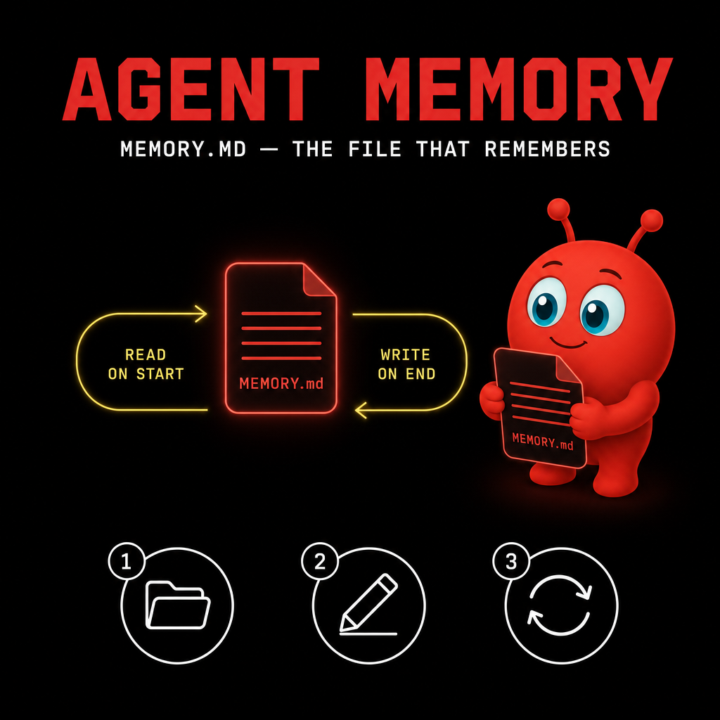
How to give your OpenClaw agent memory that survives restarts
One of the first things people hit with OpenClaw is the "goldfish problem" — the agent feels sharp inside a session, then forgets everything the moment the daemon restarts. The fix is built in: MEMORY.md. Here's the idea. MEMORY.md is a plain markdown file your agent reads on every session and writes back to as it learns. It's not a database, it's not a vector store — it's a file you can open, edit, and version-control like any other. Step 1. Create the file. Drop a MEMORY.md inside the directory your agent runs from. Empty is fine to start. The agent will pick it up on the next session. Step 2. Seed it with what you actually want remembered. Things that earn their place in MEMORY.md: who you are, what tools you use, recurring projects, names of people the agent will see again, conventions you don't want to repeat ("I prefer bullet summaries", "always reply in British English"). Things that don't: one-off task context, secrets, anything you'd rather it forget. Step 3. Let the agent edit it back. The whole point is durability across restarts, so let the agent append to it during sessions. If you want tighter control, review the diff at the end of the day and trim. Treat MEMORY.md like a journal you both write in. A common mistake is making it too long. If MEMORY.md grows past a few hundred lines, the agent spends tokens re-reading background instead of doing work. Prune aggressively — keep it lean. Hope that helps. Cheers Jason West 🙌
Feb 20 •
What I've built with OpenClaw in 3 days 🤯
I set up OpenClaw on Wednesday. It's Friday. Here's what my AI assistant (Manager Mike) has done so far — all through Telegram on my phone. 🤖 Built a team of AI agents Mike is my main assistant, but he manages a team of sub-agents that each have their own job: • Writer Will — writes SEO blog posts for my SaaS, generates featured images, and publishes drafts to our Ghost blog. He runs on a daily cron job at 6am, Mon-Fri, working through a keyword queue we built from competitor gap analysis. • Social Steve — handles social media content and scheduling. 1 per day on every channel. • Telephone Tina — an AI phone agent (via Vapi + ElevenLabs) who makes and receives real phone calls. She called 6 of my mates to organise a curry night, handled voicemails, sent follow-up texts, and takes inbound calls on a UK number 24/7. • Outbound Ollie — a cold email outreach agent. He searches Apollo.io for prospects, enriches them to get email addresses, checks their websites for existing chatbots (so we only target businesses that don't have one), then sends personalised emails with industry-specific templates. He sent 135 emails today across schools, hotels, and SaaS companies — all automatically. 📞 Real phone calls Tina isn't a gimmick. She called my friends, had actual conversations, handled objections ("I'll need to check with the wife"), left voicemails, and sent SMS follow-ups. She answers inbound calls with "Hello, you've reached Jason West's office, this is Tina speaking." My assistant checks every 30 minutes if anyone's called in. 📧 135 cold emails in one afternoon I said "schools, UK, 50" and Ollie: 1. Searched Apollo for 100 prospects 2. Enriched them to get verified email addresses (98% hit rate) 3. Visited each website to check if they already have a chatbot 4. Filtered out the 15 that did 5. Sent 50 personalised emails with the right landing page Then I said "do hotels too" and "now SaaS." Same thing. All automated, all rotating across 6 SMTP accounts on 2 domains, all with industry-specific subject lines and copy.

Apr 6 •
How are you structuring your AI + automation agency brain across 30+ clients?
Running an agency with 30+ clients, each with their own automations, knowledge bases, and workflows (mostly Make.com + Claude). Curious how others are solving the organizational layer — not just the automation itself. My current stack: ClickUp for team management, Google Docs for documentation, OpenClaw (Codex GPT primary / MiniMax backup) running locally, and Claude Code via Cowork which honestly has been moving fast. Background is cybersecurity (that's my major) with solid SQL and working knowledge across several languages — so I'm comfortable going deep technically, just want to make sure I'm not building a mess at scale. I'm weighing a move toward a local monorepo structure — one folder per client holding prompts, scenario docs, context files, API notes — something I can actually version control and build from systematically. A few things I'd love to hear from the community: 1. How do you structure your client knowledge bases? One repo per client? Flat files? Notion? Something else? 2. Are you using Claude Projects, Claude Code, OpenClaw, or something entirely different to maintain context across clients? 3. For Make.com builders — where do you store your scenario documentation, module notes, and client-specific logic so it's actually findable later? 4. Version control — are you Git-versioning your prompts and automation docs, or is that overkill for most agency ops? Not looking for the perfect system — just what's actually working in production for people running real client loads. Drop your setup below 👇
5d •
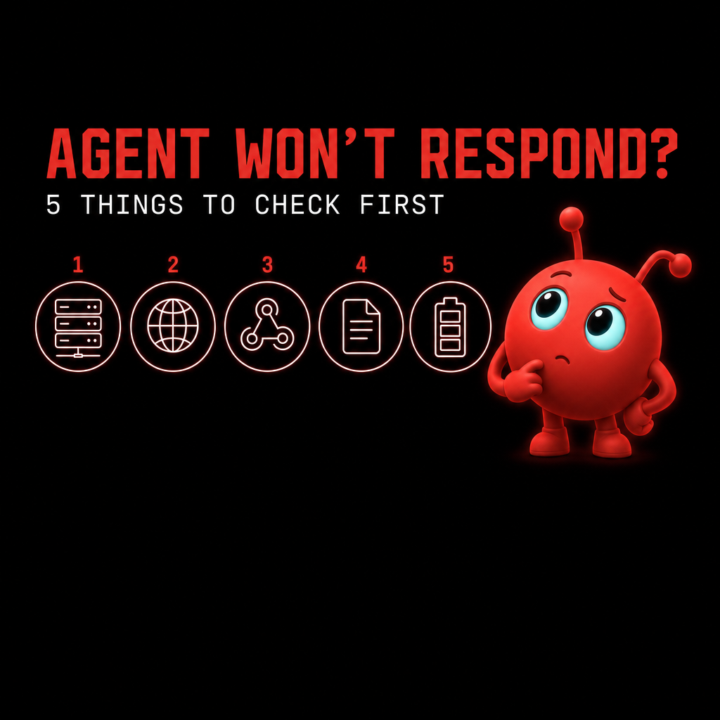
Debugging an OpenClaw agent that won't respond: 5 things to check first
If your OpenClaw agent has gone quiet and you're staring at a chat that won't reply, the cause is almost always one of five things. Run through these in order before you tear the install down. Step 1. Is the daemon actually running? The agent stops the moment the daemon dies. Check the process is alive. If you ran `onboard --install-daemon` twice in the past, you might have two competing instances. Kill them both and start one cleanly. Step 2. Is the model endpoint reachable? If you're routing through OpenRouter, log into the OpenRouter dashboard and check the Activity tab. No requests showing means the daemon isn't getting through. Usually that's an expired token or a typo'd token-provider value. Re-run the onboard command with a fresh key if you're not sure. Step 3. Has the channel webhook been claimed twice? Telegram, Slack and Discord will silently swallow messages if a webhook is set to a different URL. In Telegram, `getWebhookInfo` against the bot token tells you exactly what URL is registered. If it's wrong, `setWebhook` to the right one (or `deleteWebhook` and let OpenClaw register itself). Step 4. Did the skill actually load? A malformed SKILL.md (bad YAML frontmatter, wrong indentation) fails silently, and the agent falls back to "no relevant skill" behaviour. Check the daemon logs. A parse error will be sitting there if that's the cause. Step 5. Are you out of credits or rate-limited? Free models hit usage caps mid-conversation. Paid endpoints fail when the balance is empty. Check the provider dashboard before assuming it's an OpenClaw bug. Nine times out of ten it's #1 or #3. Drop the symptom in the comments if you're stuck and the community will help you narrow it down. What did you have to check the last time your agent went quiet?
10d •
Setting up your first skill in OpenClaw, a 4-step walkthrough
Skills are how you teach OpenClaw to do specific things consistently. Once you've got one wired up, you can call it from any agent, on any channel, with the same predictable behaviour. Here's the fastest way to set up your first one. Step 1. Create the skill directory. Inside your OpenClaw install, head to the skills/ folder and make a new directory named after what your skill does. Keep it lowercase and hyphen-separated. Example: skills/weekly-summary/. Step 2. Add a SKILL.md file. This is the brain of the skill. At the top, drop in YAML frontmatter with at least name and description. The description matters, it's what your agent uses to decide when to trigger the skill, so be specific about the situations it should fire in. Below the frontmatter, write the instructions in plain English. Treat it like a one-page brief for a junior teammate. Step 3. Drop in any helper files. If your skill needs a template, reference doc, or prompt fragment, put it alongside the SKILL.md in the same folder. The agent can pull from anything in there at runtime. Step 4. Reload the daemon. Restart your OpenClaw daemon so it picks up the new directory. The skill should show up in your agent's available toolkit on the next invocation. Once you've built one or two, the pattern becomes muscle memory. ClawHub (clawhub.ai) is also a good place to browse community-built skills for inspiration before rolling your own. What's the first skill you'd want to build for your agent? Drop it below.
1-30 of 61
skool.com/openclawusers
Free community for OpenClaw users to install, build, break, fix and share wild AI agent ideas together.
Leaderboard (30-day)
1

+7
2

+6
3

+3
4

+2
5

+2
Powered by