
Write something
Pinned

Nov '24 •
Our Toughest Deal Refinances to Agency - 3 years in the making
This was the most difficult project in our career, and I’m proud of this story of perseverance and ultimately preservation of capital. In a time where there is much negativity towards Syndications and multifamily, this story hopefully gives hope to the operators out there doing the right thing, giving every bit of smarts and execution to protect capital. This story is a save. I don’t know many other operators that would have been able to pull off what we did and the challenges we faced, how we survived and thrived. Our strength as GP guarantors at Sharpline, our track-record, our relationships with Freddie and Fannie were the key. It’s a testament to Sharpline and the commitment of our team as well as the patience and belief from our investors. I want this post to be a reality check and not considered bragadocious but give homage to the people in Sharpline and the many partners (lenders, vendors, consultants, investors) that helped get this insurmountable project to where it is today. Here we go. 3 years ago we bought this as a heavy value-add post covid. We couldn’t get new roofs that were leaking for 7 months, so this inhibited our reposition to improve the property, which kept some of the bad elements at the community there longer than we wanted. Fire property management company 1 , Fire property management company 2 (proverbial jump out frying pan into the fire, scary). Decided to self-manage project. This was in an early stage of our self-management journey about 2 years ago (we now self-manage 1500+ units). We purchase one half of the project with cash and the other with a bridge loan with floating rate debt (our only floating rate Sharpline has ever done, we didn’t buy a rate cap either, not smart) 4% bridge loan. We begin to execute capex plan successfully (we ripped the mansards off #MansardSlayer). The process of reposition took longer than we liked because of construction delays and bad PM companies, but we ultimately had the safety net of the 24 unit townhouse project that was getting higher occupancy that we purchased with cash as part of the syndication. So we refi’d the 24 unit with a local bank and GPs personally guaranteed the loan as we continued to do projects. This allowed us to free up liquid capital to continue executing to get higher occupancy, but we were still not there yet. We were at 65% overall occupancy on 128 units and the community was improving.

Pinned
Sep '24 •
How NOT to Sound Like an Idiot - Series
Go to Classroom area to check it out. I will be adding more an more episodes in the series. https://www.skool.com/multifamily/classroom/1987cf64
3d •
Understanding the Two-State Dynamic Playing Out in Kansas City Right Now
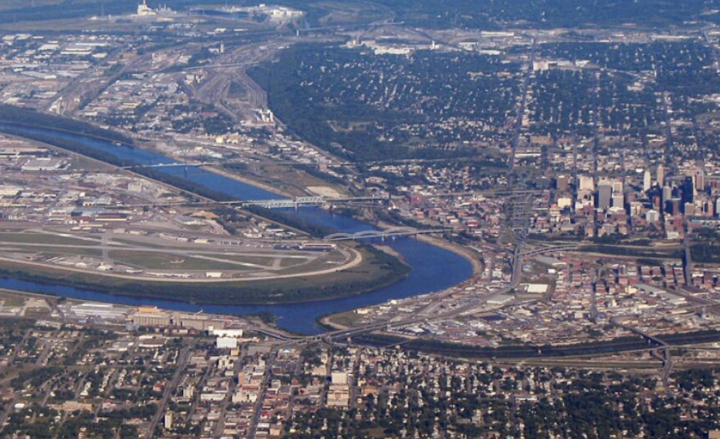
Kansas City operates as a single economic region, but it functions across two different state systems — each with its own tax structures, incentive tools, and development priorities. When those systems begin pulling in different directions, the effects don’t appear overnight. They show up through where employers commit, where capital flows, and how people reorganize their daily lives. That two-state dynamic is becoming relevant again. Why This Metro Behaves Differently In most cities, relocating a headquarters or major asset means crossing hundreds of miles and rebuilding a workforce. In Kansas City, it can mean crossing a street. That distinction matters. It allows: - Companies to reposition without disrupting their labor pool - Municipalities to compete aggressively without geographic friction - Employees to adapt incrementally rather than uprooting entirely As a result, movement inside this metro tends to be gradual, but durable. We’ve Seen This Before — and We’re Seeing It Again This isn’t hypothetical. Kansas City has already experienced meaningful internal repositioning. One of the most visible examples is Lockton, which committed to relocating its headquarters to the Kansas side. That decision wasn’t about leaving the metro — it was about optimizing within it. More recently, similar conversations are happening around large-scale anchor institutions, not just office users. There have been serious discussions around: - The Kansas City Royals potentially locating a new stadium and surrounding mixed-use development on the Kansas side, including sites tied to the Aspiria campus - The Kansas City Chiefs exploring the possibility of moving from Arrowhead Stadium to the Legends Outlets Kansas City area in Wyandotte County Whether or not every proposal materializes is less important than what these discussions signal. These are not fringe ideas — they are serious evaluations of incentives, infrastructure, and long-term alignment. What Happens When Incentives Start to Matter Again

6d •
Setting & accomplishing Big Goals(READ TILL END)
Focus on solving problems and working hard in a nitch, instead of obsessing over materialistic desires like fancy cars or penthouses. Entrepreneurship is about dedication and focus, not just filling your pockets. Cut out distractions and focus on the work, not the outcome. There are two main ways to make money: 1.dedicating your time to something profitable or 2. using your money to generate more money. Curious how to maximise and scale your earning potentials Comment 'info' Cut out the noise and stay focused on what truly matters. See you at the top
1
0

Sep '25 •
How YouTube Helped Me Scale Into Multifamily Real Estate
First, a huge thank you to this community 🙏. The strategies, insights, and advice shared here on multifamily investing are invaluable for anyone serious about building wealth in this space. A bit about my journey: I was stuck in a 9–5 job, trying to figure out how to create financial freedom. I started a YouTube channel as a side hustle, sharing content and uploading consistently—but growth was slow, and I wasn’t seeing results. Everything changed when I connected with a YouTube growth specialist. Within a few months, my channel grew from 400 subscribers to 4,000, and today it has over 400,000 subscribers, generating passive income every month. The real game-changer? I used YouTube as a platform to scale my multifamily investments. By treating it like a business, I could: 🏢 Share content that reached potential partners and investors 🏢 Fund new deals with passive income from the channel 🏢 Avoid costly mistakes by learning from the audience and experts 🏢 Build systems that made investing and operations more efficient The biggest lesson: multifamily investing, like YouTube, is a business. Treat it strategically, implement systems, and leverage the right guidance—and your growth multiplies. For anyone here: combining online platforms with smart multifamily strategies can accelerate your path to financial freedom while minimizing risks.
1-30 of 88

skool.com/multifamily
All things Multifamily, otherwise known as Apartment Buildings: investing, managing, owning, financing, raising capital, partnerships, legal, debt.
Leaderboard (30-day)
1

+1
2

+1
3
+1
4

+1
Powered by