
Write something
Pinned

May 1 •
Welcome to The Mind Rooms Protocol
Instead of "overcoming" intrusive thoughts, you can learn here to sort them to "mental rooms" in your brain or mind. The concept stems from my experience in Executive Coaching and Clinical Supervision for Psychiatrists and Psychotherapists. It is recommended by medical doctors.
1
0

May 1 •
What are Mind Rooms?
Mind Rooms is a concept created back in 2013 when the first book about different rooms for thoughts came up in Frankfurt. The idea behind: What if all thoughts are wildly spread in one big "thinking hall" in the brain? Chaos everywhere. If every thought "owns" the same urgency, stress is a natural result. Increasing permanent stress can lead to unwanted phenomena, such as brain fog, exhaustion, anxiety, and phenomena called OCD (some attempts of definition: https://www.ncbi.nlm.nih.gov/books/NBK519704/table/ch3.t13/) The Mind Rooms Protocol is a storytelling process for the human brain – in order to invite the brain to build rooms for thoughts. Brains love simple pictures that can connect to different entities. This is why humans easily remember facts that are wired to many situations: such as the neighbor's dog that visits them, runs through the garden, and occasionally barks. When the first edition of Mind Rooms (German: "Gedankenwohnung") was published, it immediately sold well, in the printed version and as an e-book.
1
0
May 1 •
What causes constant intrusive thoughts?
Why Do People Have Intrusive Thoughts? One of the frequently asked questions is about the causes. The most common answer: Stress seems to be No 1 trigger for intrusive thoughts. But we don't know what was first: the stress – or the thought. Even people with harmless stress levels can "develop" intrusive thoughts. Amongst all theories, one of the most plausible causes for intrusive thoughts might be a thinking habit, connected to natural and normal neuronal development. If a person focuses on a certain thought with the approach to "clean" the thought or get rid of it, she gets the opposite of the wanted result: Attempts to suppress a mental activity will empower it. The stabilized and constantly reinforced neural connection will strengthen the thought. A psychotherapist and his patient may think: Severe OCD or heavy rumination. The electrician knows: You cannot separate cables by willpower in order to avoid a red warning bulb shine. If you want a green OK-bulb, you should build a cable connection. Imagine you could build electrical connections in your brain. You can.
1
0

May 1 •
What are intrusive thoughts?
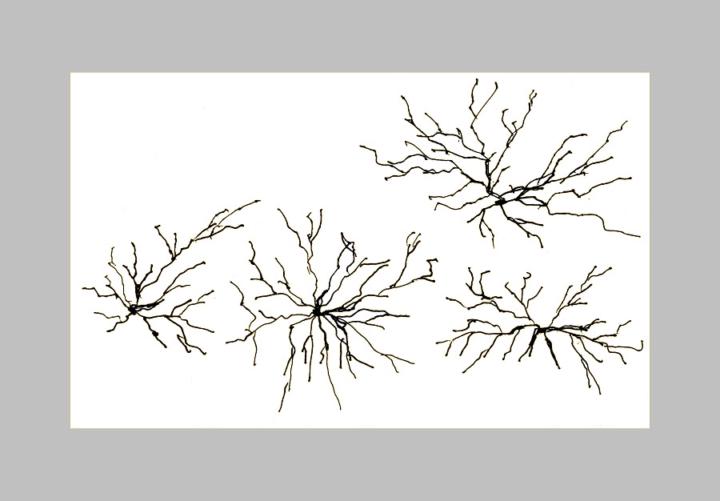
Intrusive thoughts are unwanted mental sensations that seem to attack people's minds. Why do they seem to attack? In reality, no thought can harm. The only harmful matter is the fact people fight against something inside their heads. This is not healthy. As a natural result, all mental activity and focus leads to more stable connections. Hebb's law says: "Neurons that fire together wire together". Translated in a more scientific language: Synapses strengthen when pre- and postsynaptic neurons are co-active (homosynaptic, “Hebbian” plasticity). An intrusive thought is no person, matter, or thing. It is the result of a stable connection between neurons in a person's brain. The more stable the physical connection, the "worse" the intrusive thought. In other words: The less attention a thought gets, the less important it will be. The worst one can do is to "fight" against a thought. This is where synaptic activity thrives.
1
0
1-4 of 4
powered by
skool.com/mind-rooms-1931
Rumination? Intrusive Thoughts? MIND ROOMS (med. doctors recommend it) help to cope with stress, intrusive thoughts and distraction. Join for free.
Suggested communities
Powered by