
7h • General discussion
In Case You Missed The Study Session...
Greetings Gang,
We had our live study session today! Here is the recording AND the summary of what we discussed! See you on the next one!
Meeting Purpose
Review random LabCE questions for ASCP exam prep.
Key Takeaways
- Leukoreduction vs. Irradiation: Leukoreduction prevents CMV transmission (virus is in WBCs) and febrile reactions. Irradiation is required to prevent Graft-vs-Host Disease (GvHD) by inactivating all immunocompetent lymphocytes, a step leukoreduction alone cannot guarantee.
- ABO Discrepancy Types: Group 2 discrepancies are caused by weak or missing antigens (e.g., A subgroups, acquired B phenomenon), while Group 1 is from weak or missing antibodies (e.g., newborns, elderly).
- Hemolytic Uremic Syndrome (HUS): A key diagnosis for a patient with fever, elevated BP, low platelets, and schistocytes, especially with a gram-negative rod infection (often E. coli O157).
- Spectrophotometry & Electrochemistry: Stray light is the primary cause of Beer's Law deviation. Electrochemistry is the basis for potentiometry, amperometry, and coulometry, which measure ions and gases (e.g., PO2 electrode).
Topics
Blood Bank & Transfusion
- Leukoreduction vs. Irradiation - Leukoreduction: Filters WBCs from blood products.Prevents: CMV transmission (virus is in WBCs) and febrile reactions (recipient anti-WBC antibodies). Ineffective against: GvHD (some WBCs can pass filter), malaria (in RBCs), and bacteremia (bacteria are too small to be filtered). Irradiation: Inactivates all immunocompetent lymphocytes.Required for: Preventing GvHD in immunosuppressed patients.
- ABO DiscrepanciesGroup 1 (Weak/Missing Antibodies) - Causes: Newborns, elderly, immunodeficiency. Result: Weak or negative reactions in the reverse grouping.Group 2 (Weak/Missing Antigens): Causes: A/B subgroups, leukemia, acquired B phenomenon. Result: Weak or negative reactions in the forward grouping.
- Antibody Screen Interpretation - A positive screen requires the corresponding antigen to be present on the screening cells. If an antigen is absent, the antibody cannot be the cause of the reaction.
Hematology & Coagulation
- Hemolytic Uremic Syndrome (HUS) Patient Profile: Fever, elevated BP, low Hgb, low platelets, schistocytes. Cause: Often triggered by E. coli O157 infection (a gram-negative rod).
- Bone Marrow Differential Method: Count 200 cells on 100x oil objective. Rationale: 200 cells is the minimum for statistical validity in a heterogeneous sample; 100x magnification is needed for accurate identification of immature cells.
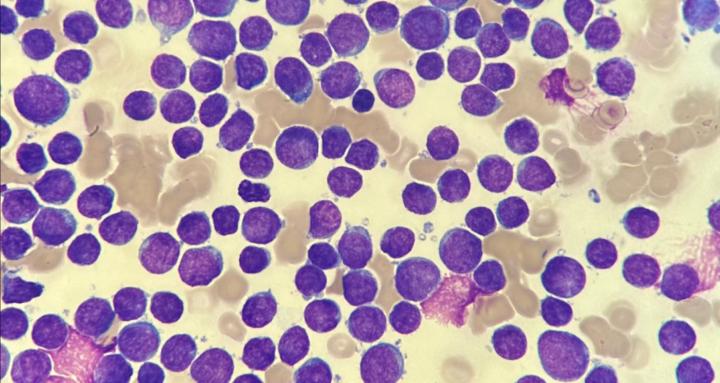
- Leukemia Cell Morphology - Myeloblasts: Contain Auer rods (pathognomonic for AML).
- CLL: Mature lymphocytes with "soccer ball" nuclei and smudge cells (fragile cells that break during slide prep).
- ALL: Large, immature lymphoblasts with scant cytoplasm and prominent nucleoli.
- Hemoglobin Electrophoresis - Principle: Separates hemoglobin variants based on their electrical charge. Alkaline pH: Hb A moves fastest, followed by F, S, C, E, and A2.
Chemistry & Lab Operations
- Beer's Law Deviation - Primary Cause: Stray light. Mechanism: Unwanted light hitting the detector falsely lowers absorbance, breaking the direct proportionality between absorbance and concentration.
- Electrochemistry - Principle: The basis for potentiometry, amperometry, and coulometry.
- Application used in blood gas analyzers. PO2: Measured by a Clark electrode (platinum cathode, Ag/AgCl anode). pH: Measured by a glass electrode. PCO2: Measured by a Severinghaus electrode (gas-permeable membrane, bicarbonate buffer).
- Cryoglobulins Type 1: Monoclonal (IgG, IgA, or IgM). Associated with malignancy (e.g., multiple myeloma). Type 2: Mixed, with at least one monoclonal component. Type 3: Mixed, with no monoclonal component.
Microbiology & Parasitology
- Malaria Paroxysms - Definition: Episodes of fever and chills in malaria patients. Cause: Rupture of infected RBCs. Timing: Best time to collect blood for diagnosis is between paroxysms.
- Parasite Egg Identification - Fasciola species: Large, operculated egg without a knob.
- Diphyllobothrium latum: Operculated egg with a small knob at one end.
- Clonorchis sinensis: Small, operculated egg with "shoulders" and a small terminal knob.
- Neonatal Bacteremia - Common Agents: Listeria monocytogenes and Group B Strep (S. agalactiae). Listeria: Transmitted via contaminated food; can cause early-onset sepsis or late-onset meningitis.
- Strep vs. Staph Differentiation - Catalase Test: Differentiates catalase-positive Staphylococcus from catalase-negative Streptococcus. Coagulase Test: Differentiates coagulase-positive S. aureus from coagulase-negative staph.
- Key Strep Biochemicals:
- S. pyogenes (Group A): Bacitracin (A Disk) sensitive, PYR positive.
- S. agalactiae (Group B): CAMP test positive (arrow shape), hippurate hydrolysis positive.
- S. pneumoniae: Optochin (P Disk) sensitive, bile soluble.
See you next time! If you enjoyed this and want more, please feel free to enjoy a 7-day free trial in the Inner Circle community where we have groups study sessions EVERY WEEK!
https://www.skool.com/microscopeviews (JOIN HERE)
XOXO,
Marilyn
4
0 comments
In Case You Missed The Study Session...
skool.com/microscopeviewsfree
🧪🔬Helping Students Effectively Study For & Pass The ASCP Exam
Leaderboard (30-day)
1

+5
2

+4
3

+3
4

+3
5

+3
Powered by