
Pinned

Jan 18 •
🗽 START HERE: How to join our Group Calls!
We built this community for people who want to connect, debate, and strategize, not just scroll. The real action happens in our group calls, where we argue ideas in good faith and tackle the week's biggest global events. Here is how you can participate: 🔥 1. Open Calls These are our public town halls. Open to everyone. Whether you want to take the stage to challenge a point or just listen in, this is the "public square." 💎2. Premium Calls For members who want to go deeper. These calls are exclusive to our supporters and offer a space for more focused discussion and priority access. 👑 3. VIP Calls Reserved for our top-tier members. These are intimate, mastermind-style sessions where you get direct Q&A access with special guests and deep dives into high-level strategy. - 📅 Check the Schedule & Join Here: https://www.skool.com/libertypolitics/calendar - 💎👑 Become a Premium or VIP Member: https://www.skool.com/libertypolitics/plans Heads up: We believe these conversations are worth sharing! Our group calls are recorded and may be posted to our social media channels. By joining the stage, you’re helping us bring these important discussions to a larger audience. By participating in group calls and voice discussions, you consent to being recorded. You can read our community rules here: https://www.skool.com/libertypolitics/-/rules Moderation decisions and bans by mods are made with Armin's approval. 👋 New to the group? Say hello! We want to get to know you. Drop a comment below to introduce yourself. Tell us where you're from and what you like to do for fun (outside arguing politics!). Welcome to the community!
Pinned

Jun 16 •
Feed Traffic
We have received comments that the feed feels heavily congested, difficult to get through as well as intimidating due to such high volume of posts. We’d ask that individual members limit their daily posts to 2 or 3, so that we don’t monopolize on the space and keep it inviting for new contributors, as well as make it easier to catch up on the feed for those who log in. Thank you for your attention to this matter. -Mods


6d •
"Why I left the left"
For anyone who used to be a lefty but has since left that camp, what caused that change? What "redpilled" you/caused you to wake up and distance yourself from the left? My story is kind of funny. It was Lily Tino (the trans-identifying male influencer who would abuse waitstaff for misgendering him) claiming that Kurt Cobain was trans. I'm curious other people's stories. Where are you at on the political spectrum(s) now?

15h •
J.D. Vance’s Economic Gamble - Risk to America and the World
J.D. Vance is championing a controversial economic path that has raised eyebrows among economists and global observers. He frequently insists that the U.S. dollar’s status as the world’s leading currency is actually a burden on the country, and he openly advocates for weakening the dollar on purpose. The reasoning, according to Vance, is that a strong dollar makes American goods too expensive and drives local factories out of business in favor of cheap foreign imports. But let’s be clear: Vance’s readiness to forfeit America’s financial leverage in order to revive domestic manufacturing is more than just an economic gamble; it is a radical departure from a long-standing economic consensus that could shake the foundations of American power. The immediate and stark risks of such a policy extend beyond U.S. borders. Intentionally weakening the dollar and abandoning its international status would fuel inflation at home and make everyday goods more expensive for ordinary Americans. Moreover, this would strip the United States of a critical tool of geopolitical influence: the power to impose sanctions and exert financial pressure on the global stage. In essence, undermining the dollar’s position is a direct blow to America’s ability to act as a superpower. Vance’s extreme line of economic thinking signals a dangerous turn that is already causing anxiety in financial markets and among global economic stakeholders. For those who prize freedom, open economies, and shared prosperity, Vance’s proposals raise profound concerns. Are we prepared to jeopardize global financial stability and U.S. leadership for a gamble that could leave both America and the world worse off? Sometimes the most alarming scenario is not the extreme idea itself, but the real-world chaos it might unleash. Adam Feder


🔥
2h •
ALL GOVERNMENT CENSORSHIP REQUESTS WILL BE PUBLIC
🚨💥 THE SECRET IS OUT! NOW ALL GOVERNMENT CENSORSHIP REQUESTS WILL BE PUBLIC 👀🔥 This changes EVERYTHING! 💪 Elon Musk just announced that all requests for content removal or restriction sent by governments to X will now be visible to anyone, thanks to the platform's open-source algorithm 📱💻 🔍 What does this mean? If a government, institution, or influential person asks to delete, hide, or restrict a post, EVERYONE will find out. No more "behind closed doors" requests or opaque decisions 🚫🤫 💡 X, under Musk's direction, has become the world's most transparent social network in this regard: what was once invisible is now exposed to millions of users 🌍👏>> Credit for the text and photo to its author. https://x.com/httrejo/status/2089458374039548340?s=46&t=gT6uLhaVod8uwzT4p6povA
1-30 of 6,108
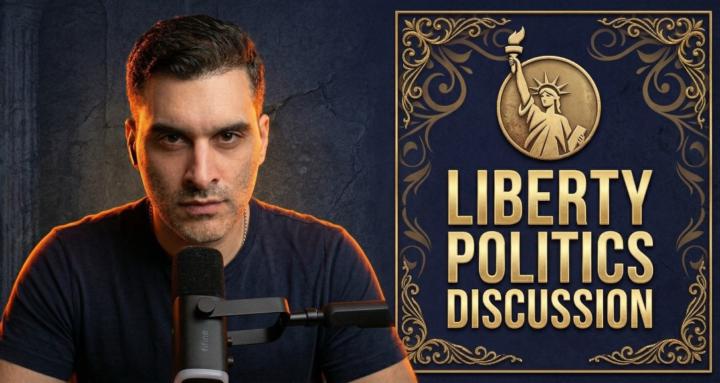
skool.com/libertypolitics
Talk politics with others who care, in live calls and community posts. Share your views, ask questions, or just listen in.
Leaderboard (30-day)
1

🔥
+973
2

+806
3
+573
4
🔥
+547
5
+479
Powered by