
Pinned

⭐
Jan 18 •
🗽 START HERE: How to join our Group Calls!
We built this community for people who want to talk, not just scroll. The real action happens in our group calls, where we argue ideas in good faith and tackle the week's biggest global events. Here is how you can participate: 🔥 1. Open Calls These are our public town halls. Open to everyone. Whether you want to take the stage to challenge a point or just listen in, this is the "public square." 💎2. Premium Calls For members who want to go deeper. These calls are exclusive to our supporters and offer a space for more focused discussion and priority access. - 📅 Check the Schedule & Join Here: https://www.skool.com/libertypolitics/calendar - 💎 Become a Premium Member: https://www.skool.com/libertypolitics/plans Heads up: We believe these conversations are worth sharing! Our group calls are recorded and may be posted to our social media channels. By joining the stage, you’re helping us bring these important discussions to a larger audience. By participating in group calls and voice discussions, you consent to being recorded. 👋 New to the group? Say hello! We want to get to know you. Drop a comment below to introduce yourself. Tell us where you're from and what you like to do for fun (outside of arguing politics!). Welcome to the community!

5m •
“What the Iraq Survey Group Actually Found — and Why the ‘No WMD’ Claim Is Misleading
For more than two decades, a political slogan has dominated discussion of the Iraq War: “No weapons of mass destruction were found in Iraq.” That claim is repeated so often that many people assume it must be true. But when you examine the actual historical record—including the Iraq Survey Group investigation, United Nations inspection reports, and recovered materials from inside Iraq—the slogan collapses under scrutiny. The evidence tells a very different story. Key Findings from the Historical Record Weapons of Mass Destruction were in fact recovered in Iraq. Coalition forces recovered approximately 5,000 chemical munitions, including artillery shells and rockets containing mustard agent and sarin nerve agent. Chemical weapons are explicitly defined as weapons of mass destruction under U.S. law, meaning these discoveries constitute confirmed WMD findings. In addition, authorities secured hundreds of metric tons of uranium compounds tied to Iraq’s former nuclear weapons program, which were later removed from the country to eliminate proliferation risks. Saddam Hussein never abandoned his ambition to rebuild WMD programs Post-war investigations—most notably the Iraq Survey Group’s Duelfer Report—found that Saddam maintained a deliberate strategy of preserving expertise, infrastructure, and procurement networks necessary to restart chemical, biological, missile, and nuclear weapons programs once sanctions collapsed. Rather than dismantling his capabilities, the regime preserved them in a state of strategic latency. The Iraqi regime actively attempted to conceal weapons infrastructure before the invasion Captured Iraqi documents and interrogations of regime officials revealed extensive efforts to destroy documents, disperse materials, and sanitize sensitive facilities in the months before Operation Iraqi Freedom. Intelligence analysts also observed large truck convoys moving from western Iraq toward Syria shortly before the invasion, raising concerns that regime materials were being relocated before coalition forces entered the country.
0
0

6m •
Spreading fake news. Found a bunch while I was doomscrolling. Heads on swivel folks
https://youtube.com/shorts/z6rsr2pAs6Q?si=E68ZnCtDlXvdOjIY
0
0

25m •
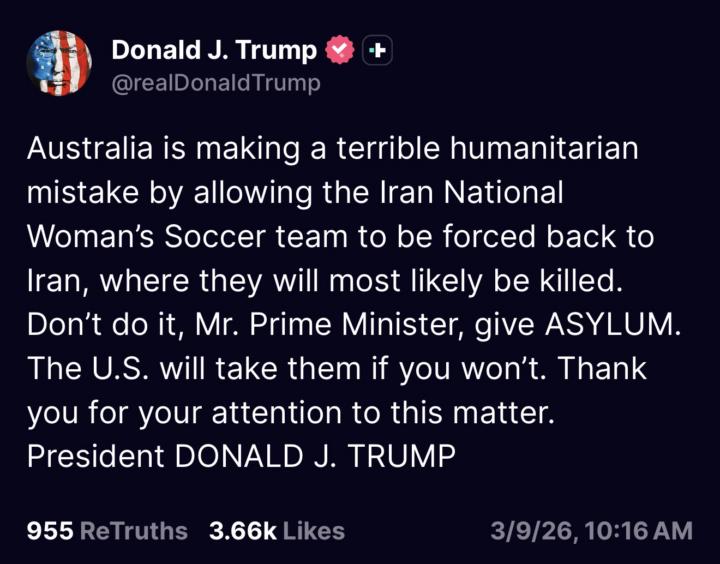
Dictator Trump!
There goes our dictator again trying to save innocent lives!!! The audacity 🧐🤣👍💕🇺🇸☀️🦁 Which Olympics was it that the Israeli athletes were killed? Ah yes Munchen 1972 and who did that again? Oh yes that’s right the Balestinians!!!! Weird but hey Free Balestine right????
1-30 of 2,336

skool.com/libertypolitics
Talk politics with others who care, in live calls and community posts. Share your views, ask questions, or just listen in.
Leaderboard (30-day)
1

+431
2

+387
3

+325
4

+250
5

+230
Powered by