

Jun 11 •
📢New Edition: The Middleman Always Wins
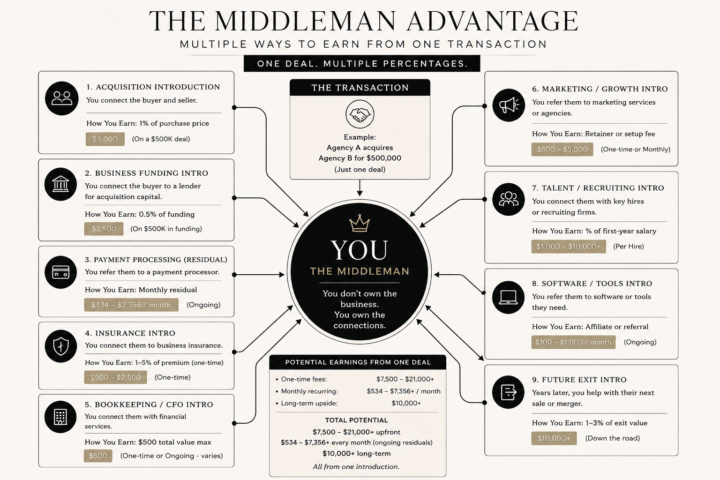
Even within entrepreneur circles, I've always been one of the people who tends to go down the paths less traveled. The result of that is very simple: Being the middleman is by far the most profitable business position I've ever been in. Not consultant, ceo, private equity fund manager, or board director. Middleman. My consulting firm has helped 8 companies raise over a million in funding from investors and firms. And 2 companies exit (incl one of my own). That's just 10 deals, nothing heroic. But the almighty percentage fee... 🙌 That's the silent winner. Earning percentages multiple times from ONE single deal. It's the thing that's allowed me to thrive without any social media, a team, or ads for 3 years offline.. All by being the middleman. I'm slightly simplifying for teachability, but honestly, it's not far off. (The following lesson is purely an example. Licenses or specific structuring may be required depending on what you're doing.) -- Click here to read the full lesson! It's really more a like guide to being a middleman and earning % easily. If the the lesson is locked for you, that means you need to subscribe to Sovereignty newsletter to access the entire classroom. I'm here for ya!
2d •
📢 10 Most Famous Definitions Of Fulfillment - Then Mine 👀
How do I know I'm spending my life doing things that will still feel worth it when I'm eighty? That question has been bothering me for years while reading Nietzsche, Marcus Aurelius, and the rest. So this week I put ten famous definitions of fulfillment into one place. It's a fun, rare exercise to see them laid out side-by-side. Yet after reading them all, I still didn't have an answer to my original question. It took me some time to realize I didn't need a better 'definition' or quote on fulfillment at all really. I needed a practical filter, for my overly rational self, that I could use whether I'm weighing a career path or standing on a ledge wondering "whether or not this is all worth it". Frankly, that's how I arrived at my own modern definition of fulfillment. And, more importantly, how to recognize the direction you’re heading in. I have a feeling this mental exercise is going to stay with you for awhile. I can't wait to hear you own perspective! Jeweliet -- Go to the Newsletter Classroom here on Skool to read this week's exercise. If the classroom is locked for you, simply subscribe here and get immediate access.
3
0
9d •
War on Words - Common 2026 Phrases That Kill Influence
For most people, word choice becomes a self-imposed prison for their influence and their progress. What’s interesting is that lot of these phrases are being sold as good branding, marketing, and storytelling techniques. Self-imposed is the key word. ..The good news is our influence doesn’t have to be as fragile as we often make it. This editing framework will make writing influential pieces (ones that actually change something) a lot easier. Part 1 of the War on Words series is about common phrases in 2026 that kill influence. You’ll see how common phrases invite skepticism; How personal story telling can push people away; And how famous advice attracts the exact audience you don’t want. Then I’ll show it in practice with a side-by-side edit. Same piece of content with different words - and a very different effect. Imagine where your life would be if you had been just 30% more convincing in the conversations that mattered. That’s what we’re getting into this week. Jeweliet PS - I'm particularly excited about this series. I'm relaunching my YouTube channel with these lessons so you can listen and not just read. Would be grateful if you checked it out! -- Click here to read if you're a subscriber. If it's locked for you, you need to become a subscriber here to access the full series (and all other essays). It's pay-what-you-want, cancel anytime.
15d •
📢 New Edition: Illegal Lien Strategy That Made Millions In The 90s 👀
Liens are the annoying thing that banks and lenders put on your assets, usually for unpaid debts. But as you'll see today, sometimes they are used to roadblock deals in order to make a quick buck. Seems boring and not useful to your situation? Think again my entrepreneur friends! 💪 This story demonstrates the details of asset buying/ selling. And even how lawsuits work that most people don’t learn until it hits them in the face. Which by then, it’s usually too late. Understanding mechanics can help you make wiser decisions in the future. Warning: A lot of what you’re about to read is unethical and illegal. Do not read this story of the ‘mogul’ and think to copy him. This story is not legal or financial advice in any form. This is truly elite-level business knowledge. Or just a cool cocktail party story to show off. It's the type of boring-sounding topic that’s wearing a gym pump cover, meanwhile you no idea the impressiveness underneath. So, it’s worth reading. Jeweliet -- Click here to read the full essay! If you click and the essay is 'locked' it's because you need to subscribe to Sovereignty Newsletter. Subscribe here - it's pay-what-you-want.
Feb 2 •
📢 NEW Edition: Cashing In On Payment Processing (Like Banks Do)
Published: February 1, 2026 I thought I understood money simply because I understood sales. And that mistake was expensive. I’ve lost a lot of money and gone through tons of unnecessary pain because I didn’t understand how ‘money systems’ actually work. In a previous edition I told you about a payment processing horror story... Today is the mechanics underneath it. This private newsletter is about sovereignty, which you only gain by understanding your options...Today’s edition is exactly that, and it won’t disappoint. This is the edition that I wish I had when I started my first business. Not another funnel breakdown or magic script -- just a clear explanation of the money systems operating underneath everything in business. 👉🏼 Learning how these systems work has completely changed how I think about wealth, opportunity, and leverage. (💡 NOTE: Skool, the platform we're on, uses this EXACT understanding of payment processing and is largely why they are valued so highly today). This edition is a technical breakdown of payment processing and banking infrastructure— and more importantly, WHY it matters to entrepreneurs like you. You’ll see: - how money really moves once a card is swiped - everyone who gets a cut on every transaction - and where missed opportunities exist that most entrepreneurs don’t even know to look for This isn’t about becoming a payments expert. It’s about understanding the layer of business that quietly effects everything - and will change the way you approach wealth building. If you read it and aren’t at least a little stunned by the trillions of dollars floating around and how easy it is to access, I’ll eat my words. JT -- To read this full edition go to the private newsletter classroom here on Skool! 👉🏼 If you aren't already a member of my private newsletter, it's "pay what you want". Go here and enter any amount to join & get immediate access: https://jewelietgrace.com/newsletter

1-22 of 22
powered by
skool.com/jts-vault-3966
Sovereignty 🤝 Learn for yourself. Live better. We are an un-boring newsletter about personal power read by over 1,200 thinkers internationally.
Suggested communities
Powered by