
Write something
Pinned
⭐
1d •
Don't Quit!
91% Quit. 9% Build Freedom and a Life of Their Dreams. This isn’t about talent. It's not about luck. And it’s definitely not about being fearless. It’s about identity. The 9% decide who they are before the results show up. They choose consistency over comfort. Growth over excuses. Long-term freedom over short-term relief. HuRU is about knowing Hu U R… So the real question is: 👉 Who are you becoming when no one’s watching? 👉 Comment with one word that describes the version of you you’re committed to building in 2026.
Poll
18 members have voted

Pinned
🔥
2d •
Hey Brennan I Got A ?
@Brennan Thompson Do you know who inspired the Evolution Growth Summit and Evolution Podcast by being the first ever booked guest? Bonus ? Do you know who the guest is tomorrow at 2pm est/1 pm central recording live?

Pinned
⭐
Jul '25 •
🎉 Welcome to The HuRU Crew! 🏷️✨
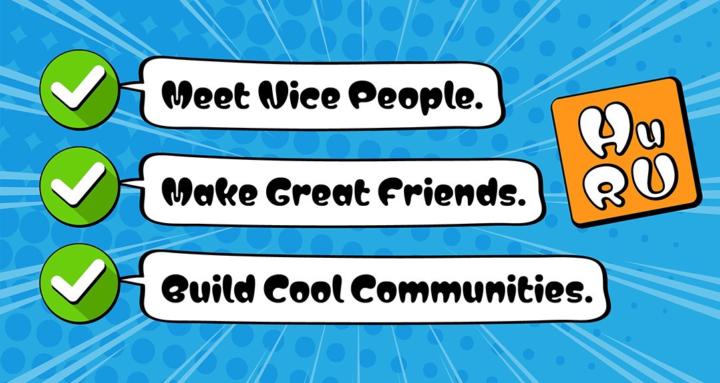
Meet Nice People. Make Great Friends. Build Cool Communities. Hey there, friend 👋 If you’re reading this, you’ve wandered into something brand new - something kinda quirky, kinda brilliant, and definitely built with you in mind. This isn’t a guru circle or a sales pitch party. Nope. This is where the weird, the warm, and the wonderful people come to hang out, help out, and shout out other cool humans. We’re still putting the snacks on the table, but soon this place will be full of: 🫶 Creators & community builders 💬 Random, late-night idea sharers 🚀 Folks building businesses (or just building relationships) 🎨 The occasionally unhinged doodle from our Name Badge mascot... So drop a comment below or even better, create your own post. Or do both! Whichever you choose... answer this: 💥 Hu R U? And, what do U do? Tell us something unexpected, chill, or wildly unimportant about yourself. No pressure. Just fun. Let the randomness begin. 💫
⭐
8d •
Buckle UP!
“Relationships are like seat belts. If they don’t click, we’ll never feel safe.” ~ Simon Sinek Think about it... Family. Love. Friendships. Business partners. Colleagues. And yes — right here in community. When a relationship clicks, you feel it immediately. You can exhale. You can be honest. You don’t have to brace for impact every time you speak your truth. But when it doesn’t click? You’re constantly on edge. Guarded. Second-guessing yourself. White-knuckling the ride instead of enjoying the journey. Healthy relationships don’t mean that there aren't any bumps in the road. They mean you trust the restraint when the road gets rough. In HuRU, we don’t aim for perfect. We aim for real. For trust. For showing up buckled in — present, accountable, and willing to ride together. Because growth is safer when you’re not flying through the windshield alone 😄 So here’s the HuRU question of the day: Where in your life do you feel securely clicked in... and where might it be time to check the latch? Buckle up, Crew. This journey is better together. 🧡💙


3h •
We suffer more in imagination than we do in reality
We Suffer More in Imagination Than We Do in Reality Life can feel heavy. We move through life facing obstacles, adversity, brick walls, and hurdles. Sometimes we’re asked to climb mountains when all we want is a place to sit down and catch our breath. Many people believe what they’re going through is too much. So they look for ways to escape—numbing, running, distracting—anything to avoid facing reality. But here’s a hard and freeing truth: Most of what we call suffering isn’t as bad as we think. Our imagination adds weight that reality never asked us to carry. The mind is powerful. When it’s undisciplined, it becomes a storyteller that exaggerates pain, predicts disaster, and convinces us we’re trapped—when we’re not. Let me give you a few real examples. My niece, Victoria Meza, was murdered by her boyfriend. I recently found out that charges will not be pressed against the man who took her life. Did that hurt? Yes. Deeply. Did learning that he will walk free cut even deeper? Of course it did. But am I suffering? No. I’m hurt. I’m grieving. I’m angry at injustice. But suffering is something different. Years ago, I wouldn’t have known the difference. The old version of me would have reacted from rage and impulse, driven by imagination and emotion instead of truth. Today, I don’t have that desire—because my mindset has changed. Pain no longer controls my direction. At the same time, life kept piling on. A storage company took money from my bank account after agreeing to wait until I got paid. That put me overdrawn by $200. I couldn’t pay some bills, including my auto insurance. Because I’m buying a car, full coverage isn’t optional. Without it, the vehicle can be taken. Will that create stress? Yes. Will it make life harder for a moment? Absolutely. But does that qualify as suffering? No, because there is still a way through. Suffering is not about circumstances. It’s about whether you believe you’re powerless. Leonard Peltier spent nearly 50 years in prison for a crime he maintained he did not commit. After decades behind bars and declining health, he was granted clemency so he could spend the rest of his life with family—under strict conditions.
0
0
1-30 of 848
skool.com/hurucrew
Join HuRU – Because...
Building Communities is Better Together!
Leaderboard (30-day)
1

+774
2

⭐
🔥
+471
3

🔥
+431
4

🔥
+345
5

🔥
+294
Powered by