User
Write something
HOS Weekly Training in London is happening in 4 days
Pinned
WELCOME TO HOS SEASON 3
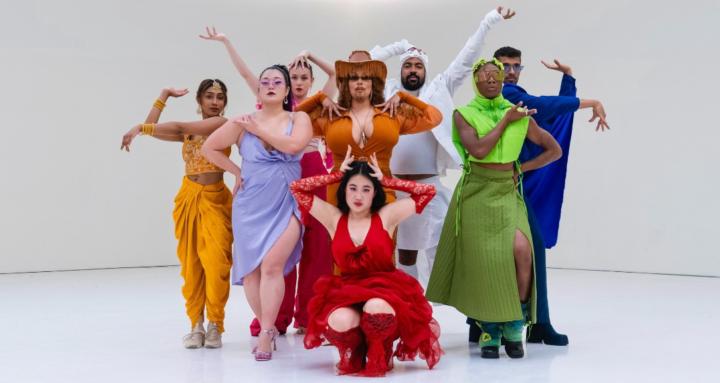
Comment below: What are you looking forward to most this season? This platform was created as a space for healthy escapism — a place to step out of the noise of the world and back into your body, your creativity, and your sense of self. House of Suraj is rooted in queer dance cultures and Global Majority experiences. Here, movement is not just performance — it’s a tool for wellbeing, cultural expression, joy, and collective care. We honour dance floors as places of freedom, connection, and belonging. This is a membership space designed to support you over time. You’ll find embodied practices, creative tools, seasonal teachings, and access to live or recorded sessions you can return to at your own pace. Nothing here is about keeping up or getting it right — you’re invited to engage in the way that feels most supportive for you. There are a few membership tiers available, offering different levels of access — from self-guided content to more intimate, high-touch experiences. You can choose what fits your life right now, and adjust as needed. One of the offerings that lives within House of Suraj is HELD — a private, one-to-one movement-based programme focused on nervous system regulation and grounded support. HELD is for those who feel called to deeper, personalised care, while remaining connected to the wider House of Suraj ecosystem. Above all, this is a space that chooses community over competition, presence over pressure, and joy as a practice. I’m really glad you’re here, and I look forward to sharing this season with you. Kumari (They/Them) HOS Founder
2
0
WELCOME TO HOS SEASON 3
What is the cultural & historical context of the Groove in dance?
A GOOD READ: In the context of Black American music and dance, groove comes out of African diasporic rhythmic traditions brought through the transatlantic slave trade. Many West and Central African cultures center polyrhythm, call-and-response, repetition, and embodied rhythm; where music is not separate from movement. There isn’t “music over here” and “dance over there.” The body is part of the instrument. On plantations, in juke joints, in church, in social dance spaces, rhythm became a survival technology. Drumming traditions were restricted in many places, so rhythm moved into the body: into clapping, patting juba, footwork, vocal phrasing. That deep relationship between pulse and physicality carried forward into blues, jazz, swing, funk, soul, disco, hip hop, and house. When we talk about “the pocket” in Black music, we’re talking about a very specific rhythmic placement, slightly behind, slightly ahead, elastic but intentional. James Brown’s funk bands. The swing of jazz. The bounce in New Orleans second line. The jack in Chicago house. That elasticity is cultural. It’s communal timing. It’s feeling over rigid counting. And the vinyl metaphor matters too. The groove etched into wax made Black music globally distributable in the 20th century. Records carried blues, jazz, disco, funk into clubs and homes worldwide. The physical groove of the record became the metaphor for the rhythmic groove of the music and dancers quite literally learned by placing the needle down and replaying that spiral over and over. Repetition built embodiment. Why is this important today? Because groove teaches us something countercultural in a hyper-optimized, perfection-driven world. Groove is relational. It asks you to listen. It asks you to feel timing, not dominate it. It values nuance over rigidity. It centers the body as intelligent. In dance spaces, especially Black and queer club spaces, groove has always been about more than steps. It’s about belonging. When you’re in the groove, you’re in conversation with the DJ, with the room, with history. You’re participating in a lineage of embodied resistance and joy.
0
0
What is the cultural & historical context of the Groove in dance?
NEW Foundation Tutorials
Hi HOS, chech you Movement Foundations classroom for two new House dance tutorials. https://www.skool.com/houseofsuraj/classroom CULTURAL CONTEXT “The Jack” The foundational groove of House dance, isn’t just a warm-up move. It’s a cultural heartbeat. House music was born in early 1980s Chicago, in Black and Latinx queer club spaces like The Warehouse. The very name “house” comes from that room. And the Jack, that pulsing forward-and-back contraction through the chest and torso, became the embodied response to that sound. If groove is the relationship between rhythm and body, the Jack is house music living inside the spine. Musically, early house tracks were repetitive, drum-driven, hypnotic. Drum machines looping. Bassline cycling. DJs extending records to keep dancers in a trance state. Jack mirrors that repetition. It rides the 4/4 pulse. It’s circular, continuous, devotional. You don’t “hit” the beat you surrender to it. There’s a reason the lyric says, “Jack your body.” It wasn’t choreography. It was instruction. The Jack, came out of Black and queer club spaces where the dance floor was refuge. In those rooms, groove wasn’t performance, it was release, communion, survival. The Jack allowed dancers to drop into the pocket collectively. When a whole room is jacking, the energy synchronizes. It becomes a ritual. Culturally, the Jack represents: - Embodied freedom in spaces where identity was policed outside the club - Repetition as transcendence — staying with the groove until the ego softens - Community timing — a shared pulse that dissolves isolation - Lineage — connecting disco, soul, funk, and gospel physicality into electronic form Technically, the Jack teaches you where house lives — in the torso, not just the feet. In elasticity, not stiffness. In bounce, not control. It trains you to feel the pocket instead of dominating it. And today? Its significance is even sharper. In a globalized dance world where a house can be aestheticized or detached from its roots, the Jack anchors us back to origin. It reminds dancers that house is Black, queer, club-born culture. It reminds us that groove is not decorative, it’s relational and historical.
0
0
NEW Foundation Tutorials
What is a Groove?
Did you know before watching this video? Let me know your thoughts in the comments. https://www.skool.com/houseofsuraj/classroom/910e3547?md=b20c5b57bc2e41b68b62f83d7556cea5
0
0
What is a Groove?
HOS London Weekly (Premium Package)
Don’t forget to dress in all black for in-person training and rsvp on the calendar for the live stream if you’re out of town.
0
0
HOS London Weekly (Premium Package)
1-5 of 5