
Write something
May 25 •
Global Systems → Local Reality - NOW LIVE
For a long time, many of the biggest issues shaping our future have felt distant. Food insecurity. Water stress. Extreme Heat. Flooding. AI disruption. Social fragmentation. We usually hear about them through global headlines, political arguments or technical reports. But increasingly, these issues are no longer staying “out there.” They are beginning to affect: - local services - councils - infrastructure - farming - housing - public health - jobs - community stability - and everyday life - A flood elsewhere affects local food prices. A drought affects farming and water systems. Extreme heat pressures hospitals and energy grids. AI changes local economies and employment. Social fragmentation affects trust and resilience. These are not isolated events. They are interconnected systemic pressures that are increasingly shaping local reality. So I’ve started building a new lesson series for Has2BGreen: GLOBAL SYSTEMS → LOCAL REALITY The aim is simple: To help people understand how large global pressures eventually affect local daily life — and what communities can realistically do about it. The lessons are designed to be: - calm - practical - systems-based - emotionally grounded - non-alarmist - solution-focused Not doom. Not denial. Not political point-scoring. Just a clearer understanding of what is changing around us — and how local resilience and agency become increasingly important. The series will explore: • Food Insecurity • Water Stress • Extreme Heat • Flooding • AI & Job Disruption
May 25 •
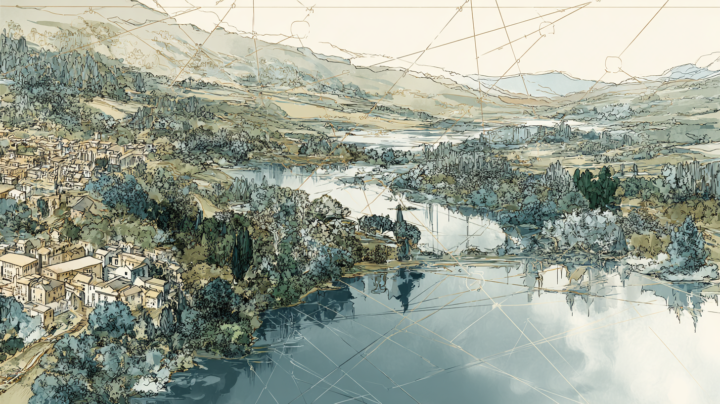
Wilding - Film about the rewilding of the Knepp Estate
I’ve just written a review of the documentary Wilding — the story of the rewilding project at Knepp Estate in England. What struck me most is that it’s not really a film about “saving nature”. It’s a film about control, uncertainty, recovery, and what happens when damaged systems are finally given space to breathe again. Unlike many climate documentaries, it avoids panic and moralising. Instead, it quietly asks a difficult question: What if nature already knows how to heal — if we stop overwhelming it? The film also raises deeper questions about farming, economics, land ownership, resilience, and whether modern society has become too disconnected from living systems to recognise what restoration even looks like anymore. I found it thoughtful, emotionally grounding, and surprisingly hopeful without pretending everything is fine. Full review here 👉
2
0

May 2 •
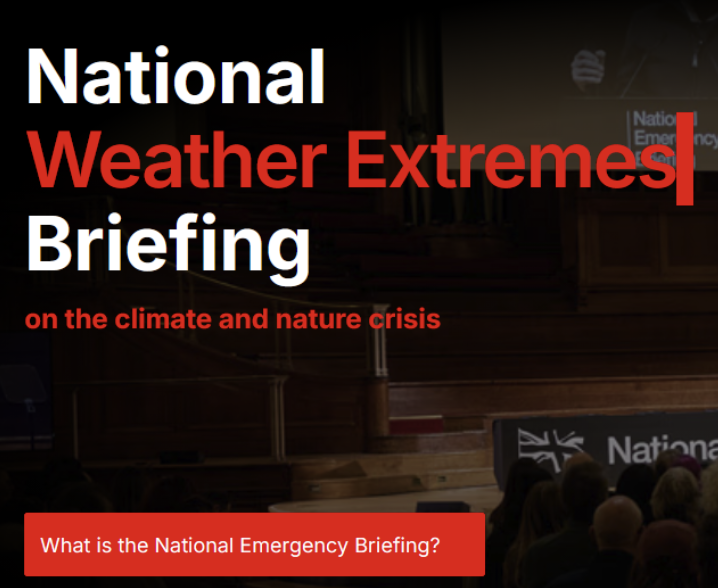
New Skool group : National Emergency Briefing
National Emergency Briefing "On 27 November 2025, ten of the UK’s leading experts briefed an invited audience of more than 1,200 politicians and leaders from business, culture, faith, sport and the media in Westminster. The briefing set out the implications of climate and nature breakdown for health, food systems, national security and the economy, and did so on the public record. Its purpose was to demonstrate what a clear, evidence-led national emergency briefing could look like and why it is needed. The question that follows is how this evidence is communicated to the public and translated into appropriate national action. When credible evidence of national risk is available, institutions have a responsibility to ensure the public is informed. The National Emergency Briefing exists to help create a societal tipping point towards the action now required." --- This briefing may focus on the risks facing the UK, but they all relate to the whole of the globe. We need spaces to decompress and share our fears and views. You are welcome to do so here in Has2BGreen - but more are needed.
3
0
Mar 31 •
When Understanding Meets Reality
There comes a point where understanding is no longer enough. Up to now, much of what we’ve explored in Has2BGreen has been about making sense of the world — the systems, the structures, the forces that shape outcomes. That matters. Without that clarity, it’s very difficult to act in a way that is effective. But there is another step. What happens when you move from understanding… into reality? This new series, Inside the System, sits within our broader In Real Life course. It exists because that transition — from knowledge to action — is not straightforward. In fact, it can be one of the most disorienting moments people experience. When you step into a role — whether that’s as a councillor, a campaigner, or someone trying to make change locally — the expectation is often that things will begin to move. You have a mandate. You have ideas. You have intent. And then something else happens. Processes appear. Decisions seem to have already been shaped. Questions do not always receive clear answers. Movement is slower than expected. It can feel confusing. And, at times, personal. This series was created to make sense of that experience. Not to criticise individuals. Not to encourage confrontation. But to understand how systems behave when you enter them. Across these lessons, we look at things that are rarely explained openly: Where decisions are actually made. Why process can feel overwhelming. What role gatekeepers play. How resistance shows up — and how to recognise it. What it means to stay effective over time. And how influence begins to build quietly, often before it becomes visible. This is not a set of tactics. It is a way of seeing. Because without that understanding, it is very easy to become frustrated, to push in ways that don’t work, or to step back entirely. And that’s not a reflection of the individual — it’s a reflection of how complex systems respond to change. With that understanding, something different becomes possible. You begin to see where movement can happen.


Mar 22 •
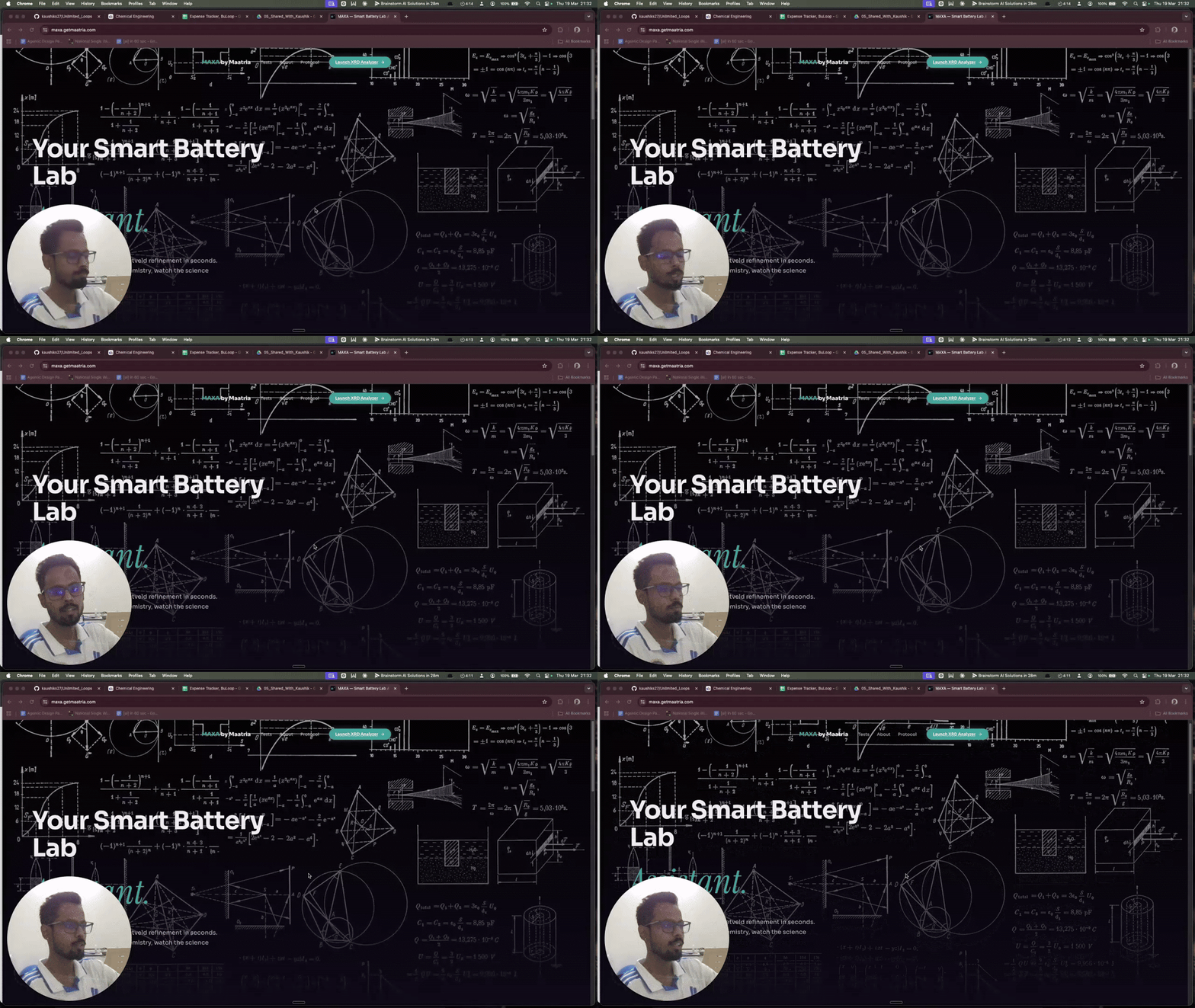
MAXA to speed up energy transition
Every battery that goes into an EV or a grid storage system starts with getting the cathode material right. If the crystal structure is off, the battery underperforms. Or worse, it degrades fast and ends up as waste. I work on NMC cathode compositions. The kind that go into the batteries powering electric vehicles and renewable energy storage. We were iterating on dozens of them. Every single one needed XRD (X-ray diffraction) to confirm the crystal structure before we could move forward with anything else. If the structure is wrong, nothing downstream matters. The problem was the XRD refinement itself. Open GSAS-II. Load the raw data. Set up the background. Run Le Bail. Refine scale, lattice, profile, atoms, cation mixing, preferred orientation. Converge. Check the fit. Maybe add impurity phases and do it again. That is roughly 10 steps, and every step has parameters you need to get right. A new person on the team? Couple of days just to learn the workflow. Someone experienced? Still two to three hours per sample to get a clean Rietveld refinement. Multiply that by dozens of compositions and you are burning weeks on something that should not be the bottleneck. Weeks spent on refinement is weeks not spent finding the next cathode composition that could make batteries cheaper, longer lasting, or faster to charge. That matters here because better batteries mean more affordable EVs, more reliable grid storage for solar and wind, and fewer reasons for anyone to stay on fossil fuels. So we built a tool at Maatria. We call it MAXA. The idea is simple: you should not need to babysit a 10-step refinement manually when the logic can be codified. Here is how it works: 1. Upload your raw XRD file and select your cathode composition. MAXA runs a 12-stage automated Rietveld refinement pipeline using GSAS-II under the hood. Background, Le Bail, scale, lattice, profile, atomic coordinates, cation mixing, preferred orientation, convergence, and final validation. 2. If the fit quality is poor, it detects residual peaks, suggests possible impurity phases, and lets you decide which to include for multi-phase refinement. 3. You get lattice parameters, c/a ratio, cation mixing percentage, bond distances, Rwp, and a full exportable report. Seconds, not hours.
1-30 of 46
powered by
skool.com/has2bgreen-3767
Learn, act, and lead on climate change: from basics to advocacy to real-world action. A global hub for solutions, stories, and change-makers.
Suggested communities
Powered by