
Write something

2d •
DESIGNING AWAY CUSTOMER COMPLAINTS
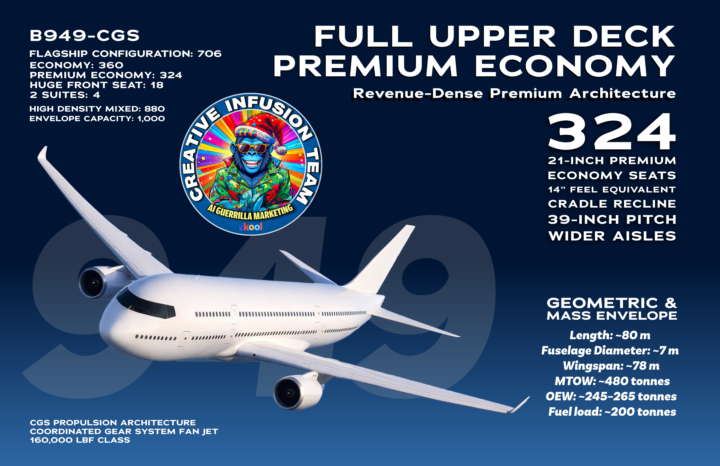
B949 Passenger Experience Response. By Dr Dave Siefkes. I’ve been studying something interesting lately. When you look at airline passenger complaint data in the United States over the past year, a pattern appears almost immediately. Most complaints are not about safety. They are not about the age of the aircraft. They are not about how fast the airplane flies. They are about the experience inside the cabin. Passengers complain about tight seats. Passengers complain about fighting for overhead bin space. Passengers complain about lavatory lines. Passengers complain about unreliable Wi-Fi. Passengers complain about noisy cabins and uncomfortable temperatures. These are not complicated problems. But they are inherent problems when aircraft design decisions are made late in the process, or when marketing promises are disconnected from engineering reality. This is exactly why early integration matters. When a program starts with passenger experience integrated into the architecture from the beginning, the airplane itself begins to solve the problems that passengers complain about most. That is the philosophy behind the B949. The B949 Passenger Experience Response begins with the two issues passengers mention more than any others: seat pitch and seat width. Premium Economy on the 949 is built around a 39-inch seat pitch. That number is not random. It happens to match the spacing passengers enjoyed on the historic Douglas DC-3. In other words, the aircraft that defined early comfortable air travel had the same legroom that modern passengers would love to see again. Seat width is just as important. The 949 Premium Economy seat is designed at 21 inches wide, eliminating the shoulder compression that passengers frequently experience in narrow long-haul cabins today. When passengers feel physically comfortable, their entire perception of the flight improves. But seating is only part of the story. Another major frustration for passengers is the daily battle for overhead bin space. Anyone who has flown recently knows the ritual. Boarding begins. Passengers immediately scan for bin space. Bags are shifted, rotated, and sometimes rejected.
1
0
4d •
Delta’s Leadership Shakeup and What It Signals for the Airline Industry
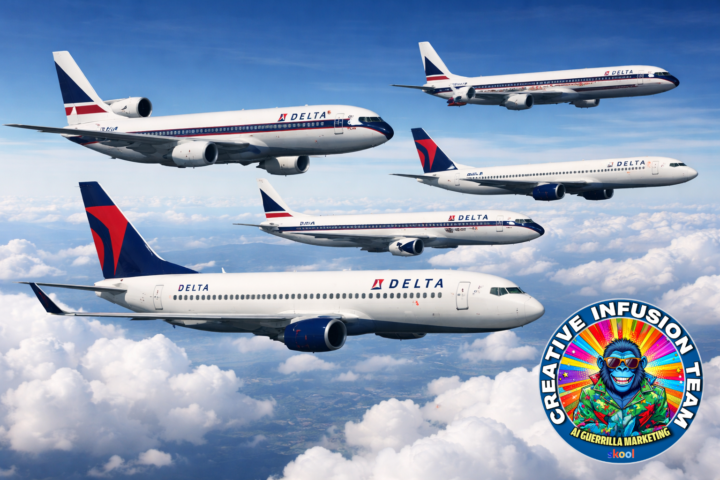
When a major airline like Delta Air Lines announces a new President, a new COO, and a new CFO all at the same time, that is not routine corporate housekeeping. In aviation, changes at this level usually mean something much bigger. The airline is preparing for its next strategic chapter. For people watching the industry, this is an important moment. It tells us that airlines are beginning to prepare for the next major cycle in aviation. That cycle will include a massive fleet reset and a new round of competition between manufacturers like Boeing and Airbus. For marketers, it is a reminder that timing, message, and product all have to align. Timing Is Everything Airplanes stay in service for a long time. Many widebody aircraft fly for 25 to 30 years before they are replaced. Because of that, aircraft orders tend to happen in waves. The next big wave is approaching. Aircraft delivered in the late 1990s and early 2000s are slowly approaching retirement. Types such as the Boeing 767 and large portions of the Boeing 777-300ER fleet will need replacement in the 2030 to 2040 time frame. When that moment arrives, airlines will be making decisions that shape their fleets for the next generation. Aircraft manufacturers know this. Airlines know this. Investors know this. That is why leadership changes today matter. They often signal preparation for decisions that will come years later. Marketing Starts Long Before the Product Arrives In aviation, marketing does not start when a new airplane rolls out of a factory. Marketing starts when the conversation about the future begins. Aircraft manufacturers must convince airlines that their next product will solve real problems. Airlines must convince passengers that new aircraft will deliver a better experience. This is where narrative becomes important. Manufacturers frame their aircraft around efficiency, reliability, and long term economics. Airlines frame those same aircraft around passenger comfort, better cabins, and improved travel experiences.
11d •
GUERRILLA MARKETING CASE STUDY - Popeyes vs Chick-fil-A.
The Chicken Sandwich War THE STORY For years, Chick-fil-A owned the chicken sandwich conversation. Not just the product— the identity. Polite service. Consistent quality. Fanatical loyalty. Then in August 2019, Popeyes quietly introduced a chicken sandwich. No Super Bowl ad. No massive campaign. No warning. Just… a tweet. Within days, the internet was on fire. Lines wrapped around buildings. Stores sold out nationwide. People argued online like it was sports or politics. And Chick-fil-A? They barely said a word. This wasn’t a marketing war of budget vs budget. It was timing vs positioning. WHAT ACTUALLY HAPPENED 1️⃣ Popeyes Did Not Invent Demand They entered an existing cultural conversation. Chicken sandwiches already mattered. Chick-fil-A had trained the market to care. Popeyes didn’t explain why chicken mattered. They simply said: “We’re here now.” 2️⃣ The Launch Was Intentionally Underpowered Popeyes did not over-prepare supply. Result: - Immediate sell-outs - Photos of empty signs - Social proof everywhere Scarcity wasn’t announced. It emerged naturally, which made it believable. 3️⃣ Social Media Did the Heavy Lifting The brand leaned into: - Humor - Light provocation - Cultural timing They didn’t attack Chick-fil-A directly. They let the audience do it for them. That’s the key. 4️⃣ Chick-fil-A Played Defense by Playing Quiet Chick-fil-A didn’t panic. They didn’t overreact. They stayed… Chick-fil-A. Which actually validated the moment: “If the leader isn’t panicking, this must be real.” 5️⃣ Popeyes Won Attention, Not Loyalty (Yet) Important distinction: - Chick-fil-A still owns long-term trust - Popeyes temporarily owned the moment And moments create: - Trials - First impressions - New mental availability That’s guerrilla marketing. THE CORE GUERRILLA INSIGHT Timing beats innovation. Conversation beats explanation. Scarcity beats persuasion. Popeyes didn’t out-market Chick-fil-A. They out-timed them.

10d •
The 3-Visit Habit System.
GUERRILLA MARKETING CASE STUDY How to Turn a $1,200 Customer Acquisition Cost into $5 Most businesses chase attention. The smart ones engineer return behavior. Let’s break down how John Taffer builds loyalty on purpose. Not emotionally. Structurally. The Principle Three perfect visits create about a 72 percent likelihood of another visit. Not one visit. Not a promotion. Not a grand opening splash. Three. And he does not leave it to chance. He scripts it. Visit 1. Flawless and Marked The service is perfect. Then the server asks, “Is this your first time with us?” If yes, a red napkin is presented and explained. Now the guest is identified. Not as a transaction. As a first timer. After the visit, a postcard is mailed. Free rib dinner. Any day. No restrictions. No blackout dates. No games. Now they come back. Instead of spending $1,200 in advertising to reacquire that customer, it costs about $4 in food. Think about that. Visit 2. Relationship Layer They return for the ribs. Service is flawless again. At the end of the meal, the manager visits the table. He asks how everything was. Then he says, “Next time you have to try our chicken.” He flips his business card over and writes $5 off a chicken dinner. Now he is not management. He is their guy. They are breaking even on the chicken. They do not care. Because the objective is Visit 3. Visit 3. Cement the Habit They return. The experience is clean again. At the end of the meal the manager says, “You have to try my cheesecake.” He writes on the back of his card. Free slice of cheesecake. Now it is personal. Now there is relationship equity. After that third visit, there is about a 72 percent likelihood of another visit. Habit formed. The Real Math Traditional acquisition can run $1,200 to build a loyal customer. Taffer spends about $5 in controlled incentives. He redirects advertising money into behavioral sequencing. He does not market louder. He markets through certainty.
2
0

1-17 of 17

skool.com/guerrillamarketing
Creative Infusion Team brings bold thinkers together to spark guerrilla marketing, sharp strategy, AI and unstoppable momentum for your business.
Leaderboard (30-day)
1

+8
Powered by