
🔥
Apr 20 (edited) • ❓Questions
Every Now and Then I Take On Someone As An Experiment
Just for the feedback, which is worth its weight in gold. Because answering the questions, sometimes are the very same questions that come up in the people I do help. I will warn you, I was on a roll and it is a BOOK! 😄
I put a man on the same protocol I've used the last several years successfully on countless type 2s, several obese pre-diabetics, and some people with autoimmune disorders(colitis, IBS, Crohn's, etc.)
But I told him, he wasn't my ideal client certainly. He looks half his age, he's very Very lean, like veins popping out, biceps glaring, and in perfect athletic health, but he's far too intelligent and likes experiments so we thought this would be fun to try. 🙋♀️🤩 My greatest concern was... he has an extremely high-stress job and doesn't sleep at all sometimes. Stress can make ketosis very difficult to get into. And it wrecks the hormones. Hormones control your weight, your energy levels, and how much body fat you store. Calories do not. As human beings, aside from the spiritual aspect(we are eternal souls), but physically, you are basically just an emotional meat bag run by electricity and hormones and hundreds of trillions of bacteria controlling your neurons and telling you what to do all day.
So we proposed, hey, try it, for a week, and come back and let's discuss it. Haha, but then he disappeared for a month and we didn't get to reassess. I've got to start duct taping these guys to a chair in the basement to keep better track of them or something, and just feed them butter myself. 🤣 Calm down, gentlemen... I joke!
I answered his questions in semi-quoted, point-by-point fashion. Things in brackets [ ..... ] are what I referred to as semi-quoted and summed up by me.
"Again, so lovely to hear back from you, _______I was wondering if you were okay or probably staying too busy to have any time to chat. Let me address each of your points in order.
Point 1- [You're concerned having a high fat diet is bad.] There is no such thing as a bad, nutrient-dense, high-fat animal diet, BUT there are nuances(for example, if you Only wanted to eat cupfuls of tallow, and egg whites, and chicken breast for months on end, Yes, you would be missing a Lot of nutrients and eating a lot of fat and you would eventually end up feeling like crap. There are no long-term people eating successfully this way who abstain from ruminant meat-because it is the most bioavailable to humans) All plant fat is not ideal for humans. The plant version of saturated fats such as in coconut oil so closely mimics animal cholesterol that it down regulates the liver's production of our own cholesterol(being our most potent antioxidant, this is a terrible thing). But maybe you're thinking, why does that matter? It Matters. The less cholesterol your liver makes, the less gets into your tissues and cells and bones, the less is burned up for energy by the brain and our mitochondria, and the less is made to heal and make repairs to our body, and the less that gets used - which means the more of it drifts aimlessly around in our blood leading to what they call "high serum cholesterol levels". And there is no such a worry with high cholesterol in a ketogenic state in the complete absence of plant toxins. Interestingly, an extremely high-fat, high-calorie, short-term ketogenic diet actually Lowers cholesterol.
Point 2-[you pay the price of a high-calorie diet if you can't get into ketosis]- you aren't completely wrong but there are nuances... The Right calories don't matter at all, but firstly, I don't put people on a high calorie diet. Let's take a sample day of my protocol(Let's say the first day you ate from what is listed on my protocol. For the entire day, you've only eaten 2,600 calories- for a grown man and even for many women that's not high calorie at all) But it is why I only put people on the specific protocol I sent you for the first 7 days and then we meet again and adjust it, but that first week is to force the liver to start unraveling fatty acids to convert into ketones as we're lowering blood sugar and burn those for energy instead. And then there are certain markers we look for, and test the functions of several suspect organs, some people if they're very damaged need a few more days(Saul we kept on it for 10 days), others need a month, some younger or very lean people only do 5 days before they're in full-on ketosis. The high dietary fat and proper electrolytes in the beginning also deter any transition problems: migraines, withdrawals, low energy, dehydration, heart palpitations, insomnia, blacking out upon standing from low blood pressure, etc. Depending on how each person is doing, we lower the fat until they're eating just enough to protect their hormones and the rest is burning body fat until they reach their desired body weight and get off medication. Then once they're lean enough, we add a little more fat back in to maintain or put on muscle.
Point 2.5-There is no high price for high calories if they're the right kind. A nutrient-dense all-animal based diet you can't overeat it. You can try, but you will fail. I mean, you literally can't overeat raw or cooked liver, you can't overeat raw egg yolks, you can't overeat steak, you can't overeat fatty chicken thighs, you can't overeat 80/20 minced beef. They are so utterly satiating, it's impossible. I did an experiment last week of a 100% raw meat diet, just for fun. I only lasted 5 days. I couldn't eat more than 500-600 calories a day. It's satiating, it retains all heat-sensitive nutrients, and it's not pleasurable as cooked food, I just didn't want to eat and I wasn't hungry at all.
Point 3- [Keto is great if you reach the goal of being in ketosis. If not the case, you pay the price of a high calories diet. If you eat external fat instead of yours, there are chances you store that fat in your arteries(?)] There are no proven studies that eating saturated animal fat causes clogged arteries. In fact, there are many lipodologists proving the complete opposite by doing experiments of adding upwards of 6,000 calories and more than 500grams of added fat per day and their cholesterol and triglycerides fall flat to the floor. There are many fake and flawed studies that have been retracted or discredited about meat and added animal fats causing "high" cholesterol and clogs. And they're funded by the grain, edible oil manufacturers, and pharmaceutical companies. What Does indeed clog arteries is sugar and plant oils(canola, soy, etc.). And sugar eaten with fat...sugar of any kind, a lot of that has to do with metabolic priority. If glucose is abundant, in general all other macronutrients are stored as fat until the sugar is burned off. But again, the reason I have people add magnesium into their electrolytes is to prevent low energy and cramps, but magnesium is a very powerful preventer against calcium hardening in blood vessels. I write the protocol very specifically in a certain way but also for a certain period of time.
Point 4-there is absolutely a big reason I don't allow dairy in the protocol at least not in the beginning months at all(butter is technically dairy, but not really...) a big reason being, the growth hormones are there to make baby animals as big and tall and fat as possible(but in adults, ESPECIALLY if it is pasteurised, the digestive enzymes are destroyed and the growth hormones can tend to help cancer cells grow in especially metabolically-damaged adults and it helps store body fat since we are no longer growing UP, if we tend to have a lot of pasteurised dairy as adults it can contribute to growing OUTwards. But they've found that raw dairy does not have this effect, so if you can milk something yourself(I don't recommend milking bulls though, that's not an udder), it's totally fine, if you know the source and you know it is raw and the animal is not eating toxic Non-Grass diets for commercial farming reasons. Secondly adding in a bunch of vegetables to "fill the stomach" is almost the complete opposite of my protocol-which is to remove all plant toxins in the diet. If the stomach were full of what foods heal best, you would be far too full to need any more filling. Green vegetables being the worst possible option. If you're utterly desperate for some plants, a small slice of organic, ripe fruit you picked yourself would be your least-toxic option. It's interesting, a few years ago right before the "kale" phase that took the developed world by storm... farmers started giving a bunch of cute "nutrient-dense" kale to their sheep. Before not too long...the sheep started having tons of miscarriages, underweight babies, and giant inoperable goiters on their thyroid. They had to stop entirely. Then they decided, meh, cows have so many stomachs they're basically invincible, let's give them this worthless kale! They did. By the tons. The cows were "meh, okay" but the people who drank their milk started developing such giant uncontrollable swelling of their thyroid that they had to stop feeding the cows kale. And you know what they did afterward to get rid of the garbage? They started marketing the wonderous magic of kale to HUMANS as a superfood. Guhh... 🙈 But do you know what heals and protects the thryroid? Eggs! Haha, and lots of them! Especially if the yolk is raw.
I hope that helps in any way. Let me know what you guys think. If you made it this far. TLDR... 🤣🙈
10
23 comments
Every Now and Then I Take On Someone As An Experiment
skool.com/feast-and-famine
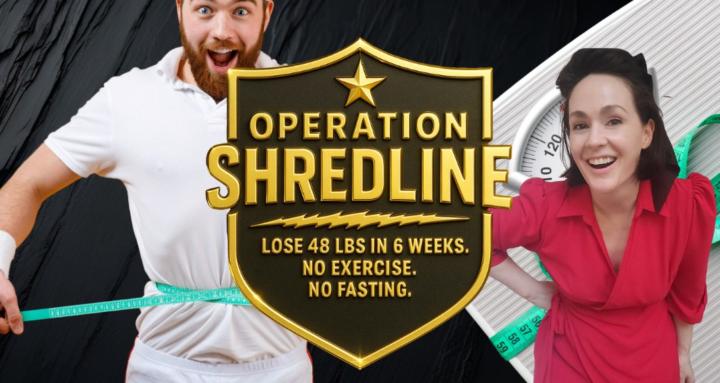
Get Shredded on a Deadline. For Men 35+ Who Want to Lose up to 48 lbs in 6 Weeks. Full-Body Transformation-No fasting, No Exercise
Leaderboard (30-day)
1

🔥
+152
2

+138
3

+114
4

+92
5
🔥
+87
Powered by