Elevare
Private
27 members
$19/month

Biological decline after 45 is a modern default, not your destiny. We exist to reverse that trajectory. This is a data-driven coaching program built for high-performing adults ready to engineer their vitality through a unified 3-pillar solution.
⚡ The Unified 3-Pillar Solution
True reversal requires targeting your physiology simultaneously across three interconnected biological levers:
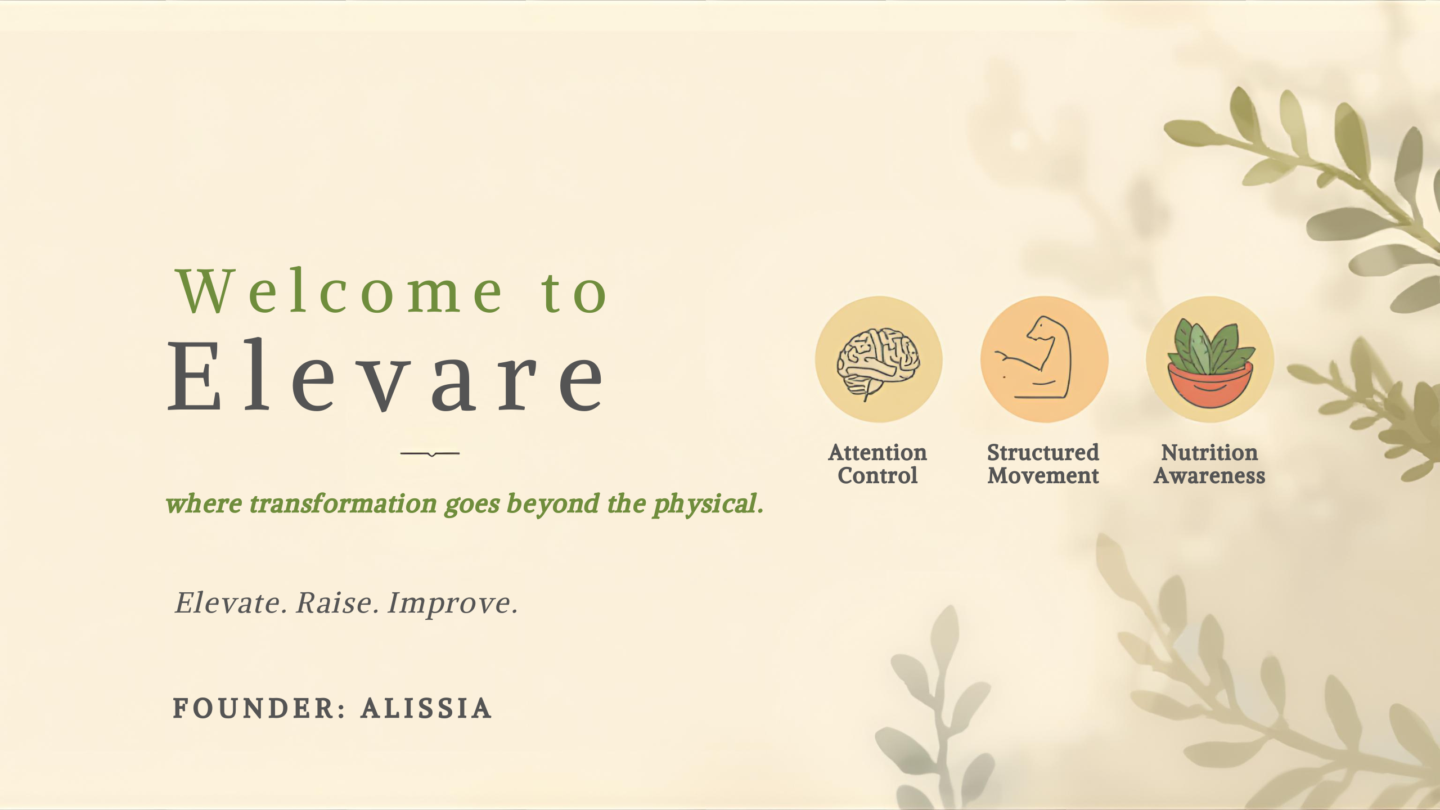
🧠 Attention Control: We repair sleep architecture and calm the nervous system to create a receptive chemical foundation.
💪 Structured Movement: We rebuild critical skeletal muscle mass to shield your metabolism, joints, and cognitive focus.
🥗 Nutrition Awareness: We optimize biochemical fueling for rock-steady blood sugar and sustained daily energy.
🏛️ The Premium Coaching Program
- Private Consultation:
- Group Sessions:
- 1:1 Private VIP Coaching
Stop guessing your health.