
Write something

Sep '25 •
🔥 Insights from my 2025 Sales - 54 Domains
2025 Sales Portfolio Breakdown Total domains: 54 Sold I pulled together some insights from my sales this year that you may find useful. This isn’t financial advice, I’m not telling you what to do or what works, only what I’ve found interesting in my own sales. Never take what I share as a guaranteed way to register domains or make money; results vary for everyone... 1. Length Matters 🦴 56% of sales were ≤7 characters. 🦴 These short invented names consistently sell in the $2K–$5K range, making them the bread and butter of my portfolio. 🦴 Insight: Short invented names act as more liquid assets in my portfolio, they’re easier to sell, even if individually smaller wins. 2. Double Keyword = Big Tickets 🦴 Only 13% of sales were keyword+keyword domains (MediaBlock, MagicHome, FlashCloud, TrustMethod, ProfitCharge, ShieldWise, RoadWard). 🦴 But these accounted for my largest sales of the year ($20K–$30K+). 🦴 Insight: Holding strong keyword generics can generate outsized returns. Volume may be low, but ROI is huge. 3. Two Invented Brandable Clusters 🦴 Short invented (≤7 letters): 56% of sales. Examples: Pakyo, Klua, Tigola, Vocoro, Fondora. 🦴 Longer invented (≥8 letters): 32% of sales. Examples: Convogo, Valorosa, Orgature, Centravo. 🦴 Insight: Buyers are split. 🦴 Startups lean toward snappy, easy-to-spell 5–7 letter coinages. 🦴 Larger or more formal companies sometimes prefer longer, romance-language inspired names that feel established. 4. Common Suffixes & Sound Patterns 🦴 -ora / -osa endings (Fondora, Valorosa, Panthra, Estrala, Travisia) 🦴 -o / -io / -ero endings (Vocoro, Povora, Coinero, Nexoro) 🦴 -ix / -ex / -trix style (Gravax, Yesdex, Countrix) 🦴 -ful / -ize endings (Hyperful, Monatize) 🦴 Insight: Phonetic DNA sells. Buyers gravitate to names that sound like other successful startups but still feel unique. Spotting these repeatable endings can guide future acquisitions. 5. Category Themes 🦴 Finance / Trust: TrustMethod, ProfitCharge, Cognier

Oct '25 •
"Stats"
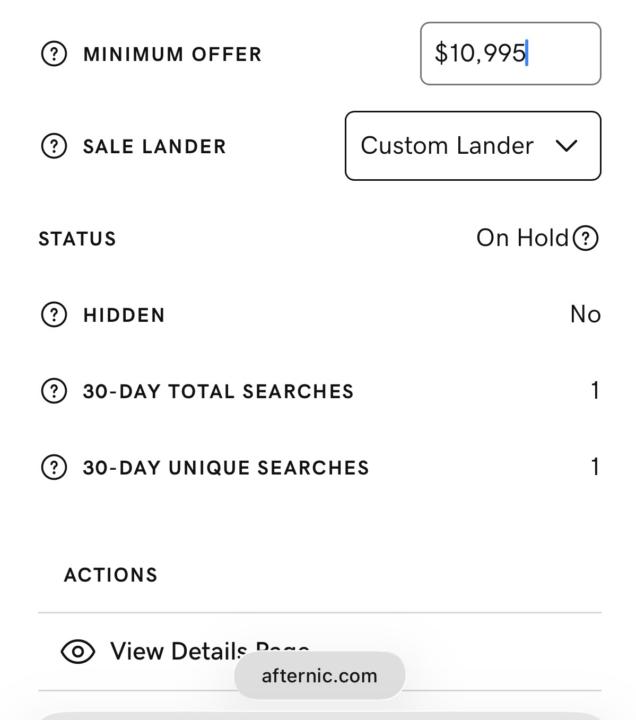
This is how much proxy metrics *needs* to show us about the traction and gravitas for a name. This is also why I ignore them on purpose. The question, considering this, may be *what* the proxy metrics show and *what* they do not show. I think what they show is all sorts of *frequency*. Frequency of search. Frequency of adoption. Frequency of occurence in natural language. None of that however explain anything about the nature of brand names. It can perhaps lead to the discovery of some (temporary?) correlation between some pattern and sell-through. Like the way symptoms can tell a doctor what ails a patient. But it tells the doctor nothing about how the body works. The underlying theory for practicing his profession, and the thing that enabled cures to be developed and administered by correlation, had *nothing* to do with statistics. Stats can never be an account of how a system works. It's astonishing to me that the domain aftermarket can not (refuse?) to see this. I'll share this one once it clears.
Oct '25 •
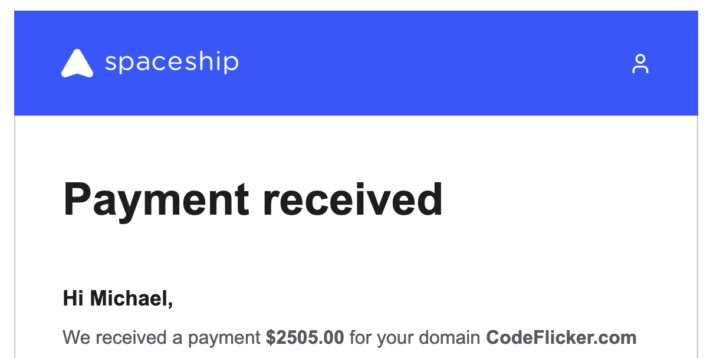
💥 First Spaceship.com Sale! 💥
I accepted a $2050 offer on CodeFlicker.com... CodeFlicker.com — Sale Analysis Form & Feel - 11 characters, two short words that are easy to recognize and spell. - The name sounds energetic and visual, combining a technical term with a creative image. - Reads naturally and looks balanced in a logo or wordmark. Signal & Associations - Code suggests programming, software, development, and technology. - Flicker brings to mind light, movement, animation, or quick visual change. - Together, the phrase feels like “a spark of code” or “where creativity and technology meet.” - The word pairing gives the sense of living, breathing code rather than static work. Reach / Versatility - Fits perfectly for a coding-related brand such as a dev platform, design studio, tutorial channel, or animation tool. - Also fits for a tech media brand, YouTube channel, or AI-driven creative company. - Because both words are simple and familiar, the meaning stays open to interpretation while still hinting at tech and creativity. Why It Could Sell Strongly - Strong emotional and visual appeal that makes it easy to remember. - Perfect for brands blending code and art, such as interactive design or digital storytelling. - The word “Flicker” carries an emotional spark that feels alive and dynamic, giving the brand personality. - Works well for slogans like “Where Code Comes Alive” or “Light Up Your Code.” Risks & Considerations - The term “flicker” can occasionally remind people of “Flickr,” the photo-sharing brand, though the context here is clearly different. - Slightly longer at 11 characters, but still compact enough for clean branding and social handles. Domainer Takeaways - Pairing a concrete technical word with a vivid visual one creates strong memorability. - Names that merge creativity and technology appeal to both software builders and design-driven founders. - The success of CodeFlicker reinforces that emotional language in tech names sells well when it feels natural and energetic.
Oct '25 •
2 Domain Sales! 🚀
I've sold 2 domain names recently, one an invented brandable and the other a keyword brandable. Both domains very similar to what you'll find in the daily expiring lists I share. Below is their analysis: StartFlame - Sold for $3977 Ordevo - Sold for $2,000 StartFlame.com - Sale Analysis Form & Feel - 10 characters including both words. - Two clear dictionary words: “Start” and “Flame.” - The phrase carries action and energy, like igniting a beginning. Signal & Associations - Start suggests launch, initiation, or new ventures. - Flame suggests passion, spark, heat, or ongoing energy. - Together the phrase communicates “ignite something” or “fuel a start” which makes it very usable in branding. Reach / Versatility - This name works in tech for a launch platform or SaaS, in creativity for studios or media, in wellness for motivational products, or in training and education for growth programs. - It provides a metaphor rather than a single definition which lets buyers apply it broadly. Why It Could Sell Strongly - Emotional resonance from words like “start” and “flame” which are motivational. - Startup friendly theme, perfect for early stage ventures. - Strong design potential for logos, slogans, and taglines. Risks & Considerations - Slightly longer than many brandables at 10 characters. - Flame is a common word which means the brand must build its own identity in a competitive space. Ordevo.com Sale Analysis Form & Feel - 7 letters which makes it concise and manageable. - Invented but easy to pronounce as “Or-de-vo.” - Simple enough to look good in logos and brand campaigns. Signal & Echoes - The “Orde” portion hints at order, orchestration, or organization. - The “vo” ending feels like evolution, innovation, or forward motion. - Put together the word gives the sense of “ordered evolution” or “structured progress.” Reach / Versatility - Works for tech, AI, SaaS, logistics, automation, finance, or creative platforms. - Because it is coined and abstract it does not limit the buyer to one vertical.
Sep '25 •
💯 Sold 2 domains recently...
🌐 StackSet.com This is a clean, two-word brandable that works especially well in the tech and software world. Why it works: Both “Stack” and “Set” are short, simple, and meaningful words. Together, they suggest technology stacks, coding frameworks, cloud infrastructure, or even productivity tools. It has a natural rhythm and balance that makes it easy to say and remember. Brandability: You could easily imagine a startup offering developer tools, SaaS products, or project management solutions with this name. It has that modern, tech-savvy appeal that founders love. 🤝 Symbro.com This is a invented 6-letter brandable with a strong, smooth sound. Why it works: It looks like a mashup of “Sym-” (suggesting symmetry, synergy, or symbolic) and “bro” (giving it a human, approachable, community feel). That makes it flexible - it could fit anything from a social platform, AI assistant, health app, or even a community-driven business tool. Brandability: Short, pronounceable, easy to spell, and feels friendly. Names like this are popular because they’re unique, ownable, and versatile across industries. 💡 How to Find Names Like These Look for short, punchy words or combinations (like “Stack” + “Set”). Think in 2-word pairings that are clear, balanced, and meaningful in the startup world. Experiment with invented blends, take a prefix that has positive or smart associations (“Sym-”, “Neo-”, “Vita-”) and mix it with something human or modern-sounding (“-bro”, “-zo”, “-via”). Keep it short — ideally 5–8 letters. Easy to say, easy to type. Think versatile. Don’t box yourself into one tiny niche. Names that feel broader tend to have higher value. 👉 Between the two, StackSet leans more corporate/tech infrastructure, while Symbro is softer and more consumer/social friendly. Together they’re great examples of the range of brandables that sell.
1-10 of 10
powered by
skool.com/domain-builder-society-3486
For those serious about mastering domain investing, founder of nameoffice.com, Rader offers insights into building a domain name side hustle.
Suggested communities
Powered by