
Write something

5h •
A Simple Way to Calculate Your Calories & Macros
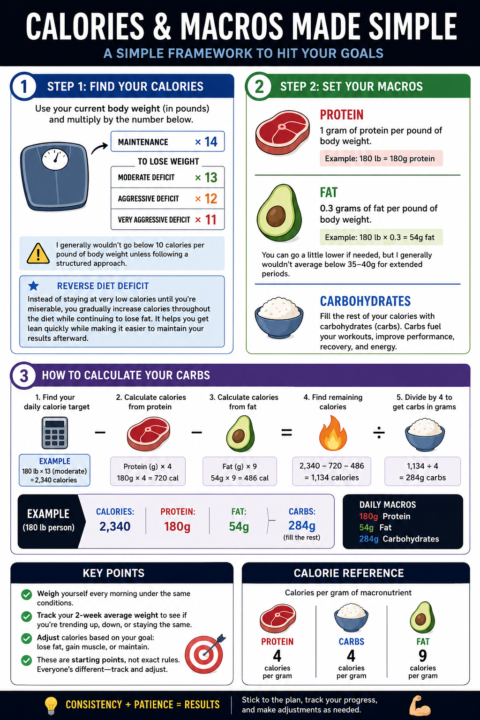
If you’re not sure where to start, here’s a simple method that works well for most people. These are starting points, not exact numbers. Stick with them for 2 weeks, weigh yourself every morning under the same conditions, and compare your 2-week average to see if your weight is trending up, down, or staying the same. Step 1: Find Your Calories Maintenance… - Current body weight × 14 To Lose Weight… - Current body weight × 13 = Moderate deficit - Current body weight × 12 = Aggressive deficit - Current body weight × 11 = Very aggressive deficit Personally, I don’t recommend going below 10 calories per pound of body weight unless you’re following a structured approach. One of the best methods I’ve used is my “Reverse Diet Deficit”. Instead of staying on very low calories until you’re burned out, you gradually increase calories throughout the diet while continuing to lose fat. It’s helped me get lean quickly while making it much easier to maintain my results afterward. If you want help setting that up, just ask. Step 2: Set Your Macros Protein… Start with 1 gram of protein per pound of your current body weight. Example: 180-pound person = 180 grams of protein Fat… Aim for about 0.3 grams of fat per pound of body weight. Example: 180 pounds × 0.3 = 54 grams of fat You can go a little lower if needed, but I generally wouldn’t average below 35–40 grams of fat per day for extended periods. Carbohydrates… Once you’ve set your protein and fat, fill the rest of your calories with carbohydrates. Here’s how: 1. Protein: 4 calories per gram 2. Carbohydrates: 4 calories per gram 3. Fat: 9 calories per gram Example (180-pound person eating 2,340 calories): - Calories: 2,340 - Protein: 180g × 4 = 720 calories - Fat: 54g × 9 = 486 calories The Math… 2,340 − 720 − 486 = 1,134 calories remaining 1,134 ÷ 4 = 284 grams of carbohydrates So your daily macros would be: - 🥩 180g Protein - 🥑 54g Fat - 🍚 284g Carbohydrates Remember, this is simply a starting point. Track your food consistently, monitor your 2-week average body weight, and adjust calories based on whether your goal is to gain, lose, or maintain weight.
0
0
2d •
Shoutout to Joe
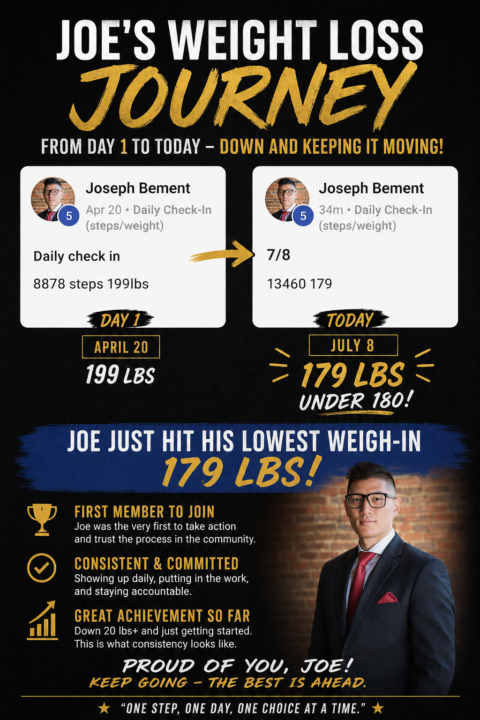
@Joseph Bement Joe was the very first person to join this community, and today he hit another huge milestone… 199 lbs ➡️ 179 lbs. That’s 20 pounds down since joining the community and his lowest weigh-in of the journey so far. No shortcuts. No gimmicks. Just showing up day after day, staying accountable, and trusting the process. That’s what consistent effort looks like. Proud of you, Joe. Thanks for setting the standard and proving that small daily habits really do add up. Keep going—we’re not done yet.
4d •
Food for thought…
Want to eat high protein without spending a fortune? Here’s a simple trick I use. One of the most important things you can do for your body is eat enough protein. Protein helps build and maintain muscle, keeps you fuller for longer, helps with recovery from workouts, and can make dieting much easier because it’s the most filling macronutrient. A good goal for most active people is to eat close to 1 gram of protein per pound of your goal body weight. You don’t have to hit it perfectly every day, but getting close will put you in a great spot. Now let’s talk about saving money. Instead of looking at the price of the food, I look at how much I’m paying for every 25 grams of protein. As a general rule, if I can get 25 grams of protein for around $1 or less, I consider it a great value. Here are a few examples: 🐟 Canned tuna – Usually around $1 per can for about 25 grams of protein. 🥤 Protein powder – Don’t just look at the tub price. Divide the total cost by the number of servings. A 30-serving tub for $30 is about $1 per serving. A $45 tub is about $1.50 per serving. 🍗 Chicken breast or chicken tenderloins – Watch for sales and freeze extra. They’re one of the best protein-per-dollar foods you can buy. 🦃 Lean ground turkey or lean ground chicken – Affordable, versatile, and easy to meal prep. 🥣 Fat-free Greek yogurt – High in protein, low in calories, and one of the best bargains in the dairy aisle. At the end of the day, don’t just shop based on the sticker price. Shop based on how much protein you’re getting for your money. A simple benchmark of about $1 for every 25 grams of protein can help you hit your protein goals while keeping your grocery bill under control.
0
0
6d •
Happy 4th everyone
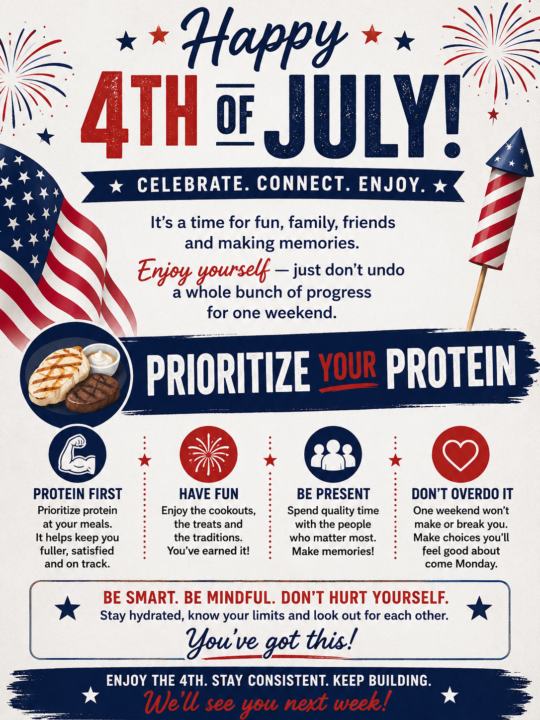
As we head into the Fourth of July weekend, remember this… Have fun. Eat the food. Spend time with your family and friends. That’s what the holiday is about. Just don’t let one weekend erase weeks or months of hard work. My biggest recommendation is to prioritize your protein first. Start with your lean protein before diving into everything else. It’ll help keep you fuller, make portion control easier, and you’ll still have room to enjoy some of your favorite holiday foods. This community isn’t about perfection—it’s about consistency. Enjoy yourself, make some memories, stay active if you can, drink plenty of water, and be safe. Come back next week ready to keep building. One good weekend is part of a healthy lifestyle. One bad weekend doesn’t have to become a bad month.
2
0
1-30 of 49
powered by
skool.com/diet-with-me-2370
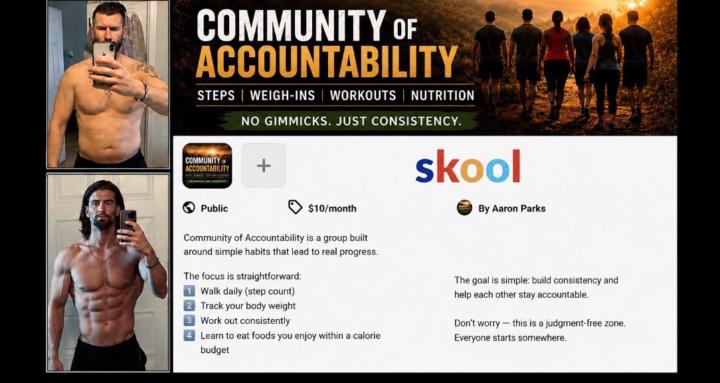
We walk. We lift. We track our food. We get lean. No magic pills — just real habits and accountability.
Suggested communities
Powered by