
Write something

Aug 22 •
Dark skin Storm casting
Storm has always been a goddess and an X-Men fan favorite ⚡ Now, Black fans are finally getting an Ororo Munroe who reflects the dark-skinned beauty they’ve spent years asking Hollywood to embrace. With Broadway star Maya Boyd officially stepping into the role in Marvel’s next X-Men film, her casting is opening a broader conversation about colorism, representation, and what it means to see a dark-skinned Black woman centered as powerful, glamorous, and undeniably beautiful in a blockbuster fantasy. Now comes the next challenge: giving Boyd the hair, makeup, lighting, and storytelling worthy of Storm—and maybe even the solo movie fans have been waiting for! https://www.ebony.com/maya-boyd-as-storm-is-a-win-for-dark-skinned-black-beauty/ 📸: Matt Winkelmeyer/Getty Images
0
0

Aug 8 •
Florida's new anti-DEI law threatens Sarasota arts groups' funding
Sarasota County commissioners to vote this month on tourist tax-funded arts grants https://www.artsbeat.org/p/new-florida-anti-dei-law-threatens-sarasota-arts-groups-funding
0
0
Aug 5 •
How Media Taught White America Racism Ended
Stories don't just entertain; they teach us how to interpret the world. Many popular narratives about racism resolve tension in ways that reassure white audiences that racism is exceptional, temporary, or already solved, rather than systemic, ongoing, or requiring collective responsibility. 🍎 The Bad Apple The Story: Racism is caused by a few bad individuals. What it teaches: If the openly racist person is removed, the problem is solved. How it comforts: White audiences don't have to examine culture, institutions, family socialization, or themselves. Racism becomes someone else's problem. What's missing: Systems don't require every individual to have malicious intent to produce unequal outcomes. 🤝 Token Diversity The Story: One Black friend, coworker, teacher, or leader proves the group is inclusive. What it teaches: Representation is treated as evidence of equity. How it comforts: White institutions can point to one relationship or one hire instead of examining patterns of power, belonging, retention, or decision-making. What's missing: Inclusion is more than presence. It's influence, safety, power, and shared decision-making. ❤️ The Redemption Arc The Story: The racist learns a lesson. What it teaches: The emotional climax becomes the racist's growth. How it comforts: The audience experiences relief because the person "became better," often without spending equal time on accountability, repair, or the long-term impact on those harmed. What's missing: Healing belongs to the people who were harmed, not just the person who caused harm. 🦸 The White Savior The Story: One morally courageous white person changes everything. What it teaches: Progress depends on exceptional white heroism. How it comforts: White audiences can identify with the hero rather than examining the broader system that made the hero necessary. What's missing: Most social change has been led by the communities directly affected, supported by many people over time—not rescued by one individual. 🎬 The Happy Ending
0
0

Aug 1 •
South Sound Town Hall Replay
Here you can find the replays of the first South Sound Town Hall we hosted yesterday! I just wanted to say thank you to all those who showed up and had the conversation. We welcome you to share your noticing's, questions, comments and feedback from last night as well. Feel free to make a post or comment below. Here’s Mickie's outline of what community discussions and conversations took place: 6:50pm-7:10pm: Introduction of panelist. Each panelist shared their background and skills they possess. We also shared what made us fall in love with theatre and asked for audience participation and heard from 3 peoples who shared their love for theatre. 7:10pm-7:43pm: We posed the questions “What does representation look/feel like?” and “What does safety look/feel like in theatre?” Followed by break for Town Hall 7:58pm-8:37pm: The second video Aleeza presents her PowerPoint presentation on White Supremacy in theatre, biases in theatre and the cast process, data showing what work still needs to be done in our community at Tacoma Little Theatre, Lakewood Playhouse, Tacoma Musical Playhouse, and Evergreen Playhouse, and deconstructing racism in the artistic atmosphere. Half way through this presentation, a conversation is started about putting Black actors in roles that are traditionally white and stories that are typically centered around whiteness and how that changes the story, the work that goes into that process, minstreling Black actors verses empowering Black actors, and how conversations are vital in the artistic and rehearsal process to set your POC up for success instead of fitting them into a box. 8:37pm-8:49pm: Community members were given time to share their joys, concerns, or speak freely on what they want to see in theatre, how they feel in theatre spaces, and to give thanks. 8:49pm-9:07pm: Action items were created. Now that we’ve had community discussions, shared what our thoughts and feelings are, how do we enact the change? What are our action items? Which, we came to the conclusion there needs to be more Town Halls, in fact, a Town Hall dedicated to the Artistic Directors and Board Members showing up and being asked questions and hearing community voices in person, Town Halls for designers, neurodivergent artists, free community workshops, and alliance of theatre’s being shown and taking action and making change together. People strongly wanted more community conversations. Town Halls was the biggest feedback we got for making change happen. More conversations.
4
0

Jul 30 •
The next chapter of Black theater is already unfolding on Broadway. 🖤
-via Ebony Black playwrights, directors, performers, and creatives are bringing new voices, new perspectives, and new audiences to the stage. Their work is broadening the stories that Broadway embraces while creating space for even more artists to follow. Read more in the comments as Our Stage, Our Stories: 250 Years of Black Theater in America concludes with a look at the visionaries shaping the future of American theater. https://www.ebony.com/250-our-stage-our-stories-act-five-the-future/ 📸: Joan Marcus
0
0

1-30 of 47
powered by
skool.com/deconstructing-theater-1925
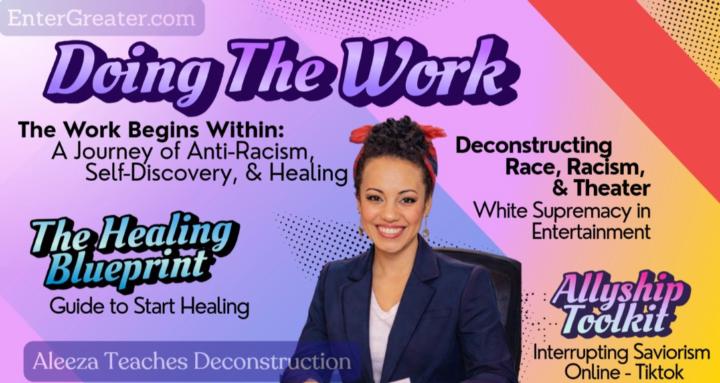
We're deconstructing white supremacy, antiblackness, race, and racism in theater and our daily lives.
Suggested communities
Powered by