
Write something
Pinned

Jan 31 •
Welcome to Long Game Strength
Most adults over 40 don’t need harder workouts. They need better decisions. After 40, the game changes. More volume and more intensity stop working the way they used to. Strength now requires: • Intentional training • Intelligent recovery • Measured progression • Consistency without extremes This community is for adults who want to stay strong, mobile, and capable for decades, not just the next 8 weeks. No fads. No burnout cycles. No “all or nothing.” We focus on durable strength that supports real life. If you want to stay strong, capable, and high-performing long term… you’re in the right place. – Josh
May 19 •
Why I Use Pauses Under Load
One thing I watch closely during training is whether someone can actually control a position once movement stops. That tells me a lot. When people move quickly, they can often work around weak positions without realizing it: - shifting tension - losing trunk position - compensating through the shoulders or hips - relying on momentum instead of control But the second you introduce a pause… the truth shows up pretty quickly. That’s what Dave is working on here. We’re not just trying to “complete reps.” We’re trying to improve: - positional awareness - stability under load - force production from good positions - control through the shoulder girdle and trunk This becomes especially important as adults get older. A lot of setbacks don’t happen because someone lacks strength. They happen because they can’t control force once they get into challenging positions. That’s a very different conversation. Pauses slow everything down enough for the body to actually learn: - where it is - how to stabilize - how to maintain structure under tension And in my experience, that carries over extremely well into long-term training quality. One thing I’ve learned over time: strength without control has limitations. The ability to own a position matters. — Josh
0
0
May 12 •
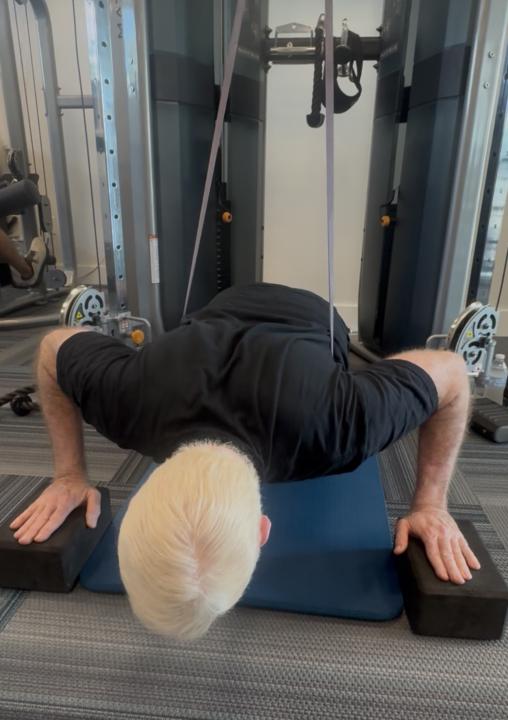
WHY HIP MOBILITY MATTERS MORE THAN MOST PEOPLE THINK
One of the biggest things I notice as adults age is loss of hip mobility. And when the hips stop moving well… the body starts compensating everywhere else. That often shows up as: • Low back tightness • Poor balance • Shortened walking stride • Knee discomfort • Difficulty getting up/down • Stiffness after sitting In this video, Dave is performing a simple split-stance hip mobility drill using a bench for support. The goal isn’t intensity. The goal is controlled movement through the hips while gently opening the front side of the body. Benefits of drills like this: • Better hip extension • Improved posture • Increased blood flow and mobility • More efficient walking mechanics • Better glute activation • Reduced stress on the lower back This is the type of foundational work that helps people stay active, capable, and independent longer. Mobility is not optional as we age. It’s maintenance for life.
0
0
May 7 •
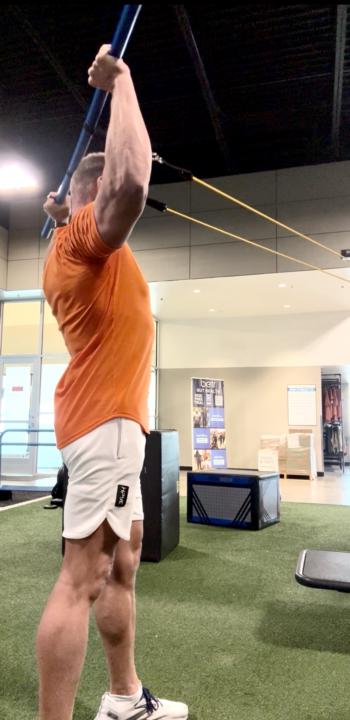
A warm-up should expose limitations, not hide them
What I see often is warm-ups becoming automatic. Bands get pulled. Arms move around. People go through the motions. But very little attention is paid to what the movement is actually revealing. Movements like external rotations can tell you a lot: - Is the shoulder moving freely? - Can rotation be controlled without compensation? - Is the trunk staying organized? - Does tension stay where it should? Those answers matter before heavier loading starts. Sometimes a limitation is not a strength issue. It’s: - restricted tissue quality - poor positioning - loss of rotational control - inability to stabilize under tension That’s where: - soft tissue work - controlled positional work - slower tempos - reduced load …can become useful tools. The goal is not to “feel warmed up.” The goal is to understand what your body is prepared to do that day. A good warm-up gives information. And that information should influence how training is approached. — Josh
0
0
May 5 •
What strength actually buys you
There’s a reason I care about how people move. It’s not about workouts. It’s not about numbers. It’s about this. Being present. Being engaged. Being able to show up fully in moments that matter. What I see over time is this: People don’t lose independence all at once. They slowly give it up. - They stop loading their body - They avoid positions that feel unstable - They move less, and compensate more And eventually… They’re there, but not really in it. Strength real, strength changes that. It allows you to: - stay on your feet longer - move without hesitation - participate instead of observe This is the long game. Not just training. Capacity. — Josh
1
0
1-30 of 42
powered by

skool.com/concierge-vitality-2713
Strength, mobility, and performance for adults committed to playing the long game.
Suggested communities
Powered by