
Pinned

👑
⭐
5d •
Welcome to Clief Notes. Here's where to start.
1. Go check out 📚Navigating The Course to see how to get around and what's here. 2. Start with The Foundation. Concepts, folder architecture, prompting framework. Everything else builds on this. 3. Check in at the bottom of each lesson. Polls, discussion posts, other members working through the same stuff. Use them. 4. When you're ready to build real things join in on our Biweekly competitions and win some real cash. ⭐ Competitions Mega Thread 5. If you are wanting to dive into the masterminds, grab all the past templates, artifacts and resources. Upgrade and head into the The Vault for Premium and The Drawing Room (VIP) for VIP 6. Post your work. Ask questions. Help others when you can. What are you here to build?
Pinned
👑
⭐
2d •
📣 New: one onboarding session, every week
I want to meet new members earlier, not months after you join. Right now a lot of people join the paid tiers and figure things out on their own. That's slower for you and it means I don't get to know you until you've already won a competition or posted in the Vault a few times. Further our Afternoon and High Tea calls 🫖 High Tea 9: The Graph the first bit of each call has been ALOT of intros and I think that eats away valuable time (not that getting to know you is not valuable) that members who have been around for a while look forward to during our live sessions. So starting this week, every new VIP and Premium member gets a standing invite to a short session with me and the mods. Calendar · Clief Notes 🕑 Wednesdays, 2pm 🎯 Open to new VIP and Premium members We'll cover: 🔑 Getting into Discord 🧭 Finding your way around 🤝 Getting the most out of other members 🏆 How to win the competitions ❓ Quick questions at the end (and feedback on what you really want out of value and such, helps me decicde if I need to add or change anything in the community) 30 minutes. One goal: you walk out knowing the community and I know your name.
22h •
Jake, you F*&^%ed up... you've unleashed an animal.
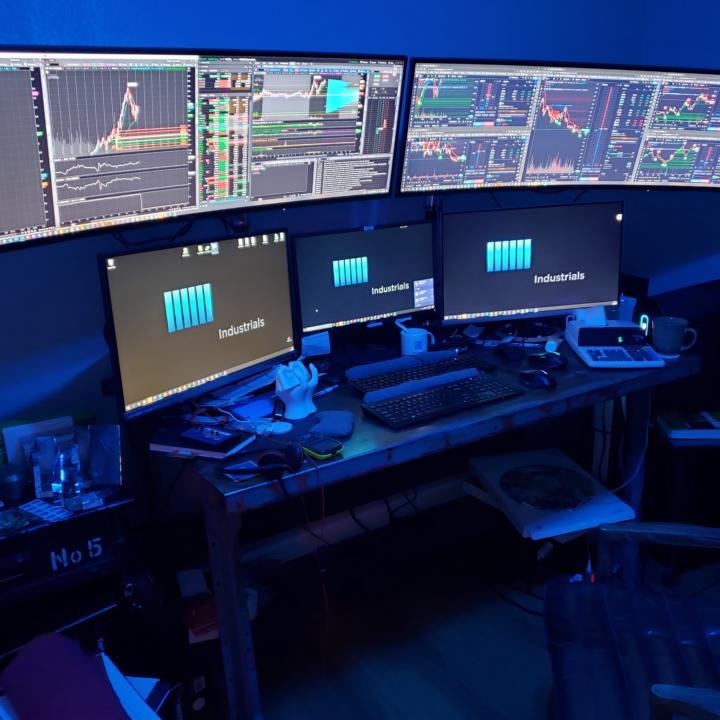
Designing systems & products, PLUS making them look good, was my specialty. Now I can build without having to lean on developers! This is great, I'm so happy! and in case anyone doubts my commitment to my craft, here's how I roll (see below). I can shift between setups in about 5 seconds, the mounts were almost as expensive as the monitors and it's a good thing my desk is made of cold-rolled steel, if anyone else tried this on some particle board nonsense, the whole desk would flip over and end them... that'd be an ironic epitaph written on your tombstone... killed by computer! 🤣🤣🤣

Mar 15 •
🏁 Foundations 4.4 Check-In
You just wrote a CLAUDE.md for one of your projects. Vote below, then drop yours in the comments. Bonus points if you ran the same task with and without it and can tell us the difference.
Poll
265 members have voted
Apr 4 •
🏁 The Archive 3.4 Check-In
Vote below, then tell us in the comments: where are you with computational orchestration right now?
Poll
164 members have voted
1-30 of 2,301

skool.com/cliefnotes
What we give away free beats most paid courses. Build durable AI systems with a Marine vet and Edinburgh researcher. 40+ lessons, growing.
Leaderboard (30-day)
1

🔥
+1724
2

🔥
+1586
3

+1505
4

+869
5

+605
Powered by