
Mar 22 (edited) • 🛠️ Show Your Work
I Run 10 YouTube Channels. I Don't Make a Single Video. Here's what that actually looks like.
I woke up this morning to 10 fresh podcast episodes.
Fully researched. Scripted. Narrated. Visuals timed to every beat. Published to YouTube, RSS, and my own website.
I didn't make any of them.
A machine on my desk did. While I slept.
I launched these channels at the end of February. It hasn't been a month yet. A channel is even pulling 1,000+ views and gaining subscribers - with zero ads, zero promotion, zero outreach.
But here's what I need you to understand: this is not a prompt.
When people hear "automated content," they picture someone typing a topic into a chatbox and hitting publish. That's not what this is. That's not even close.
What I built is a multi-stage production pipeline. Not a single generation step - a sequence of independent systems, each with its own job, its own rules, and its own quality bar. Every stage has to pass before the next one starts. If something isn't good enough, it gets caught, flagged, and redone automatically.
Here's what that actually means in practice:
Every episode starts with real research. Not "summarise this topic." Actual source-finding, fact-checking, angle evaluation. The kind of editorial groundwork a good producer would do before writing a single word. Most automated content skips this entirely. Mine can't - the pipeline won't let it move forward without it.
Then there's the writing. And this is where I spent most of my 45 days. I didn't just generate scripts - I built an entire set of rules around how spoken language works differently from written language. How rhythm changes when someone is listening instead of reading. How a pause lands. How a transition should feel. Early versions sounded like a textbook. Now they sound like someone talking to you.
After the writing comes the part most people don't think about: quality control. Every script gets evaluated across multiple dimensions before it moves on. There's a hard pass/fail threshold. I've watched the system reject its own output dozens of times and come back with something genuinely better. Nothing mediocre gets through. That's not a nice-to-have - it's the reason the content performs.
Voice is another layer entirely. Each of my 10 channels has its own distinct voice identity - its own personality, its own tone. I'm using Vois for the voice generation. The voice is where most automated content falls apart and starts sounding hollow. I wasn't willing to compromise there.
Then there's the visual layer - making sure what you see on screen actually matches what you're hearing, moment by moment. That choreography is its own craft. Early versions looked like a random slideshow. Now the timing is intentional.
And then there are layers after that - production, packaging, distribution - that I won't get into here.
The point is: this isn't one step. It's many. And the quality comes from the fact that each one has standards.
Here's the framework I keep coming back to:
Prompting is asking a question. What I built is a factory.
A prompt gives you one output. A production system gives you research, writing, quality control, creative layers, and distribution - all running autonomously, every single day, without you touching it.
I've been refining this every single day for 45 days. Over 200 iterations. Not just the automation. The craft. How stories get structured. How a voice handles a dramatic pause versus a smooth transition. How visuals choreograph against narration. The kind of details a human editor would obsess over - I just taught a system to obsess over them too.
The whole thing runs locally on one machine sitting on my desk. Voice generation, image creation, video assembly - all of it happens on that box. I don't pay a single cent for any of it. The only external service is the intelligence layer for research and writing, which runs on my existing Anthropic subscription - and even that costs under a dollar a day for all 10 episodes. So the actual running cost of producing 10 episodes a day is basically electricity. One machine doing the work of what would otherwise be a small production team.
I'm scaling to 30 channels. The architecture supports it - adding a new channel is configuration, not engineering. Different voice, different visual identity, different editorial angle. Same engine.
But the real insight was this: quality compounds. When every episode clears a real bar, the algorithm notices. When you're consistent, the audience notices. When you're publishing daily across ten channels without missing a single day, both of those things stack faster than you'd expect.
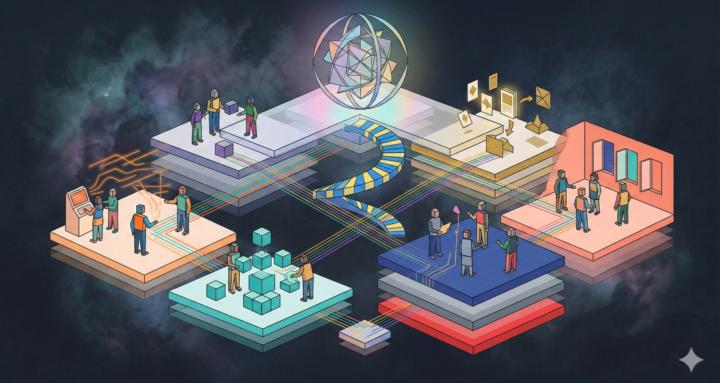
That screenshot attached? That's the map. That's what "automated content" actually looks like when you refuse to let anything mediocre out the door.
What would you build if you had a production system that could research, create, and publish one polished video every day - completely hands-free?
98
177 comments
I Run 10 YouTube Channels. I Don't Make a Single Video. Here's what that actually looks like.
skool.com/cliefnotes
Jake Van Clief, giving you the Cliff notes on the new AI age.
Leaderboard (30-day)
1

+1219
2

+858
3

+820
4

+788
5

+661
Powered by