
7h • 📚 Resources & Finds
Did Fable Predict Grok?
No.
Fable did something more useful.
When I thought I might lose it, I asked it to define a one-week outcome: make the workspace safer, more durable, and less dependent on any one model behaving perfectly.
Part of that work was a protection boundary around model action.
Later, while using Grok, a risky outbound action met that boundary and was contained.
That does not mean Fable predicted Grok.
It means the system learned from a class of risk, not from one model.
This is the abstraction shift I think more people need to make.
Most workflows stop at:
1. Prompt
2. Output
3. “Did it work?”
But consequential work needs a higher layer:
1. Define the outcome.
2. Set the constraints.
3. Make the model replaceable.
4. Put independent boundaries around action.
5. Verify what happened outside the model’s own claims.
Frontier models are smarter than most people realise.
That is exactly why we need to stop treating them like chat interfaces and start designing the systems they operate inside.
Full Deep Dive at: www.aris-space.com/documents/workflows/did-fable-predict-grok
Build for the class.
Keep the model replaceable.
Trust the evidence.
//A<3
11
2 comments
Did Fable Predict Grok?
skool.com/cliefnotes
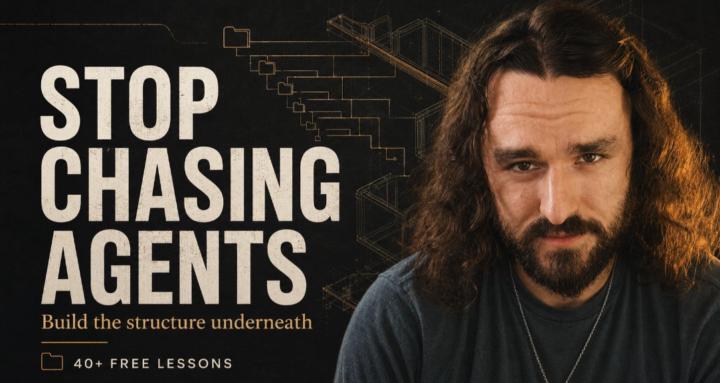
What we give away free beats most paid courses. Build durable AI systems with a Marine vet and Edinburgh researcher. 40+ lessons, growing.
Leaderboard (30-day)
1

🔥
+1723
2

+1259
3

+1028
4
+926
5

+739
Powered by