User
Write something
Weekly Elite Careers Call is happening in 3 days
VIDEO EDITING INTERN
I'm looking for someone hungry who wants coaching but can't afford it. I'll coach you for free in exchange for 5 hours/10 hours a week of content admin — uploading videos, writing descriptions, scheduling posts, cutting clips. If that's you, message me.
2 Proven Strategies to Accelerate Your Corporate Law Career Post-Uni
Starting out in corporate law can feel like stepping into uncharted territory — but with the right approach, you can position yourself far ahead of the curve. 𝐇𝐞𝐫𝐞 𝐚𝐫𝐞 𝐭𝐰𝐨 𝐬𝐭𝐫𝐚𝐭𝐞𝐠𝐢𝐞𝐬 𝐜𝐨𝐧𝐬𝐢𝐬𝐭𝐞𝐧𝐭𝐥𝐲 𝐮𝐬𝐞𝐝 𝐛𝐲 𝐬𝐮𝐜𝐜𝐞𝐬𝐬𝐟𝐮𝐥 𝐜𝐚𝐧𝐝𝐢𝐝𝐚𝐭𝐞𝐬 1️⃣ 𝐓𝐚𝐫𝐠𝐞𝐭𝐞𝐝 𝐈𝐧𝐭𝐞𝐫𝐧𝐬𝐡𝐢𝐩𝐬 𝐚𝐧𝐝 𝐕𝐚𝐜𝐚𝐭𝐢𝐨𝐧 𝐒𝐜𝐡𝐞𝐦𝐞𝐬 Top firms like Sidley Austin, White & Case, and Clifford Chance recruit with precision. To gain a genuine edge, secure vacation schemes or internships early. These give you: • First-hand exposure to high-value work, • Insights into firm culture and expectations, • A direct pathway towards a training contract. Approach each application with focus: tailor it to the firm, and show how your experiences meet their commercial priorities. 2️⃣ 𝐁𝐮𝐢𝐥𝐝 𝐒𝐭𝐫𝐨𝐧𝐠 𝐂𝐨𝐦𝐦𝐞𝐫𝐜𝐢𝐚𝐥 𝐅𝐥𝐮𝐞𝐧𝐜𝐲 Corporate law is as much about understanding deals and industries as it is about drafting contracts. Elite firms look for candidates who can connect legal advice with commercial impact. Stay engaged with: • Business and financial news, • Recent transactions in key sectors, • Trends shaping the industries these firms advise. This preparation doesn’t just improve interviews — it enables you to contribute meaningfully from day one. 𝐏𝐫𝐨 𝐈𝐧𝐬𝐢𝐠𝐡𝐭 Cultivate your professional presence. Attend firm events, contribute to discussions, and demonstrate a consistent interest in the sector. Success in corporate law isn’t about a single application — it’s about building evidence over time that you can add real value. What’s the most effective step you’ve taken to stand out in corporate law recruitment?
1
0
An Oxford Degree Won't Guarantee You a Training Contract
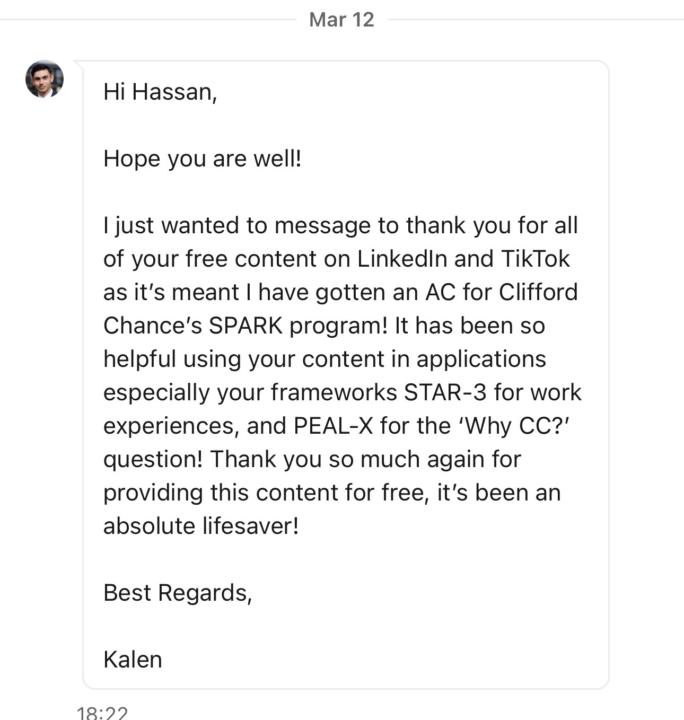
It’s a hard truth, but one that too many students learn the hard way. I’ve worked with Oxford PPE graduates, all with strong academic backgrounds and solid legal experience, who still faced rejection from Magic Circle and top US firms. Despite the prestigious name, they struggled to make the cut. 𝐇𝐞𝐫𝐞’𝐬 𝐰𝐡𝐲 Top firms aren’t looking for a famous university name or a flawless academic record. They want commercially fluent, evidence-driven applications that clearly prove your value. A generic "hard-working" claim won’t cut it. They want line-by-line proof — that’s where frameworks like PEAL-3™ and STAR-3™ come in. These frameworks ensure you show exactly how your experience aligns with their needs, whether it’s handling complex client issues or leading cross-border deals. In fact, the acceptance rates at elite firms are brutal — only about 2% at Magic Circle firms and under 1% at top US firms. Prestige might help get your foot in the door, but precision is what gets you through. The firms want candidates who have not just worked hard but can demonstrate their impact in a way that directly aligns with the firm’s goals. 𝐒𝐭𝐫𝐚𝐭𝐞𝐠𝐢𝐜 𝐓𝐚𝐤𝐞𝐚𝐰𝐚𝐲 If you're relying on the prestige of your degree alone, you're missing the mark. It’s time to shift focus and prove your value with structured, firm-specific answers. Which career myth do you think misleads the most students?
1
0
Why “Prestige” Isn’t Enough: What Elite Firms Actually Want
In my years as a recruiter guiding candidates through corporate law recruitment, I’ve seen many assume that a prestigious degree or the right connections will guarantee an offer. But the truth is far more strategic. 𝐇𝐞𝐫𝐞’𝐬 𝐰𝐡𝐚𝐭 𝐭𝐨𝐩 𝐟𝐢𝐫𝐦𝐬 𝐚𝐫𝐞 𝐚𝐜𝐭𝐮𝐚𝐥𝐥𝐲 𝐥𝐨𝐨𝐤𝐢𝐧𝐠 𝐟𝐨𝐫: 1⃣ 𝐈𝐧𝐭𝐞𝐥𝐥𝐞𝐜𝐭𝐮𝐚𝐥 𝐀𝐠𝐢𝐥𝐢𝐭𝐲 𝐚𝐧𝐝 𝐂𝐫𝐞𝐚𝐭𝐢𝐯𝐢𝐭𝐲 Elite firms want candidates who can think critically and solve problems under pressure. It’s not just about what you know, but how you apply that knowledge. 2⃣ 𝐂𝐨𝐦𝐦𝐞𝐫𝐜𝐢𝐚𝐥 𝐀𝐜𝐮𝐦𝐞𝐧 Firms like Clifford Chance, White & Case, and Sidley Austin value candidates who demonstrate a strong understanding of how business works. Your application must connect your skills to their mandates, deals, and clients. 3⃣ 𝐂𝐮𝐥𝐭𝐮𝐫𝐚𝐥 𝐅𝐢𝐭 𝐚𝐧𝐝 𝐓𝐞𝐚𝐦𝐰𝐨𝐫𝐤 While academic excellence is important, firms like Ropes & Gray and Ashurst emphasize the ability to work collaboratively and maintain resilience under stress. 4⃣ 𝐀 𝐏𝐞𝐫𝐬𝐨𝐧𝐚𝐥 𝐓𝐨𝐮𝐜𝐡 𝐢𝐧 𝐘𝐨𝐮𝐫 𝐀𝐩𝐩𝐥𝐢𝐜𝐚𝐭𝐢𝐨𝐧 A generic cover letter? A red flag. Tailor every sentence to reflect why the firm specifically excites you. To land that coveted training contract, start by thinking like a future associate — focus on the strategy, the execution, and the specific value you bring to the firm. 𝐒𝐭𝐫𝐚𝐭𝐞𝐠𝐢𝐜 𝐓𝐚𝐤𝐞𝐚𝐰𝐚𝐲 Treat your application as a transaction — it’s not about getting in, it’s about proving why you belong there. What do you think is the most overlooked factor in securing a role at top firms?
0
0
Why “Prestige” Isn’t Enough: What Elite Firms Actually Want
𝐈𝐧𝐬𝐢𝐝𝐞 𝐚 𝐁𝐢𝐥𝐥𝐢𝐨𝐧-𝐏𝐨𝐮𝐧𝐝 𝐃𝐞𝐚𝐥: 𝐓𝐡𝐞 𝐂𝐨𝐫𝐩𝐨𝐫𝐚𝐭𝐞 𝐋𝐚𝐰𝐲𝐞𝐫’𝐬 𝐑𝐨𝐥𝐞 𝐚𝐭 𝐄𝐯𝐞𝐫𝐲 𝐒𝐭𝐚𝐠𝐞
Most people assume deals happen when signatures hit paper. In reality, by the time ink meets contract, the real work has been done — and by corporate lawyers at every stage. 𝐇𝐞𝐫𝐞’𝐬 𝐰𝐡𝐚𝐭 𝐭𝐫𝐮𝐥𝐲 𝐡𝐚𝐩𝐩𝐞𝐧𝐬 𝐛𝐞𝐡𝐢𝐧𝐝 𝐭𝐡𝐞 𝐬𝐜𝐞𝐧𝐞𝐬: 1. 𝐏𝐫𝐞-𝐝𝐞𝐚𝐥 𝐬𝐭𝐫𝐚𝐭𝐞𝐠𝐲 Before a single clause is drafted, lawyers assess viability: Which structure maximises value? Which jurisdictions apply? Where are potential legal and commercial obstacles? Early guidance shapes the deal itself. 2. 𝐃𝐮𝐞 𝐝𝐢𝐥𝐢𝐠𝐞𝐧𝐜𝐞 This is investigative, forensic work. Contracts, IP, employment terms, regulatory compliance — every element is examined to uncover hidden risks that could erode value or derail the transaction. 3. 𝐍𝐞𝐠𝐨𝐭𝐢𝐚𝐭𝐢𝐨𝐧 Lawyers balance ambition and protection. They translate complex commercial aims into legally enforceable terms, making sure clients get what they need, not just what they ask for. 4. 𝐃𝐫𝐚𝐟𝐭𝐢𝐧𝐠 𝐚𝐧𝐝 𝐫𝐞𝐯𝐢𝐬𝐢𝐧𝐠 Drafting isn’t clerical. It’s about structuring deals, defining timelines, allocating responsibilities, and embedding protections for risk. Precision here prevents multi-million-pound disputes. 5. 𝐑𝐞𝐠𝐮𝐥𝐚𝐭𝐨𝐫𝐲 𝐜𝐥𝐞𝐚𝐫𝐚𝐧𝐜𝐞 Competition law, market regulations, cross-border approvals, data privacy — missing one detail can kill the deal. Lawyers coordinate with authorities and advisers to ensure smooth compliance. 6. Signing & closing All moving parts — people, documents, funds — must align perfectly. Lawyers orchestrate the handover, ensuring risk is mitigated and obligations are clear. In short: the legal work isn’t paperwork. It’s orchestration, foresight, and strategic alignment — turning complex, high-stakes transactions into reality. 𝐒𝐭𝐫𝐚𝐭𝐞𝐠𝐢𝐜 𝐓𝐚𝐤𝐞𝐚𝐰𝐚𝐲 In major deals, corporate lawyers are not mere scribes. They are engineers, navigators, and architects — shaping billion-pound transactions at every turn. Next time you read a deal announcement, ask yourself: Which stages did the lawyers influence — and how did they actually create value behind the scenes?
0
0
𝐈𝐧𝐬𝐢𝐝𝐞 𝐚 𝐁𝐢𝐥𝐥𝐢𝐨𝐧-𝐏𝐨𝐮𝐧𝐝 𝐃𝐞𝐚𝐥: 𝐓𝐡𝐞 𝐂𝐨𝐫𝐩𝐨𝐫𝐚𝐭𝐞 𝐋𝐚𝐰𝐲𝐞𝐫’𝐬 𝐑𝐨𝐥𝐞 𝐚𝐭 𝐄𝐯𝐞𝐫𝐲 𝐒𝐭𝐚𝐠𝐞
1-30 of 114
powered by
Elite Careers Strategy Gateway
skool.com/city-careers-coach-8722
Offer-Engineering for elite careers (Corporate Law • IB • PE). Gate-by-gate templates + weekly live drills.
Evidence on file for all outcomes.
Build your own community
Bring people together around your passion and get paid.
Powered by