
Write something

🔥
10d •
Greeting in the name of Jesus Christ
My name is Gulraiz Christain from Pakistan I am a Bron again *CHRISTIAN* Thank God that I have been baptized with water and God has given me the baptism of the Spirit God use me for his serving in Pakistan I'm doing God serving in Pakistan last 8 year here thanks God . Our vision :- God is love and spreading the love of God and gospel of Jesus Christ to every single soul And baptize him in the name of Jesus Christ ( Matthew 28 : 19-20 ) Your brother & friend Pastor Gulraiz Christain from Pakistan
0
0
🔥
12d •
Greeting in the name of Jesus Christ
I am thankful to God for you and God has chosen us for the world in which billions of people live so that we can serve Him and achieve salvation and everlasting life. The Lord says that you are not but I have chosen you from this world God has the purpose in everything and everything. No work or thing happens without God's will I believe that God has mixed us out of this great world. There is definitely a purpose in God
Jan 28 •
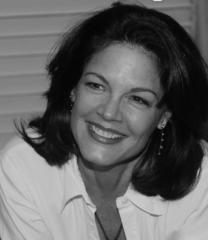
Welcome. I’m glad you’re here.
Christ-in-Kundalini is a space for exploring spiritual life as something lived and felt. I hold the path of spiritual growth as deeply personal, and this work is designed to meet you where you are—whether you are new to yoga or Christianity, returning after time away, or long practiced. The work unfolds throughout the year, loosely following the Christian calendar. The intention is not to move toward a single belief, but to stay present with what is forming through embodied practice, reflection, and creative attention. You’ll see the words Shape, Symbol, and Symbiosis here: Shape speaks to the body and the stories we live. Symbol points to the language that helps us touch what is deeper than words. Symbiosis names the space where sensing and knowing meet. This is an interspiritual space that honors many paths. I'd love to hear yours. xxjackie
20d •
"Get on your knees"
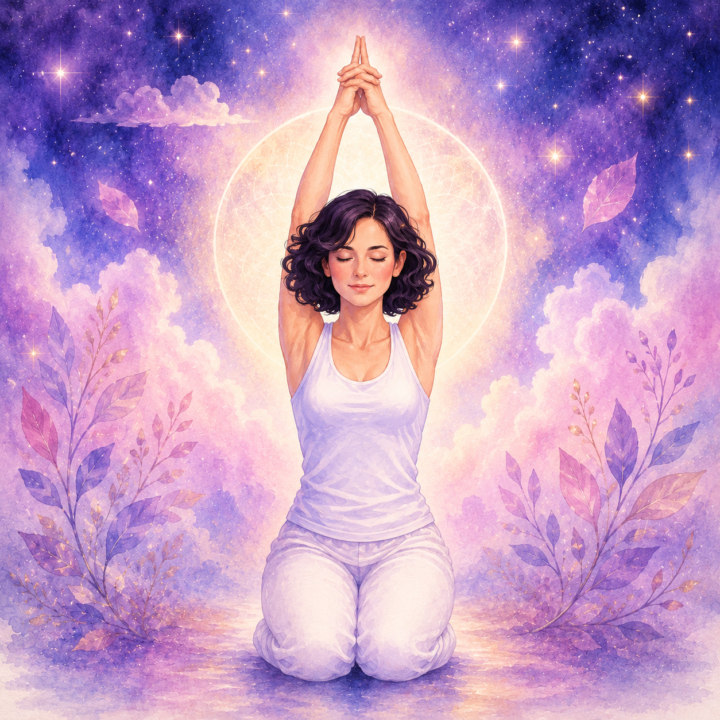
About five days ago, I was in bed struggling with some anxiety. It was still dark and I was torn: do I get up? Do I stay in bed with all my looping thoughts? And then there was this voice, strong but not commanding: “Get on your knees, Jackie.” And so I did. In Sat Kriya. Seven years ago, I used Sat Kriya to calm my nervous system after a debilitating bout with Guillain-Barré Syndrome, an illness that affects your peripheral nervous system. I couldn’t walk for weeks. After I was “stabilized,’ I had a cancerous tumor removed from my kidney that was discovered during diagnosis. I was healing, but not quite. Getting on my knees was the only thing I could do. And everyday for 40 days, I did. Then it was 60, Then it was 90. And then I was off the Gabapentin and into another stage of my life. It was after that I joined a Kundalini 200 hour cohort, got my certification with Brett Larkin & Guru Singh, so amazed I was but the effectiveness of Kundalini—in a three-body way. Not partitioned. Whole. Now seven years later I’m about to finish a 300-hour certification with Guru Singh. And I’m back on my knees. This time the experience is different. Every day of Sat is different. You wouldn’t think so. You would think every day of that 40 is the same. But what I’ve found is that in each day there is something new to discover. My body speaks to me. It expresses itself through posture, breath, mantra, drishti, mudra, movement. Each morning before I rise, I listen to scripture. I’m a practicing Catholic, and I say practicing because that’s what Christianity is for me. A practice. Sat Kriya, for me, is an expression of that scripture. Not only of prayer, though it is or can be that, but of story. For instance, yesterday, my body was the “narrow gate.” “Enter through the narrow gate…” —Matthew 7:13 After listening to the reading on my Hallow app, I thought my practice that day would be about drishti. About where and how I placed my gaze. But then I discovered I wasn’t moving through the gate.
1
0
23d •
Happy Sun; Happy Fathers!
Welcome to our new members, and blessings today to all the fathers, husbands, brothers, grandfathers, and all the men who tend and hold the field for their families and communities. Since today is also the Solstice, it feels like a good day to share a little sun blessing. Many Kundalini classes end with the traditional Long Time Sun song. This is a beautiful version from Aykanna, featuring Pauline, who, like me, is part of Guru Singh’s Kundalini University 300-hour cohort. So on this day of long light, Father’s Day, and Sun energy, may we pause for a moment and receive the blessing: May the long time sun shine upon you. May all love surround you. And may the pure light within you guide your way on. Love, Jackie https://open.spotify.com/track/7J3vmQ0QJFYZXz0up0qFaR?si=cfc1cead56424af0
2
0

1-30 of 48
powered by
skool.com/christ-in-kundalini-8393
Christ-in-Kundalini combines ancient yogic wisdom and the teachings of Jesus into a unique embodied writing and storytelling experience.
Suggested communities
Powered by