
Write something

Apr 13 •
🍪 Zero Sugar Oreos… Are They Actually Better?
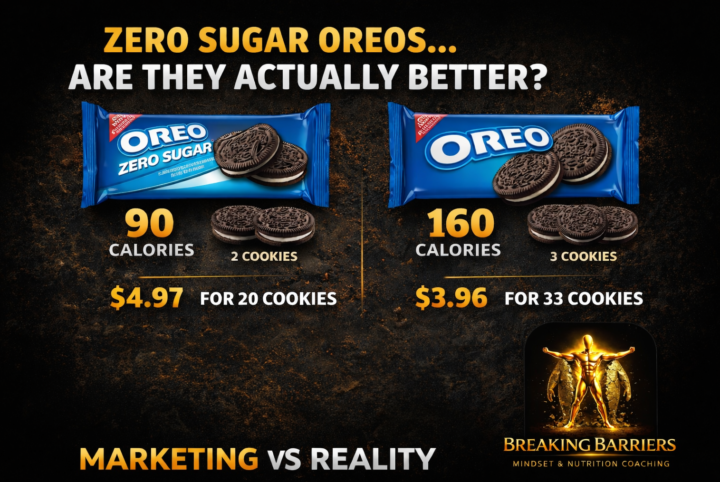
🍪 Zero Sugar Oreos… Are They Actually Better? Sounds like a win, right? “Zero sugar” “Lower calories” “Healthier choice” Let’s slow that down for a second and actually look at it. 🔍 The Numbers Don’t Lie 👉 Zero Sugar Oreos 90 calories for 2 cookies 👉 Regular Oreos 160 calories for 3 cookies At first glance… looks like a big difference. But here’s the reality: ➡️ 2 regular Oreos = about 106 calories ➡️ 2 zero sugar Oreos = 90 calories 💥 That’s a difference of 16 calories Not exactly life-changing. 💰 Now Let’s Talk Cost 👉 Zero sugar: $4.97 for 20 cookies 👉 Regular: $3.96 for 33 cookies That means: Zero sugar = ~25 cents per cookie Regular = ~12 cents per cookie 💥 You’re paying DOUBLE for… basically the same thing 🧠 What’s Really Going On Here? This is a classic example of: 👉 Marketing > Reality They changed the label Adjusted the serving size And made it feel like a better choice But when you actually break it down… ➡️ Calories are almost the same ➡️ Portion control is still required ➡️ The results won’t magically change 🚫 The Biggest Mistake People Make Thinking: “It’s zero sugar… so I can eat more” That right there? That’s how progress stalls. ✅ The Truth You Actually Need Fat loss doesn’t care about labels. It cares about: Total calories Consistency Awareness 💥 Bottom Line 👉 If you like Oreos… eat Oreos 👉 Just don’t lie to yourself about them Because this isn’t a “health food” It’s just: A different version of the same treat 🔥 Real Talk You don’t need “better junk food” You need: 👉 Better habits 👉 Better awareness 👉 Better decisions when it matters If this hit home, drop a 🍪 below And tell me… 👉 Would you have fallen for this one before reading this?
Mar 14 •
🍽️ When You’ve Been Overweight Since Childhood
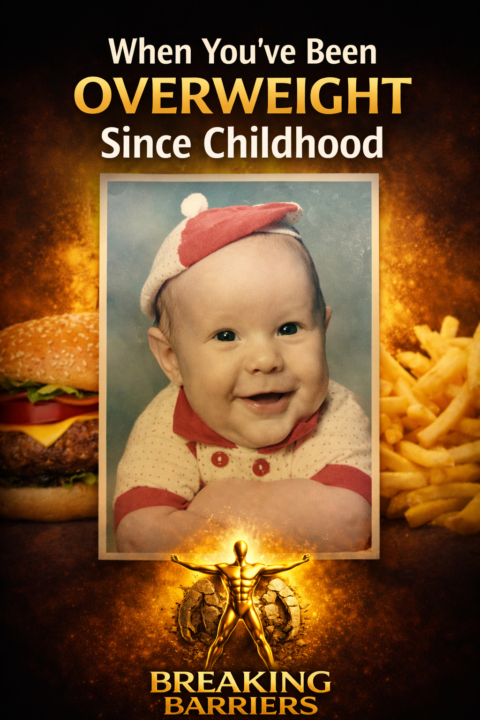
🍽️ When You’ve Been Overweight Since Childhood For some people, weight gain happened in their 20s or 30s. But for many others… They’ve been overweight since childhood. That changes things. It means you didn’t just learn a few bad habits along the way… You grew up in an environment where those habits were normal. 🍕 Second helpings were normal 🍪 Snacks after school were normal 🥤 Sugary drinks were normal 🍟 Fast food was normal 🍰 Celebrating everything with food was normal And when something is normal for 20… 30… sometimes 40 years, it becomes part of how you see the world. So when someone says: “Just eat healthier.” What they’re really asking you to do is relearn a lifetime of habits. That’s not weakness. That’s reprogramming. 🧠 Learning new portion sizes 🥗 Learning what balanced meals look like 🍗 Prioritizing protein 💧 Drinking enough water 🚶 Moving your body consistently This isn’t about fixing one bad week. It’s about rewriting a lifetime of patterns. And that takes patience. It takes practice. And most importantly… It takes support. That’s what Breaking Barriers is about. Not quick fixes. Not shame. But helping people build the skills they may have never been taught growing up. 🔥 Because the past may explain your habits… But it doesn’t have to define your future. #BreakingBarriers 💥 #NutritionMindset 🍽️🧠 #PoundsToPurpose ⚖️➡️🎯 #ChangeYourMindChangeWhatMatters 💭➡️💪
0
0
Mar 4 •
Don’t Fall for the Food Label Trap
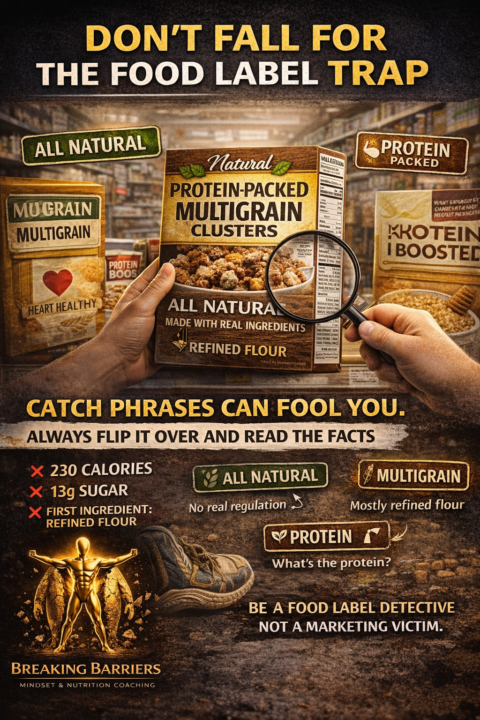
Walk through a grocery store and you’ll see words designed to make you feel good about what you’re buying. Not healthier. Just better about buying it. Food companies know something very important: Most people don’t read nutrition labels. They read catch phrases. Things like: 🥬 All Natural 🌾 Multigrain 💪 Protein Packed ❤️ Heart Healthy 🍃 Made with Real Ingredients ⚡ Energy Boosting 🍯 Sweetened with Honey Sounds healthy, right? Here’s the problem… Most of those phrases are marketing, not nutrition. “Multigrain” can still be mostly refined flour. “Protein packed” might mean 8 grams in a 400-calorie bar. “Natural” has no meaningful regulation at all. Food companies aren’t trying to make you healthier. They’re trying to make you buy the product. The real truth about healthy eating is much simpler: ✔ Look at protein ✔ Look at calories ✔ Look at ingredients ✔ Ignore the marketing on the front If the front of the package is screaming at you… There’s a good chance the nutrition label is whispering the truth. At Breaking Barriers Mindset & Nutrition Coaching, we don’t teach people to follow hype. We teach them to read reality. Because once you understand food marketing… You stop getting fooled by it. 💥 Change your mind. Change what matters. 💥
0
0
Feb 21 •
🥗🔥 NUTRITION REALITY CHECK — EFFORT vs EXPECTATION
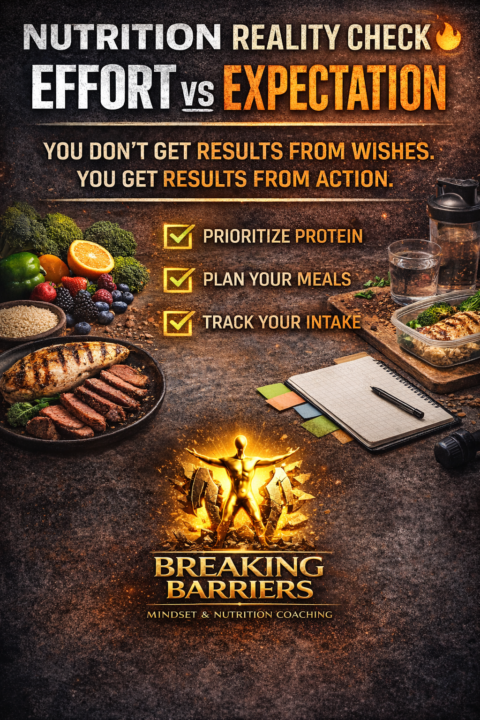
🥗🔥 NUTRITION REALITY CHECK — EFFORT vs EXPECTATION Let’s have some honest nutrition talk. People want: ✔️ Fat loss ✔️ More energy ✔️ Better labs ✔️ Less inflammation ✔️ A stronger body But then nutrition looks like this: ❌ Protein is low ❌ Meals are random ❌ Weekends erase weekdays ❌ Portions aren’t monitored ❌ Convenience keeps winning And then comes the question: ➡️ “Why am I not seeing results?” Because nutrition follows the same rule as everything else: 💥 You don’t get results from what you hope for — you get results from what you consistently do. 🍽️ What 25% Nutrition Effort Looks Like Skipping meals → overeating later Guessing portions → calories creep up Low protein → hunger stays high No planning → fast food wins That’s not failure — that’s just misaligned effort. 🧠 What Real Nutrition Effort Looks Like ✔️ Protein first at every meal ✔️ Food choices made before hunger hits ✔️ Water intake intentional ✔️ Simple meals repeated consistently ✔️ Planning just enough to avoid chaos Not perfect. Just consistent. ⚖️ The Truth Most People Don’t Want to Hear You cannot out-expect your habits. Your body doesn’t respond to motivation… It responds to repetition. Small daily choices build the body you live in. 🚀 Simple Solution (Start Here) Before every meal, ask: 🥩 Where’s my protein? 🥦 Where’s my fiber? 💧 Have I had water recently? Do that consistently and watch what happens. No magic foods. No extreme diets. Just effort aligned with your goals. 🔥 Bottom Line Nutrition isn’t about being perfect. It’s about making choices that match the results you say you want. Because when effort goes up… Results eventually have no choice but to follow.
0
0
Feb 15 •
What Water Actually Does in the Body
Water is involved in literally every major system: Cell Function - Cells are mostly water. Dehydrated cells = sluggish energy, poor recovery, slower healing. Temperature Regulation - Sweat cools you. No water = overheating risk climbs fast. Blood Volume & Circulation - Blood is ~50% plasma (mostly water). Low water = thicker blood = harder work for the heart. Kidney Function & Detox - Kidneys filter waste through urine. Too little water = higher risk of kidney stones and urinary infections. Digestion & Nutrient Transport - Helps break down food and move vitamins/minerals where they need to go. Brain Function - Even 1–2% dehydration can drop focus, memory, and mood. - Headaches, irritability, and brain fog are often just low hydration wearing a fake mustache. Minimum Daily Intake Before Problems Start There’s no exact magic number because body size, climate, and activity change needs — but we do know danger zones. General Medical Red-Flag Minimums (Adults): - Under ~1 liter (34 oz) per day for multiple days = rising risk of complications. - Under ~500–700 ml (17–24 oz) = dehydration symptoms likely within 24–48 hours. Early Dehydration Symptoms - Dry mouth - Headache - Fatigue - Dark yellow urine - Constipation - Dizziness Moderate–Severe Dehydration - Rapid heart rate - Low blood pressure - Confusion - Muscle cramps - Kidney strain - Heat exhaustion / heat stroke risk If someone is sweating, exercising, or in heat, those minimums jump fast. Recommended Daily Intake You’ll hear “8 glasses” everywhere. That’s a starting point, not a law. Solid Practical Guideline 0.5 – 0.7 ounces per pound of body weight per day Examples: - 150 lb person → 75–105 oz - 200 lb person → 100–140 oz - 250 lb person → 125–175 oz Add More If: - Exercising - Hot climate - High-protein diet - Caffeine or alcohol intake - Larger body mass - High sodium intake Urine Color Test (Simple & Effective) - Pale yellow = good - Dark yellow/amber = drink - Clear all day = maybe too much
1-30 of 40
powered by
skool.com/breaking-barriers-5869
Rewire your mindset, reinvent your body. Real coaching, real food, real results. No excuses. Change your mind and you change what matters.
Suggested communities
Powered by