
Write something
Oct '25 •
This week in ‘Classroom’
This week in our Mini Moments series, we explored two lovely practices: Ping Pong breath and a seated yoga flow. Ping Pong breathing is especially effective because it captures a child’s attention in such a fun and playful way. Let’s be honest, breathing exercises aren’t always the easiest thing to introduce to children. They often involve stillness and focusing on something that can feel quite abstract, especially for younger kids who are still developing that kind of thinking. That’s why I love this breathing activity so much. It gives children a clear visual focus (and you can make it even more engaging by drawing little faces on the ping pong ball). There’s no pressure to sit still, and the movement is built into the experience. Children naturally explore how their breath affects the ball, learning through curiosity and play; something that feels really intuitive and joyful for them. We also shared a gentle seated yoga flow that’s perfect for loosening up in the morning or anytime your body needs a bit of warmth and movement. One of the reasons I love this sequence is that it’s incredibly flexible, you can do it almost anywhere. Whether you’re sitting on a chair, at the edge of the bed, or even at your desk, this flow works beautifully without needing much space at all. The movements focus on gently decompressing the spine and toning the upper body, helping to build strength and increase mobility. Since we move continuously without holding poses for too long, it’s easy on the joints while still creating a lovely sense of warmth throughout the body. Later this week, I’ll be sharing a fun little Halloween craft you can do with your child in under five minutes. It’s a great way to support hand-eye coordination and fine motor skills and it’s simple enough to fit into even the busiest day. I’d love to hear what you thought of this week’s Mini Moments. Is there something you'd like to see more of? Let me know in the comments ✨
0
0
Oct '25 •
Spotlight: Affirmations
Affirmations have been gaining a lot of attention in the past few years; even Snoop Dogg has released his own affirmation song (and yes, it’s worth a listen if you haven’t heard it yet). But what makes this simple daily practice so powerful? At its core, saying affirmations involves speaking positive words or phrases out loud. When we do this, our brain processes these words as external stimuli. This sets off a chain reaction: our facial micro-expressions subtly respond, sending feedback to the brain, which then influences our how physiologically respond. In short, positive language can trigger the release of feel-good chemicals like dopamine and serotonin. Over time, repeating affirmations helps reinforce positive thought patterns. This has a physiological effect too, it strengthens our connection to the prefrontal cortex, the part of the brain responsible for rational thinking and emotional regulation. At the same time, it helps calm the sympathetic nervous system, which is activated during stress or fear. A simple phrase like “I am safe” can shift us out of a fight/flight/freeze/fawn response and into a more balanced state, both mentally and physically, this can be such a game changer for dysregulated children! If you’re curious, try starting with just a few affirmations each morning or evening. It may feel strange at first, but with consistency, you might be surprised by the impact such a small habit can have on your thought patterns and self esteem. I started using affirmations in our bedtime routine and it’s quickly become part of the evening we all look forward to the most! It not only helps children build a positive self image and connect to their rational brain, but it also supports the bond between caregiver and child. Check out the video to hear it in action. Fancy giving it a go? Start with 3-5 short phrases everyday this weekend and check back in on Monday to let me know how it went 💛
0
0

Oct '25 •
What does yoga mean to me?
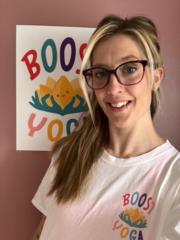
Yoga is so much more than just the physical act of getting on the mat and practicing asanas, it’s a time to connect with my inner self, be curious and acknowledge myself without judgement. Now, more than ever, children need a space where they can block out the noise of social media, AI and the bombardment of advertising they face daily, and just connect with who they are, how they think and what they’re feeling. Over the coming weeks I will be posting free demos, discussions and tips to help support children’s mental health & wellbeing, I’d love to know what content you’d like the most or if there’s a particular issue you’d like me to discuss. Peace & Positivity, Sophie @ Boost & Bloom 💛
0
0
Oct '25 •
Welcome
🌸 Welcome to Boost & Bloom! 🌸 Hello and a warm welcome to Boost & Bloom, a supportive community for parents/caregivers and educators of children, including those with additional needs and disabilities (SEN/SEND) and or social emotional mental health needs (SEMH). Here, you'll find resources, guidance, and practical workshops designed to support children’s emotional and physical wellbeing through SEL (Social & Emotional Learning), mindfulness, and yogic techniques. This space is all about connection, compassion and emotional wellbeing, for both you and the children in your care. We’d love to get to know you: What brings you to our community? Are you a caregiver or an educator, or perhaps both? And what are you hoping to learn, gain, or explore here? Let us know in the poll and introduce yourself in the comments below! With peace & positivity, Sophie Harrow Founder of Boost Yoga
Poll
Cast your vote
0
0
1-5 of 5
powered by
skool.com/boost-yoga-6911
Helping care givers support emotional regulation in children through yoga, mindfulness and social emotional learning.
Suggested communities
Powered by