
Write something

🔥
10d •
Mood & Health
This week in Ask Lynne, we're introducing our Theme of the Week! The theme will be announced every Monday. You're invited to ask any health question related to that week's theme. You can also continue to ask questions about diagnoses, blood work, imaging, medical terminology, or any other health topic—even if it's not related to the weekly theme. 🧠 Mood and physical health are more connected than many people realize. Stress, poor sleep, chronic illness, pain, hormones, medications, and nutrition can all affect how we feel. Taking a moment to notice your mood is one small step toward understanding your overall health. Comment below with the one word that describes your mood today.
🔥
10d •
Home & Back To Work
I wanted to share with you that I had a lovely visit with a friend whom I have known for 40+ years. We ate too much, we slept too little, we got rained on while trying to yard sale and we reminisced a lot. I am officially back to work. I have added some things that were discussed this week to the ABCs of Health since returning the community Good vs Bad Cholesterol What the DSM- V is What are Triglycerides and is your level being low dangerous. AND since no one was brave enough to hazard a guess I am going to give you the definition of a NODULE! A nodule is a small, solid, usually lump or swelling of tissue that can form just beneath the skin, in internal organs, or in glands. While the term itself is not a diagnosis. A nodule can be benign (non-cancerous) or malignant (cancerous). Depending on where a nodule is found, it will be examined differently. Skin: Dermatologists define a nodule as a firm lump larger than 1 centimeter. Lungs: Detected on imaging, they are small, rounded growths usually under 3 cm in diameter. Thyroid: A common lump that forms on the butterfly-shaped gland in the neck. Common causes include cell accumulation, inflammation, or infection, but because they can be cancerous, the presence of a nodule warrants further investigation usually via imaging! Building this kind of health literacy, one medical terminology word at a time, is exactly what the ABCs of Health is here for. How Can I Help More? Reach out if I can help you more. Quick questions and topic ideas are always welcome. If you want a private conversation, DM Lynne Vella and your questions and answers will remain private if that is your preference. 💚 It's Safe to Ask Here.

🔥
14d •
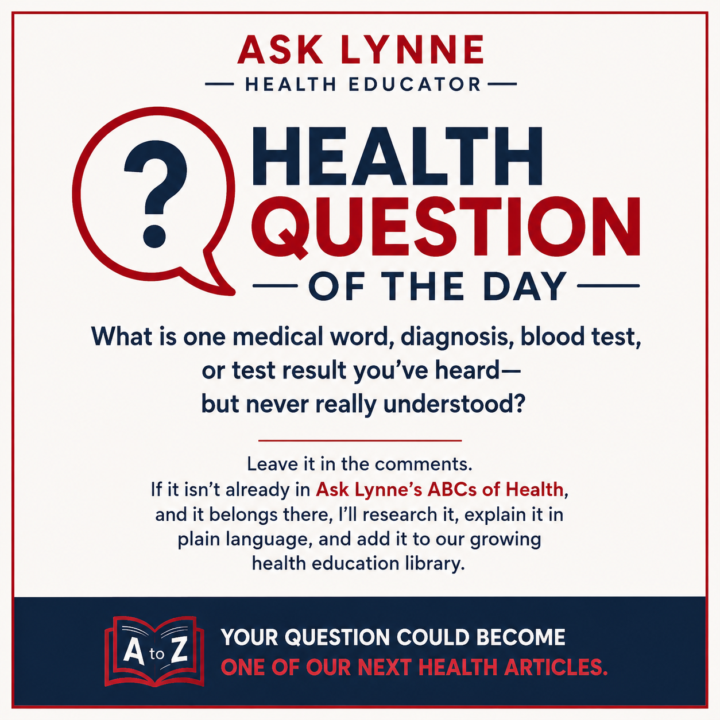
🩺 Health Question of the Day
What is one medical word, diagnosis, blood test, or test result you've heard—but never really understood? 𝐋𝐞𝐚𝐯𝐞 𝐢𝐭 𝐢𝐧 𝐭𝐡𝐞 𝐜𝐨𝐦𝐦𝐞𝐧𝐭𝐬. 𝐀𝐍𝐃 𝐢𝐟 𝐲𝐨𝐮 𝐭𝐡𝐢𝐧𝐤 𝐲𝐨𝐮 𝐤𝐧𝐨𝐰 𝐭𝐡𝐞 𝐝𝐞𝐟𝐢𝐧𝐢𝐭𝐢𝐨𝐧 𝐨𝐟 𝐬𝐨𝐦𝐞𝐨𝐧𝐞 𝐞𝐥𝐬𝐞'𝐬 𝐰𝐨𝐫𝐝, 𝐥𝐞𝐚𝐯𝐞 𝐭𝐡𝐚𝐭 𝐢𝐧 𝐭𝐡𝐞 𝐜𝐨𝐦𝐦𝐞𝐧𝐭𝐬 𝐭𝐨𝐨! If it isn't already in Ask Lynne's ABCs of Health, and it belongs there, I'll research it, explain it in plain language, and add it to our growing health education library. 💬 Your question could become one of our next Health Articles.
🔥
15d •
🥵Feeling the Heat? Here's What to Watch For
Much of Southern Ontario and parts of the U.S. are experiencing very hot weather. Educators Note: Extreme heat can raise blood pressure and raise or decrease blood sugar! Be aware! A few simple reminders: 💧 Drink water before you feel thirsty. 🧂 If you're sweating heavily, replace electrolytes as well as water. 🌳 Stay in the shade or air conditioning whenever possible. 👕 Wear light, loose-fitting clothing. 👴 Check on older adults, young children, and anyone with chronic health conditions. ⚠️ Watch for signs of overheating: dizziness, headache, nausea, muscle cramps, confusion, heavy sweating, or hot, dry skin. If symptoms become severe, seek medical attention immediately. Knowing your own body's warning signs is a simple but powerful piece of health education. Stay cool and take care of one another. ❤️ 💬 Question: What's your favourite way to stay cool during a heat wave? How Can I Help More? Reach out if I can help you more. Quick questions and topic ideas are always welcome. If you want a private conversation, DM Lynne Vella and your questions and answers will remain private if that is your preference. 💚 It's Safe to Ask Here.

🔥
18d •
🧠 Mental Health is Health
I've worked with people living with both physical and mental health conditions. As a nurse and office manager in the practice of a neuropsychiatrist, I saw firsthand how physical health can affect mental health—and how mental health can affect physical health. Although we've made progress in talking about mental health, many people still don't view it with the same importance as physical health. 𝐓𝐡𝐞 𝐫𝐞𝐚𝐥𝐢𝐭𝐲 𝐢𝐬 𝐭𝐡𝐚𝐭 𝐲𝐨𝐮𝐫 𝐦𝐢𝐧𝐝 𝐚𝐧𝐝 𝐛𝐨𝐝𝐲 𝐚𝐫𝐞 𝐜𝐨𝐧𝐧𝐞𝐜𝐭𝐞𝐝 𝐞𝐯𝐞𝐫𝐲 𝐬𝐢𝐧𝐠𝐥𝐞 𝐝𝐚𝐲. - Anxiety can cause a racing heart, muscle tension, headaches, stomach problems, and difficulty sleeping. - Depression can affect your energy, motivation, concentration, appetite, and even your immune system. - PTSD can keep the body in a constant state of alert, making it difficult to relax, sleep, or feel safe. - Personality disorders can affect the way someone experiences emotions, relationships, and everyday life. With understanding and appropriate treatment, many people learn healthy ways to manage their symptoms. These are real medical conditions—not signs of weakness. As Ask Lynne's ABCs of Health continues to grow, I'd like to add more plain-language explanations of common mental health conditions. 💬 Which mental health diagnosis, medical term, or question would you like explained in plain language? Leave it in the comments, and it will become part of Ask Lynne's growing ABCs of Health.
1-16 of 16
powered by
skool.com/ask-lynne-onca-health-adv-1120
Ask Lynne: plain-language help understanding your diagnosis, blood work & lab results. Health education to navigate healthcare with confidence.🩺
Suggested communities
Powered by