
Write something

Nov '25 •
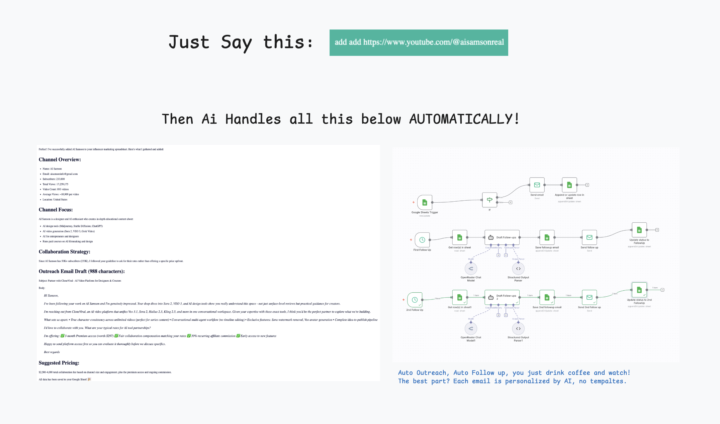
I build an email automation at nearly 0 cost!!
Except the basic monthly fee of n8n. After tried a lot of email marketing automation tools, which cost me ridiculous price, I switch back to n8n for email automation. And it works pretty well!😀 Google Sheets Template
0
0
Nov '25 •
How to setup MCP in 5 minutes, no technical setup
Go to composio (it’s free!) Choose the tools, and authorize using OAuth. Youtube Scraper, Google Sheets, Reddit, Slack, Asana, etc. Explore now
0
0

Nov '25 •
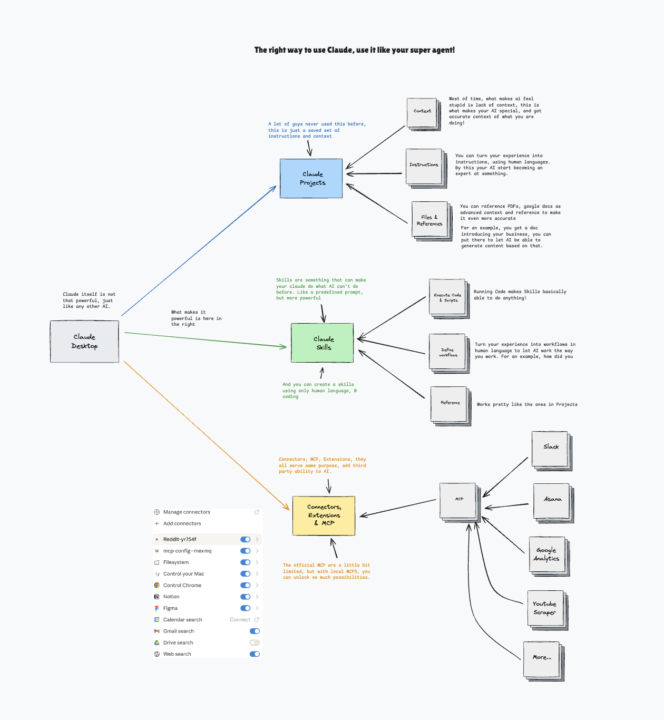
I canceled my Chatgpt subscription for this
Start turnning your Claude into your own Super Agents(No Complex Setup). The complete Claude AI Agent Stack
0
0
Sep '25 •
How to install Google Sheets MCP for Claude (in 10 secs)
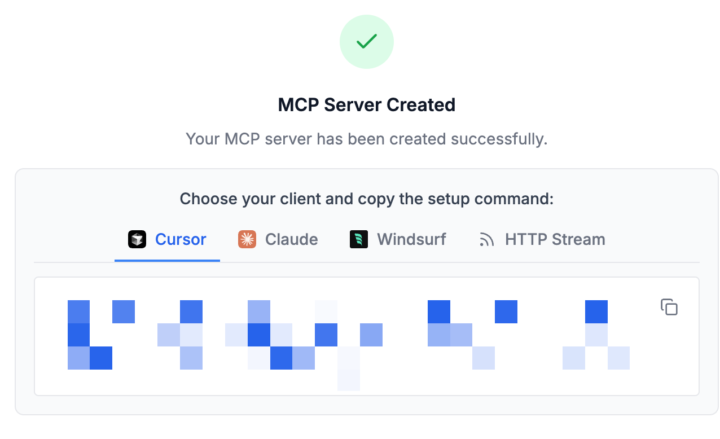
I couldn't believe it! It's Sep 2025, there still isn't an easy way to install Google Sheets MCP for Claude. Here is the easiest way to install to install it for Cursor and Claude. Only took 10 seconds, works pretty easy. Will show you below👇 1. Go to https://mcp.composio.dev 2. Find google sheets and connect account using OAuth 3. Create a new server, and copy the command 4. Paste the command in your terminal and press enter.
0
0
Sep '25 •
What is MCP? (Explained for non-developers)
Introduction Hey everyone! Today we're breaking down Model Context Protocol (MCP) in the simplest way possible. I want to show you how MCP makes AI agents more intelligent and why this matters for anyone working with AI automation. The Basics: How AI Works Today Let's start with the fundamentals. Think about ChatGPT - it's pretty straightforward: - Input: You ask a question ("Help me write this email" or "Tell me a joke") - Processing: The LLM thinks about your request - Output: You get an answer This works great for basic conversations, but it's limited. The Evolution: AI Agents with Tools The next big leap was giving LLMs tools - that's when we got AI agents. But here's where things get interesting, and also where we hit some limitations. How Current Tools Work (And Their Limitations) Each tool has a very specific function, and here's the problem - they're not super flexible. Why? Because within each tool configuration, we basically have to hardcode: - The operation (what am I doing?) - The resource (what am I working with?) - Dynamic parameters (like message IDs or label IDs) For example: - Operation: "Get" | Resource: "Message" (this never changes) - Operation: "Send" | Resource: "Message" (this never changes) You can see how rigid this becomes. Enter MCP Servers: The Game Changer Now, here's where MCP servers come in and completely transform the game. What is an MCP Server? Think of an MCP server as a universal translator that sits between your AI agent and the tools you want to use. How It Works When your agent sends a request to an MCP server (let's say Notion), it gets back much more than just "here are your available tools." The MCP server provides: - Available tools and their functionality - Resource information (what can I access?) - Schemas (how should I format requests?) - Prompts (how should I interact?) The MCP server takes all this information and helps the agent understand exactly how to take the action you requested in your original input.
0
0
1-17 of 17
powered by

skool.com/ai-mcp-automation-club-8567
Master AI Automation and turn hours of manual work into automation flows. From content creation to marketing, JOIN & SAVE time.
Suggested communities
Powered by