

8d •
Happy Saturday! What’s everyone working on?
Happy Saturday Creators! What’s everyone working on? Me, I’m creating some AI music videos to enter into the summer music video contest Revid is having! I think the prize is a year of credits which would most definitely come in handy! I am loving Revid but it’s not cheap!

Jan 27 •
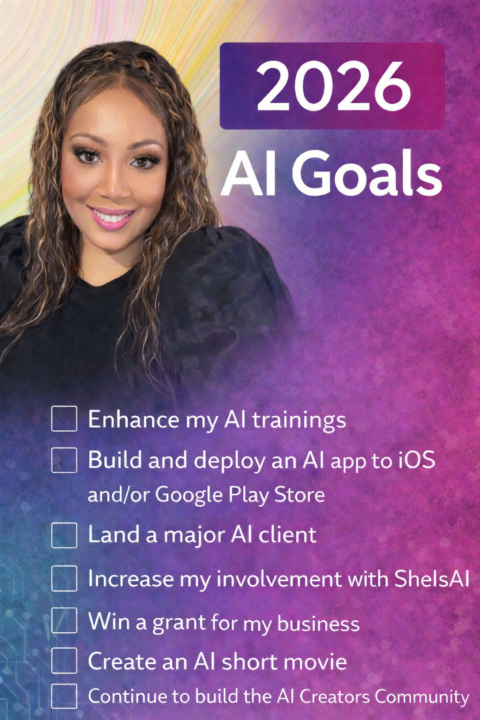
2026 AI Goals
Hey Creators! New year, time for new goals. Feel free to list your AI goals below because if you set goals you are more likely to achieve them. Let's go! Let's make 2026 we have our AI breakthrough. Here are some of my top 2026 goals: 1. Enhance my AI trainings 2. Build and deploy an AI app to iOS and/or Google Play Store 3. Land a major AI client 4. Increase my involvement with SheIsAI 5. Win a grant for my business 6. Create an AI short movie 7. Continue to build the AI Creators Community Please feel free to share yours in the comments so that we can support each other during this journey. We are still ahead of the curve with AI even if it doesn't feel like it.
May 29 •
Happy Friday!!
Hey Creators, What's new in your AI world? I have been overly consumed with the Corporate job. My boss is slowly trying to convert us into AI software engineers! Not everyone has the capacity or capability! But to make this AI mandate fun I have created some AI Challenges and games. Good thing I'm the creative type! So, my first game for Q2 is Who Wants to be a Bot Master! I turned the poster I created into a video using Kling. Came out nice. Check it out. https://pro.klingai.com/h5-app/invitation?code=7BWRZXJBCKZV

Jun 4 •
A Typical Day Working in AI
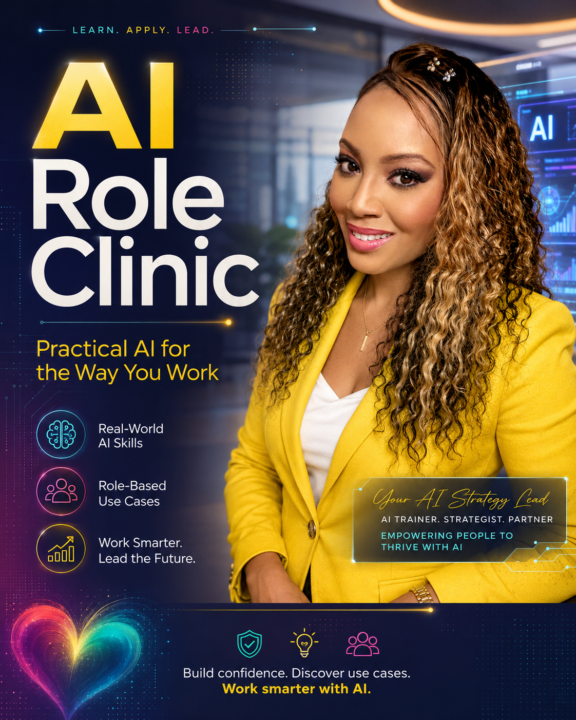
Ever wonder what it's really like working in AI in Big Tech in Silicon Valley, the mecca of the tech and AI world? Let me tell you about a typical day for me. A typical day for me working in AI in Big Tech is a mix of strategy, creativity, problem-solving, and a lot of translation from processes into AI workflows, agents and automations. I might start the morning reviewing how teams are using AI, where they’re getting stuck, and which use cases are actually creating value. Then I may jump into a meeting to help shape AI training, brainstorm an adoption program, or design a role-based clinic that helps people understand how AI fits into their actual work. Some days I’m helping teams think through AI agents. Other days I’m building challenges, drafting enablement content, or showing professionals how to move from “I’m curious about AI” to “I can actually use this to work smarter.” Currently, I'm part of the new AI coilition where I am the sole AI builder for the company...preparing for the AI week of activities and company wide AI training starting in July in conjunction with the Learning & Development team. That's a little over 8k employees worldwide...ooh wee. What I enjoy most is that this work is not just about the technology. It is about people. It is about helping someone feel less intimidated by AI. It is about showing teams how to think differently. It is about turning abstract concepts into practical skills they can use right away. My audit and risk background still shows up in everything I do. I think about structure, controls, evidence, accountability, and responsible use. But now I get to combine that with innovation, storytelling, training, and human-centered design. That is what makes this work so exciting for me. Every day, I get to help people build confidence with AI through my AI Role Clinics I started back in May where I instruct professionals from over 20 countries across the globe how to not only incorporate AI into their daily workflows but also to discover new ways of working, preparing them for a future that is already here.
May 13 •
Thank you for your support
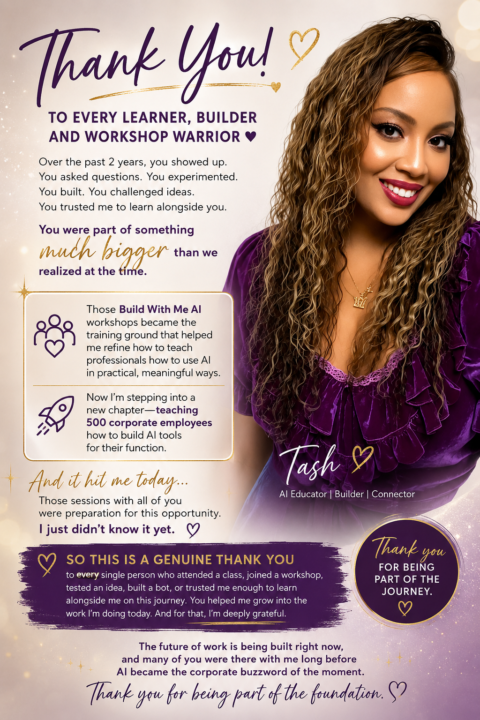
Hey Creators, Over the past two years, so many of you have joined my AI classes, workshops, and “Build With Me” sessions to learn, experiment, ask questions, break things, fix things, and build alongside me. And honestly? You were part of something much bigger than any of us realized at the time. Those workshops became the training ground that helped me refine how to teach professionals how to actually use AI in practical, meaningful ways. Every question, every challenge, every breakthrough helped shape my approach. Now I’m stepping into a new chapter where I’ll be teaching hundreds of corporate employees how to build AI tools and AI coworkers for their specific business functions. And it hit me today… those sessions with all of you were preparation for this opportunity. I just didn’t know it yet. So this is a genuine thank you to every single person who attended a class, joined a workshop, tested an idea, built a bot, or trusted me enough to learn alongside me on this journey. You helped me grow into the work I’m doing today. And for that, I’m deeply grateful. The future of work is being built right now, and many of you were there with me long before AI became the corporate buzzword of the moment. Thank you for being part of the foundation. 🤍
1-30 of 269
powered by
skool.com/ai-creators-2552
A collaborative AI community for creative innovators to learn, share, build projects, get funding/grants updates, and no coding knowledge required.
Suggested communities
Powered by