
Write something

2d •
The Agentic OS: What a Folder of Skills Actually Is
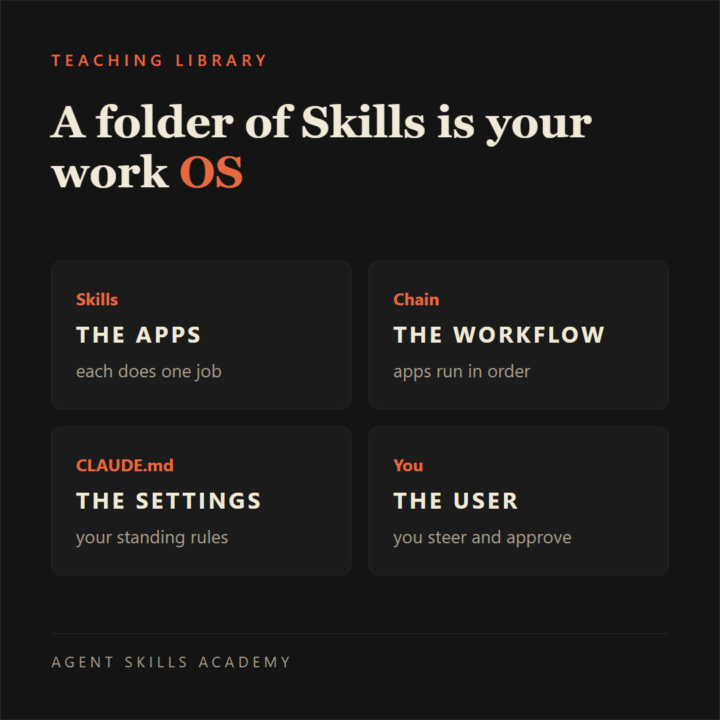
A folder of Skills is an operating system for your work. Not a metaphor, a real one: the Skills are the apps, the chain is the workflow, your CLAUDE.md is the settings, and you are the user who runs it. ━━━━━━━━━━━━━━━━━━━━━━ THE OLD WAY vs THE NEW WAY ⚖️ ▶ The old way: you are the operating system. One window for writing, one for research, one for the calendar, and you carry the context between them all day, from memory. ▶ The new way: one folder does that. Each Skill is a program, Claude Code is the machine that runs them, and you stop carrying and start directing. ━━━━━━━━━━━━━━━━━━━━━━ WHAT MAKES A FOLDER AN OS 🗂️ An operating system earns the name three ways, and the folder does all three. • It runs programs. Every Skill is one job written down: the weekly report, the newsletter, the invoice chase. • It manages handoffs. A conductor Skill runs the others in order, passing each output into the next job. That is skill chaining. • It enforces standards. Your definition of done lives in the files, applied on every run, not depending on how sharp you feel on a Thursday. And it is all files: a folder you can copy, back up, and carry, not an account someone else can close. ━━━━━━━━━━━━━━━━━━━━━━ THIS ONE IS REAL 🔎 The post you are reading came out of a folder like that. The posts and lessons here are drafted by a folder of Skills before I approve a word, so our content system is an agentic OS wearing a badge. Anthropic ships one too: their small business plugin is a folder of Skills that runs the real jobs of a business, no code. ━━━━━━━━━━━━━━━━━━━━━━ SKETCH YOURS IN TWENTY MINUTES ✍️ Draw one folder in the middle of a page. Around it, list five jobs that repeat in your week, then draw a line between the two that feed each other. That drawing is your OS map, and it tells you what to build first. The free Foundation class inside turns the first box into a running Skill in an afternoon. If you found this searching what an agentic OS is: it is a folder you assemble yourself, inside Agent Skills Academy, free to join, and the Foundation class builds the first program with you.
11d •
How to Build a Business Using AI: Skills, Chaining, and the Folder That Runs It
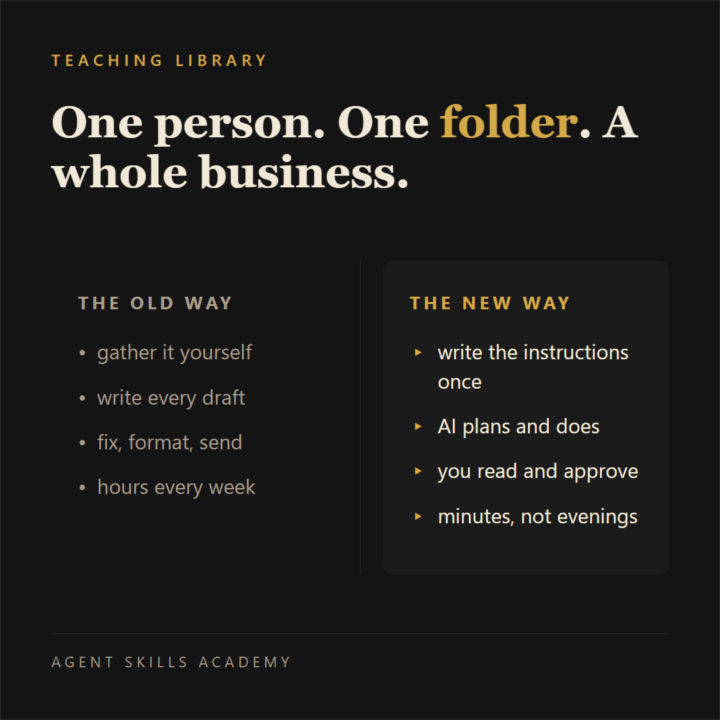
Can you really build a business using AI, one person, no code? Yes, and the mechanics are simpler than you think, so here's the whole machine, piece by piece. Anthropic is rebuilding work around plain text files. A file called SKILL.md teaches Claude one job. CLAUDE.md holds your standing instructions. Memory files keep what it learns about your work. No code in any of them, just clear English. Your business becomes a folder of these files, and Claude runs it while you direct. ━━━━━━━━━━━━━━━━━━━━━━ THE THREE PIECES 🧱 ▶ A Skill: one job, written down. It reads like the note you'd hand a careful new assistant on day one: the job, when it happens, the steps, and what a good result looks like. It lives in a small file named SKILL.md. ▶ A chain: several Skills that run in order, like stations on a line. One gathers, one drafts, one checks, one delivers, and a small conductor Skill just says: run these, in this order. That's skill chaining, also called orchestration. ▶ A Plugin: your Skills packaged as one unit, in Anthropic's official format, so the whole system installs anywhere and stays yours. ━━━━━━━━━━━━━━━━━━━━━━ UNDER THE HOOD, WHEN YOU ASK 🔍 So what actually happens when you type "run this week's newsletter"? Claude reads your CLAUDE.md first, so it knows your business and your rules. Then it finds the right Skills, plans the steps, and for bigger jobs it spins up a small team of AI agents, where each agent reads its own instruction file and takes one station on the line. The research agent researches. The drafting agent writes. Work passes down the chain, the conductor keeps the order, and the finished piece lands in front of you for a yes or a no. You didn't do any of the doing. But every step followed sentences you wrote, so the result comes out your way, and changing the business means editing a sentence. ━━━━━━━━━━━━━━━━━━━━━━ THIS IS RUNNING RIGHT NOW 📰 That's not a demo, it's how things work here. The newsletter in this community comes out of a folder holding six SKILL.md files and one conductor. And @Srinivas Kadiyala , a member, built two Skills in his first week, chained them, and packaged the pair as his own Plugin, so his newsletter ships as a real file he can send anyone.
9d •
What are Claude Code Skills
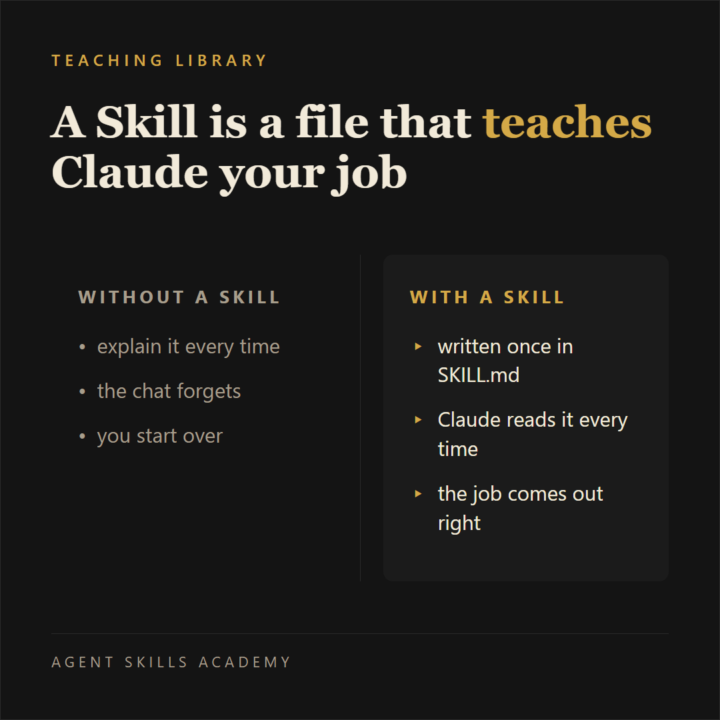
A Claude Code Skill is a plain English file that teaches Claude how to do one of your jobs. There's no code in it and nothing to program: you write instructions the way you'd brief a person, and Claude reads them and does the work. ━━━━━━━━━━━━━━━━━━━━━━ WHAT CHANGES WHEN YOU HAVE ONE 🔁 ▶ Without a Skill: you explain the job to AI from scratch every time, and the explanation dies when the chat closes. ▶ With a Skill: the explanation lives in a small file called SKILL.md. Claude reads it every time the job comes up, so the work comes out right today and right next month, even while you're busy with something else. That's the whole shift. The instruction stops being something you type and becomes something you own. ━━━━━━━━━━━━━━━━━━━━━━ WHAT'S ACTUALLY IN THE FILE 📄 Four things, in plain English: the Skill's name, what it does, when to use it, and the steps to follow. Here's the shape of one: ▶ Name: draft the newsletter ▶ What it does: turns this week's notes into a first draft ▶ When to use: every Friday ▶ Steps: read the notes file, write 600 words in my voice, save the draft for my review That's a complete Skill. If you can write a clear note to a person, you can write one, and that's by design: Anthropic built Skills so the instruction language is English. The file sits in a folder in your project, and Claude Code reads it in Claude Desktop or in VS Code, whichever you use. ━━━━━━━━━━━━━━━━━━━━━━ WHY PEOPLE BOTHER 🧭 Because one Skill is a saved job, and a few Skills chained together are a running system. People here use them to automate their own work, run a small business's busywork, and build things they own. The full stack behind all of it is a laptop and a Claude Code subscription, nothing else. ━━━━━━━━━━━━━━━━━━━━━━ WRITE YOUR FIRST ONE TODAY ✍️ Pick the job you repeat most and write those four lines in any text file: name, what it does, when, steps. That note is your first SKILL.md in draft, and turning it into a running Skill takes an afternoon, not a course in programming.
1-3 of 3
skool.com/agentskillsacademy
Learn Claude Code Skills and Skill Chaining: build no-code AI agent workflows that run real work for you. Free to join, start building today
Leaderboard (30-day)
1

+20
2

+10
3

+7
4

+3
5

+3
Powered by