
Write something

Feb 19 •
What if everything you've been taught about consulting business development is backward?
What if everything you've been taught about consulting business development is backward? Meet Chris Nichols , co-founder of GameShift , a boutique consultancy that's been named one of the UK's top 100 management consultancies for eight consecutive years. Their secret? They never try to sell anything. The Counter-Intuitive Approach to Consulting Growth "I just want to introduce you to someone who might be able to help." This is how Chris Nichols opens most of his business conversations. No pitch. No proposal. Just genuine curiosity and a desire to connect people who might benefit from knowing each other. It sounds almost naive in its simplicity. Yet this approach has helped GameShift build a thriving practice working with executive teams at some of the world's most complex organizations. The Power of Not Selling GameShift's approach turns traditional consulting business development on its head: 1. They lead with curiosity instead of capability 2. They freely refer work to competitors when they're not the best fit 3. They focus on relationship-building rather than relationship-leveraging 4. They view their role as "introducing good people to good people" Why Most Consultants Struggle with Business Development Here's a surprising insight from Chris's years in consulting: Most consultants are actually quite good at business development once they have a conversation. What they struggle with is the early stage - starting from cold and nurturing potential opportunities. The problem isn't their ability. It's their mindset. "Don't think of it as selling," Chris advises. "If you can coach, you can generate business. If you can listen and have relationships with people, you can do this. It's about relationships."
Jul '24 •
How To Get Consulting Clients Quickly
Here's a recording of a webinar I ran recently. Let me know what you think. Have questions? Ask in the thread below and I'll personally answer.
1
0
Jun '24 •
How To Quickly Get Consulting Clients
The Challenge This Content Addresses: The Need for Immediate Clients in Consulting Often, consultants find themselves at a crossroads, investing heavily in content creation, books, and white papers with a delayed return. This investment, while valuable in building authority, can inadvertently create a downturn in immediate client acquisition, leading to a significant strain on resources. The primary challenge in traditional client acquisition strategies lies in their time-consuming nature and delayed results. When looking at any strategy you need to ask yourself - do you want clients fifteen months from now, or do you need them immediately? This dilemma highlights the necessity for strategies that yield quick results, allowing consultants to maintain and even elevate their current status while working towards their long-term goals. To address the urgent need for clients, there are key strategies that consultants can implement for immediate results: 1. The Network Multiplier and Daily Conversations Process: This involves leveraging your existing network to create opportunities. By reconnecting with past clients, offers, and even contacts who have previously shown no interest, you can tap into a well of potential clients that was previously unexplored. 2. The Irresistible Front End Offer (IFEO) and Sequential Layered Offer: This unique approach involves breaking down your main consulting offer into smaller, more digestible segments that address immediate and pressing pain points of potential clients. By offering solutions to these known and urgent problems, you create an entry point that is easy for clients to say yes to, leading to larger, more comprehensive engagements. 3. Proactive Client Generation: Contrary to the belief that clients should come to you, proactive outreach is key. Identifying inflection points in businesses, such as funding rounds or mergers, allows you to approach potential clients at the most opportune moment. Additionally, leveraging signals such as new senior hires or recruitment drives can pinpoint organizations that are ripe for your consulting services. 4. Simple Marketing Focused on Known Problems: Instead of only showcasing your thought leadership, focus your content on known problems that resonate with your target audience. This approach ensures that your content is relevant, engaging, and more likely to lead to conversions. 5. Consistent Outreach and Connection Building on LinkedIn: LinkedIn offers a goldmine of opportunities, allowing up to 400 new connections monthly. By consistently reaching out and building your network, you can significantly increase your chances of acquiring new clients. 6. Leveraging LinkedIn Events for Wider Reach: Hosting events on LinkedIn and inviting a large number of participants is an effective way to expand your reach and connect with potential clients who are interested in your area of expertise. 7. Creating a Systematic Process for Client Engagement: Building a systematic process that caters to the uniqueness of each client, yet provides a structured path from initial engagement to long-term consulting relationships, is crucial. This approach includes the development of irresistible front-end offers that naturally lead to more comprehensive consulting services.
0
0
Jun '24 •
How To Convert More Conversations To Clients
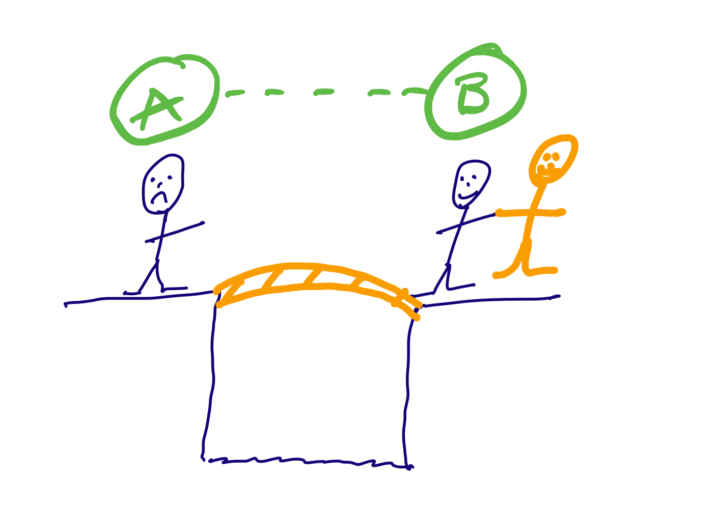
Do you want to convert more of the conversations you are already having to paying clients? i.e Getting more from the same effort. Getting More Client Conversions From More Conversations If you've been in b2b sales or client getting for your business, you've probably come across the 'Consultative Sales Model' or even SPIN questioning frameworks. You are almost certainly following a similar framework in your business. The scenario goes like this on a sales or discovery call + You ask questions to discover their current unhappy state - A + You ask questions to uncover their current desired end state - B + You seek to position yourself as the bridge between points A and B IDENTIFYING ROADBLOCKS AND WIDENING GAPS Traditionally, the way you go about building a bridge between point A and point B is by looking at specific areas with questions such as: - What have they tried before that has failed - and why? - The cost of inaction - to establish reasons big enough to break them out of the inertia of sticking with the status quo - The opportunity cost of inaction - to establish reasons big enough to break them out of the inertia of sticking with the status quo - The risk to them personally if the current situation continues Every one of those rocks you toss into the cavern is effectively making the need for the bridge between point A and B more vivid, real and urgent. But there's more... WIDENING THE GAP The same process is also described as widening the gap. What your brilliant questioning process is doing is widening the gap between their initial point A and B to the new point A and B. You are effectively widening the distance of the gap. I didn't represent it in my expensively created artists impression above as well as I could. What we are really doing is creating a new point C rather than widening the current gap between A and B. Part of the reason we widen the gap is to remove any possible idea from a prospect's mind that they can take a leap of faith and jump from A to B by themselves—without you.
0
0
Jun '24 •
How To Turn 1 Consulting Client Into 5
Many businesses get a client either from a referral or an inbound lead. They develop amazing results creating solutions for that client. The project finishes, and they then go on the hunt for a new client with little or no thought of using the experience and results of that client to proactively target new clients. If you do what I'm about for you it's relatively easy to turn 1 client into 5 like clockwork... When To Use This Process: 1. When you have recent experience of a successful project for a client 2. When you created tangible value and can prove it 3. When other companies have the same prevailing problem 4. When it is ethical to target your clients competition or supply chain Why It Works: - Fear of missing out on ‘insider knowledge’ on what their competition is doing - Ideas, ideas, ideas… - Demonstrable expertise in the area - Taking them a ready made solution with little risk to them as long as you can demonstrate that it can be operationalised in their business How To Use: Work through the following questions What project or projects have you recently completed that you solved a major IMMEDIATE pain for a client? o o What are the main pain points that you solved in that business? o o What system or approach did you use or develop to help you do this? o o What insight has that system or approach given you that you can use to educate other businesses? o o What are the results you have achieved? Be as SPECIFIC as possible in numbers and facts. o o o o o How can you package all of the experience, processes and frameworks into DEMONSTRABLE toolkits, framework sheets and process maps to move from intangible service to a saleable 'product' o o o The following is a starting point for you to consider as a start point to build out comprehensive lists later. If ethical to do so what competing companies can you approach to offer this solution i.e if you did the project for Coke - can you approach Pepsi? o o o o o Their Strategic partners? o o o o o Their Clients?
0
0
1-9 of 9

skool.com/advisors
A community of growth focused B2B Consultants, Trusted Advisors, Business Coaches and Professional Services Marketers.
Powered by