Activity
Mon
Wed
Fri
Sun
Jul
Aug
Sep
Oct
Nov
Dec
Jan
Feb
Mar
Apr
May
What is this?
Less
More
Owned by Zdravka
The private space for B2B marketing pros navigating international exhibitions.
Memberships
The $5k Client Accelerator
8 members • $3,800
OBB1 Community Navigator /Free
224 members • Free
Всеки Ден Майндфулнес
11 members • $27/month
The $5k Strategic Offer
20 members • $500
Big Business Entrepreneurs
21.1k members • Free
The AI Event Insider
187 members • $27/month
Booth Boss
81 members • Free
Event Planning Skool
46 members • Free
Engineers Can Sell
5 members • $970/month
8 contributions to The AI Event Insider

5d •
WEEKLY DEEP DIVE | SOPs & Documented Processes
Hey community! This week we get practical. Really practical. We're talking about the single biggest operational upgrade you can make to your events business in 2026: building SOPs and documented processes using AI. Tired of answering the same question from a team member for the fourteenth time. Recreating the same document from memory for the ninth client in a row. Training someone new and realizing you have nothing written down? SOPs aren't bureaucracy. They're freedom. And AI makes them faster to build than you ever thought possible. ━━━━━━━━━━━━━━━━━━━━━━━━ 1. WHAT AN SOP ACTUALLY IS AND WHY OUR INDUSTRY AVOIDS THEM A Standard Operating Procedure is simply a documented, step-by-step description of how a task gets done in your business. That's it. The reason hospitality and events professionals rarely have them comes down to two things: time and pace. Our industry moves fast, our seasons are intense, and writing down how we do things always feels less urgent than actually doing them. But here's the trap: every time you don't document a process, you're committing to doing it manually forever. Or to explaining it verbally every single time. Or to your quality varying depending on who's executing it that day. AI removes the time barrier. You can now describe a process in rough notes and have AI shape it into a clean, structured SOP in minutes. The excuse of "I don't have time to document this" no longer holds. ━━━━━━━━━━━━━━━━━━━━━━━━ 2. SOME EVENT PLANNING TASKS YOU CAN BUILD SOPs FOR RIGHT NOW - Client onboarding - from first enquiry to signed contract - Venue sourcing and site visit checklist - Supplier briefing and confirmation process - Run-of-show creation and distribution - Pre-event team briefing procedure - On-site setup and logistics management - Post-event debrief and client follow-up - Invoice and payment tracking workflow - Social media content capture during events - Hotel room block management and attrition tracking - Vendor payment and reconciliation process - Emergency and contingency protocols

1 like • 4d
So useful indeed! Thanks for sharing!
12d •
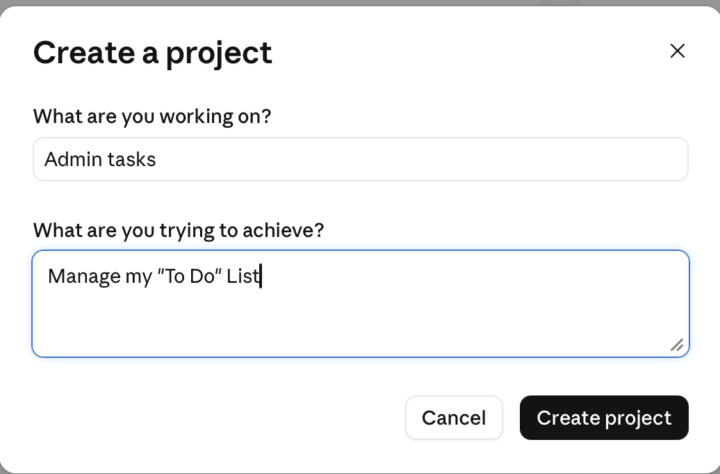
Manage Your "To-Do" list with Claude
Hi Everyone! Let's talk about your "To Do" list. Your to-do list isn't a productivity tool anymore. It's a source of anxiety. I talk to in-house corporate event planners every week. And almost every single one of them has the same problem: They're not bad at planning events. They're drowning in the act of tracking the planning of events. Here's what that actually looks like: A sticky note on your monitor for the urgent stuff. A notebook for the things you thought of in meetings. An email you flagged to "deal with later" that's now buried under 47 other flagged emails. A shared spreadsheet that hasn't been updated since last Tuesday. A voice memo you left yourself at 6pm that you still haven't transcribed. A mental list (the most dangerous one) of everything you're terrified of forgetting. You're not managing one to-do list. You're managing six of them simultaneously, in your head, all day long. Here's what AI actually solves here: A well-built AI workflow captures every task the moment it's identified, categorizes it by event, priority, and deadline, and surfaces what needs your attention today, not everything, just today. Your brain stops being the system. The system becomes the system. You show up in the morning knowing exactly what matters. Not spinning through four apps and a notebook trying to figure it out. As promised here is an example of a prompt I used in Claude to help me with my "To Do" List": I started with My Project, then defined what I wanted and what a successful response to my request looks like. Then Claude gave me a Task Manager that lets me categorize and prioritize the task. If you want the full response just drop me a message but you can see the working Task Managing system created. Let me know if this was helpful to you!
0 likes • 11d
It looks great, Teresa! What about Notion? It's also an amazing tool for PM and managing tasks, and they also have AI now ;)
19d •
The Hotel Already Said Yes. You Just Didn't Know What to Ask For.
Hey community - this week we're going somewhere I know really well. Hotel negotiation. Specifically: the gap between what most in-house corporate event planners walk away with, and what was actually sitting on the table the entire time. This is one of the areas where my background in hotel contracting through HPN Global directly translates into real, measurable value for you. I know what hotels expect you to ask for and what they're quietly hoping you won't. This week I'm handing you the insider playbook. ━━━━━━━━━━━━━━━━━━━━━━━━ 1. WHY MOST PLANNERS LEAVE MONEY ON THE TABLE, AND IT'S NOT THEIR FAULT Here's something the hotel industry doesn't advertise: their first contract is almost never their final offer. Hotels build their proposals with room to give. Concessions are already factored into their margin. The planner who asks gets. The planner who doesn't ask, doesn't. The problem isn't that in-house corporate planners can be bad negotiators. It's that most of them were never given a complete picture of what's actually negotiable. They learned their craft through doing, not through a deliberate education in hotel commercial structures, group sales incentives, and what motivates a hotel's Director of Sales to say yes. That knowledge gap costs companies thousands, sometimes tens of thousands of dollars per event. Multiply that across an annual event calendar and you're looking at a serious number. This post is the starting point for closing that gap. 2. THE FULL NEGOTIATION MENU - WHAT'S ACTUALLY ON THE TABLE Let's get specific. Here is a working list of what experienced hotel negotiators routinely request and regularly receive: ROOM & ACCOMMODATION • Complimentary suite upgrades for VIP attendees (1 comp per X rooms booked is standard) • Staff and planner rooms at significantly reduced or fully comped rates • Early check-in and late checkout guarantees written into the contract • Room block flexibility, the ability to release rooms without penalty closer to the date
1 like • 15d
Very useful !
Apr 22 •
Stop Drowning in Admin. How AI Gives You Your Time Back
Hey everyone! Welcome back to this week's deep dive. Last week we talked about the big picture: Why understanding AI is becoming a competitive edge in our industry. A few of you messaged me privately to say it resonated, but also that AI still feels a little overwhelming or out of reach. That response told me exactly what we need to talk about this week. This post is for anyone who's thought: "I'm not a tech person. I wouldn't even know where to start." You're in the right place. Let's go slowly, practically, and without any jargon. 1. FIRST — LET'S ACKNOWLEDGE SOMETHING REAL Admin is quietly stealing your career. Not dramatically. Not all at once. But hour by hour, the emails, the proposals, the briefing documents, the follow-up messages, the checklists, they suck up your time. Many hospitality and events professionals spend more time on documentation than they do on actual creative or strategic work. That's not a personal failing. It's a structural problem with how our industry has always operated. AI is the first tool that genuinely addresses it; not by replacing your judgment, but by handling the mechanical parts of the job so you can focus on the parts that actually need you. 2. WHAT "USING AI" ACTUALLY LOOKS LIKE IN PRACTICE Forget the sci-fi images. Forget the robots. In practice, using AI for admin looks like this: you open a browser tab, type a description of what you need, and get back a solid first draft in under 30 seconds. You read it. You adjust the tone. You add the specific details only you know. You send it or save it as a template. That's it. That's the workflow. It's less complicated than learning a new piece of event software, and the payoff is immediate. You don't need to understand how it works. You just need to know what to ask it for. 3. THE ADMIN TASKS AI HANDLES BRILLIANTLY (RIGHT NOW, TODAY) Here are the things AI is genuinely great at for our industry: • Client emails: first contact, follow-ups, difficult conversations, thank-you notes
0 likes • Apr 23
I’m using it every day to help me for creating content, outreach messaging and for taking notes while I’m in a call ;) I use ChatGPT and Claude paid versions:)
Apr 15 •
AI Won't Take Your Job — But Someone Who Understands It Will
This week I want to talk about something that I believe is the single most important mindset shift happening in our industry right now. And I want to be transparent with you: it's also the reason I'm evolving what I do and what this community is becoming. Let's get into it. 1. THE STATEMENT THAT SHOULD WAKE EVERY HOSPITALITY PRO UP "AI won't take your job — but someone who understands AI will." This isn't a threat. It's an invitation. The people who will lead the hospitality and events industry in the next 5 years are the ones learning AI right now. Not the technology itself, but how to apply it to real work, client experiences, event logistics, team communications, vendor management, and more. The gap between those who lean in and those who wait is widening every single day. 2. WHY I'M PIVOTING AND WHY IT MATTERS FOR YOU After years building my expertise in the events industry, I've made a decision: I'm combining everything I know about hospitality and events with the AI skills I've been developing and I'm bringing it here, to this community, first. This isn't about becoming a tech person. It's about being an events and hospitality professional who uses the most powerful tools available. I want to be the guide I wish I'd had. And this community is where I'll be sharing it all. 3. AI IS NOT ONE-SIZE-FITS-ALL AND HOSPITALITY IS UNIQUE The events and hospitality industry has nuances that generic AI advice doesn't address. Our timelines are unpredictable. Our clients are emotional. Our teams are stretched thin. Our logistics are complex. That's exactly why industry-specific AI education matters. I'm not here to teach you ChatGPT for the sake of it, I'm here to show you how it applies to YOUR work: run-of-show documents, supplier briefs, post-event reports, team onboarding, and so much more. 4. THE SKILLS GAP IS REAL AND IT'S YOUR OPPORTUNITY Right now, the majority of professionals in our industry are not using AI in any meaningful way. That means the learning curve is still accessible and the competitive advantage is still up for grabs.
0 likes • Apr 16
Hey Teresa, what a great direction for this community ! For me it is daily outreach as a business owner and for my operations team - it’s describing a stand design concept in a specification brief for the stand builders we work with :)
1-8 of 8

@zdravka-kambourova-4721
Helping Marketing Directors simplify their international B2B trade show campaigns.
Active 2h ago
Joined Nov 1, 2025
Powered by