Activity
Mon
Wed
Fri
Sun
Dec
Jan
Feb
Mar
Apr
May
Jun
Jul
Aug
Sep
Oct
Nov
What is this?
Less
More
Credit 2 Millionz (FUNDING)
273
Free
No SSN Finance ITIN Credit
272
Free
Wealthy Expat Forum
1k
Free
American Leverage™
6.4k
5.0
Free
Nomad founders
95
Free
Cloud Residents · US Credit
1.8k
5.0
$18/m
105 contributions to Cloud Residents · US Credit

19d •
W-8BEN & W-9 misfiling
Many non-resident aliens (NRAs)—frequently referred to in online communities as "cloud residents"—attempt to bypass strict U.S. bank and credit card onboarding requirements by falsely claiming to be U.S. tax residents. This usually involves signing an IRS Form W-9, where you certify under penalty of perjury that you are a "U.S. citizen or other U.S. person." While this might seem like an easy shortcut to get approved quickly, it carries severe legal, financial, and immigration consequences. Based on federal regulations and statutory references, I have summarized what can go wrong: - Involuntary Account Closures (KYC/AML Audits): Under the USA PATRIOT Act Customer Identification Program regulations (31 CFR § 1020.220), banks perform periodic risk reviews. Flagging a non-U.S. IP address, foreign phone number, or mismatched residency data triggers immediate account termination. - Banking Blacklists (ChexSystems & EWS): Under the Fair Credit Reporting Act (15 U.S.C. § 1681 et seq.), when a bank forcibly closes an account for fraud or misrepresentation, it reports the incident to ChexSystems and Early Warning Services (EWS). These flags stay on ChexSystems for up to 5 years, effectively blacklisting you from opening accounts across major mainstream U.S. financial institutions. - Automatic 24% IRS Backup Withholding: Under the Internal Revenue Code (26 U.S.C. § 3406), false certifications or mismatched Taxpayer Identification Numbers trigger mandatory IRS backup withholding, forcing the bank to withhold 24% of your interest and earnings. - Worldwide Income Tax Liability: Standard NRAs are only taxed on U.S.-source income (26 U.S.C. § 871), whereas signing a W-9 subjects you to U.S. resident rules (26 U.S.C. § 1), obligating you to file a standard Form 1040 and report your worldwide income. - Visa Denials and Inadmissibility: Under the Immigration and Nationality Act (INA § 212(a)(6)(C)(i) / 8 U.S.C. § 1182), U.S. visa applications, Green Card forms, and ESTA questionnaires explicitly ask if you have ever made a false statement to obtain a benefit. Falsifying a federal tax document signed under penalty of perjury constitutes a material misrepresentation, which can lead to permanent visa denial or deportability.
1 like • 19d
@Ain - Cloud Resident Legally, technically, and contractually, signing a Form W-9 as a non-resident alien (NRA) means executing a federal document under penalty of perjury. However, a critic might argue that some accounts slip through the cracks without immediate detection, which gives people a false sense of security. The severity of the rules is absolute, even if enforcement happens selectively or downstream. Proof & Verification of Each Point 1. "Account closed at the next yearly KYC review" - The Law: 31 CFR § 1020.220 (USA PATRIOT Act Customer Identification Program). - The Reality: Financial institutions are legally mandated to verify customer identities and tax statuses. Banks run ongoing automated monitoring (checking for foreign IP logins, overseas phone numbers, or passport/visa mismatches). When a discrepancy surfaces during periodic Know Your Customer (KYC) compliance reviews, banks do not risk regulatory fines—they freeze or shut down the account. 2. "Reported to ChexSystems and Early Warning Services (EWS) for 5 years" - The Law: 15 U.S.C. § 1681 (Fair Credit Reporting Act). - The Reality: EWS and ChexSystems are consumer reporting agencies used by major U.S. banks (Chase, BofA, Wells Fargo, etc.) to screen for risk and fraud. When an account is terminated for violating terms of service or material misrepresentation during onboarding, banks log an involuntary closure code. ChexSystems legally retains these negative marks for up to 5 years, creating a cross-bank barrier. 3. "Automatic 24% backup withholding on interest" - The Law: Internal Revenue Code, 26 U.S.C. § 3406. - The Reality: The IRS explicitly mandates that if a taxpayer identification number (TIN) fails matching rules, or if a certification exemption is improperly invoked, the payer is legally required to withhold 24% of reportable interest or payments and remit it directly to the IRS. 4. "IRS expects a full 1040 with worldwide income"
1 like • 19d
@Ain - Cloud Resident I totally understand your expression. Some people argue that banks don't always catch this or take immediate action, but that's just survivorship bias. The law is written in black and white in federal regulations. Whether an institution enforces it today or during an audit tomorrow, the legal liability remains. Don't take the risk—that's the simple truth.

Jul 17 •
HSBC U.S. Premier Checking w/ ITIN ✅
Sharing my full timeline in case it's helpful for others going through this process (ITIN instead of SSN). Jun 1 — Submitted an application as someone moving to the U.S. with no prior relationship with HSBC outside the US. Jun 3 — HSBC requests additional info to move the application forward (clarification on rationale, among other items). Replied same-day with responses to HSBC's clarification requests, including on the relocation rationale. Jun 4 — HSBC confirms preliminary review complete, requests further additional documentation to continue. Responded with most recent paystub as proof of employment. Jun 22 — Onboarding Case Manager sends a W-8BEN tax form to review/sign, flagging an SSN mismatch to resolve so the application can finish "today itself." Signed it same day. Jun 23 — Follow-up confirming the tax form (W-8BEN) has been reviewed and signed. Jun 24 — HSBC asks for clarification: i listed as a business owner but stated income source as "employment," they need this reconciled. I clarified: I'm the Founder & Managing Director of XYZ COMPANY, but also draw a formal salary as an employee, which is my primary personal income source. Jun 30 — One-month check-in: noted all documentation, clarifications, and the W-8BEN have been submitted, and asked for a status update. No response. Jul 1–16 — 3 calls to check in and ask for a status update. Last call was Jul 16. Jul 17 — ✅ Application approved, Premier checking account opened. Total: ~ 6.5 weeks from submission to approval. ITIN Issued Feb 2026.

2 likes • 19d
@E K I told you already if you apply directly to US HSBC without Premier Account from other countries, loads of documents have to be fulfilled. Good luck
1 like • 19d
@E K They dont care whether you are US citizen or not. Indeed, their target is to source wealthy individual.

Oct 11 •
RedPocket CNAM
Regarding CNAM and the whole Capital One situation where you couldn’t change your address because they couldn’t verify that your phone number matched your personal information, I contacted Red Pocket since my number was showing up on CNAM under someone else’s name. This is what they replied. I’ll port my number to a postpaid carrier in the near future and then port it back to Red Pocket afterward.

1 like • 24d
@Arcos I Exactly !
2 likes • 19d
@Valentin Hochstädter free caller registry is solely for business line registration. Always separate private vs business in your individual credit journey.

May 1 •
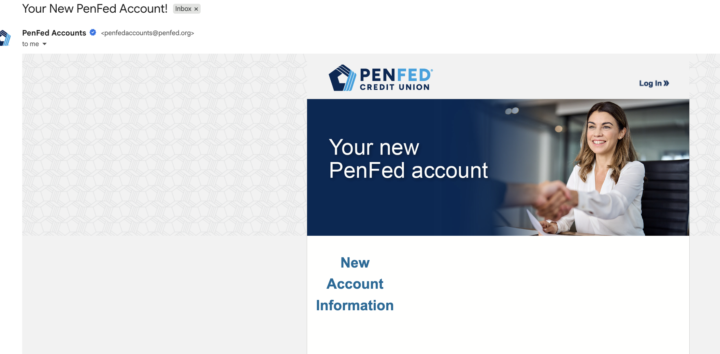
penfed approved
applied 20 april , got it approve , submitted sim bill on 24 april and today got approved
1 like • 20d
Congrats 🎉 May I ask the sim bill is submitted as a utility proof or other ? Penfed just needs the sim bill ?


2 likes • 20d
Congrats 🎉 this is just the beginning, keep up
1-10 of 105
