Activity
Mon
Wed
Fri
Sun
Jan
Feb
Mar
Apr
May
Jun
Jul
Aug
Sep
Oct
Nov
Dec
What is this?
Less
More
Memberships
Data Alchemy
38k members • Free
11 contributions to Data Alchemy


0 likes • Apr 19
CHAT is Cetacean Hearing Augmentation Telemetry not Citation
1 like • Apr 19
Skimming at one peer-reviewed paper published in 2024 on this project, https://www.animalbehaviorandcognition.org/uploads/journals/58/2%20Herzing_ABC_11(2).pdf.pdf), we may have to review the associated permit from the Bahamas Department of Marine Resources (MAMR/FIS/12A) to clarify the ethical safeguards in place. X
Apr 19 •
Unlock Business Success with Ethical AI!
Hey everyone! Our discussion on the Dolphin Gemma project, sparked by @Pierre-Henry Isidor , inspired me to share an article I came across: “The Ethics of Using AI in Scientific Research” by Resnik and Hosseini (2024): https://link.springer.com/article/10.1007/s43681-024-00493-8. It offers essential guidance for those exploring AI in science or business. Why It Matters: The article highlights AI’s transformative potential, such as AlphaFold’s breakthrough in protein modelling, alongside challenges like biased COVID-19 data models. For businesses, it provides strategies to implement AI responsibly, preventing issues like unfair hiring systems or unclear customer analytics. Practical Insights for Businesses: - Ensure Fairness: Regularly audit AI systems, as scientists do in research, to maintain equitable outcomes in hiring or marketing. - Promote Transparency: Clearly communicate how AI influences decisions, such as loan approvals, to build customer trust. - Engage Stakeholders: Involve customers in AI development, mirroring scientists’ community consultations, to align with real-world needs. Your Thoughts: How can businesses adopt these principles to use AI ethically? Have you observed effective or problematic AI applications in your industry? Please share below! #EthicalAI #AIinBusiness #ResponsibleTech

Apr 18 •
Optimal RAG text chunking
There is this research from ChromaDB that talks about the different strategies for chunking text without loosing valuable context for optimal RAG systems, but I'd recommend checking out Adam Lucek's YouTube channel where he demonstrates with practical examples these strategies. He also made available a Github repository (QuicKB) where he puts in practice all this. I think it's a really valuable resource. Don't miss the link to the video below! Cheers! 🙂
1 like • Apr 19
Thank you, Eduardo, for highlighting this resource on RAG text chunking. I watched Adam Lucek’s video and found his Python code incredibly useful for visualising how different chunking methods affect outputs—it’s a practical way to understand the impact. The ChromaDB paper you mentioned (https://research.trychroma.com/evaluating-chunking) adds depth, showing that smaller, semantically coherent chunks often improve context retention in RAG systems, which is critical for accurate retrieval. I’m curious—have you experimented with any chunking strategies in your projects? If so, what’s worked best for maintaining context?

Apr 13 •
My burning question...
Hi All, as I tackle the first few courses on here which seem really well written and useful but I have a nagging question that I am hoping you all can help me answer. I am looking to learn AI and become an expert in my workplace by implementing it to save time and money on every aspect I can, from simple automation, to full company org style agentic systems with image process etc, My question - do I REALLY need to learn this level of coding and knowledge to do that if I an to rely on mainstream AI platforms and workflows? or am I wasting my time. I am a generalist anyway, so specialising on things to a deep level is not my thing, I tend to join the dots on things and let people that are more clever than me, do the detailed stuff. I see AI as that person/entity that will help me do that. What are you thoughts and experiences? I I would rather concentrate my time and effort into the area that will help the most, if I do not need this deep knowledge then I won't but interested in your thoughts. Cheers, Neil.
0 likes • Apr 19
Hi Neil, I resonate with your generalist approach—I’m the same way, focusing on connecting the dots rather than deep technical details. In my experience, you don’t need to master coding to leverage AI effectively, especially with mainstream platforms like ChatGPT or no-code tools like N8N, Zapier. For example, I’ve used prompt chaining to break down complex tasks (like in my recent post), which saves time without coding. That said, understanding basic concepts—like how agentic workflows function—helps you guide AI tools better. A challenge is ensuring outputs align with business goals, which sometimes needs human oversight. What AI use case are you starting with? I’d love to hear your thoughts!
Apr 18 •
What’s the ONE AI Agent Skill You Wish You Could Master in 2025? Let’s Share and Learn!
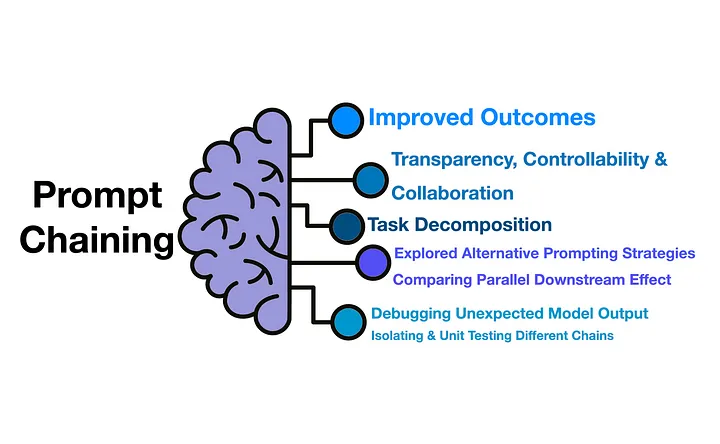
"Hey Data Alchemists! AI agents are evolving fast, from coding assistants like OpenAI’s Codex CLI to edge-optimised models like DeepSeek-R1. But let’s get real—building or using AI agents can be a steep learning curve. If you could instantly master ONE skill to level up your AI agent game in 2025, what would it be? For me, it’s prompt chaining—crafting workflows that make agents solve complex tasks reliably (like avoiding those pesky hallucinations we all hate) (https://cobusgreyling.medium.com/chaining-large-language-model-prompts-81091daccaad). What’s yours? Maybe it’s fine-tuning open-weight models like Llama 4 Scout, debugging agent failures, or even explaining AI decisions with XAI? Drop your pick below and share a quick tip or challenge you’ve faced with it. Let’s spark some ideas and help each other grow! P.S. Inspired by the ‘How to Build Effective AI Agents’ post
1 like • Apr 18
@Khanh Nguyen Thank you for your comment. I share your interest in a hands-on prompt chaining tutorial to make the concept more actionable. The Medium article I linked (https://cobusgreyling.medium.com/chaining-large-language-model-prompts-81091daccaad) discusses benefits like task decomposition, as shown in the brain diagram, but its examples are more conceptual than step-by-step guides for implementation. Have you worked with prompt chaining in any tools, like ChatGPT or Python-based frameworks? What kind of tutorial would be most useful—perhaps a simple example for beginners or something more technical? Sharing your thoughts could help shape ideas for the community. I’d also love to hear: what AI skill are you aiming to master in 2025?
1-10 of 11

@x-aiagroxpert-3059
X.AIAgroXpert: Plant Sci PhD, Agri Eng MSc, & Stats Genetics MSc, AI enthusiast driving data-informed ag innovations.
Active 202d ago
Joined Apr 8, 2025
Australia
Powered by