Activity
Mon
Wed
Fri
Sun
Dec
Jan
Feb
Mar
Apr
May
Jun
Jul
Aug
Sep
Oct
What is this?
Less
More
Biohackinggirly’s Lab🥼🔬
2.8k
Free
BioOptimization Collective
372
Free
Mikes PEP-Talk
1.9k
$5/m
The SelfmaxxingBlueprint
1.5k
Free
Biohacking Peptide Playground
9.3k
Free
Peptide Protocol Academy
116
Free
Testosterone Bible
209
Free
🍭Kandies
752
Free
6 contributions to BioOptimization Collective

Aug 21 •
ARE YOU DOING TOO MUCH IN THE GYM?
More exercises. More sets. More time in the gym. More soreness. People automatically think that means better results. It doesn't. One of the biggest things I've learned from training for over 20 years is that I'm not trying to see how much work I can survive. I'm trying to get the most results from the work I do. That's why my current training program is built around 2 quality working sets. Set 1: 8 to 12 controlled reps. Set 2: 8 to 12 reps followed by 2 drop sets. Then I track my numbers. Once I can beat my rep range with good form, the weight goes up. That's progressive overload. You don't grow because you spent two hours in the gym. You grow because you gave the muscle a reason to adapt and then gave your body what it needs to recover. Quality over junk volume. Now I'm curious... How long are you normally in the gym? 1. 30 to 45 minutes 2. 45 to 60 minutes 3. 60 to 90 minutes 4. 90+ minutes Drop yours below.

1 like • Aug 21
How do you feel about 1st set. 10 reps good form, 2nd set add 5-10lbs for 8 good reps, set 3. Add another 5-10 lbs 6 good controlled reps? Progressing every set
1 like • Aug 22
@Travis Dickey nah i found that out the hard way today on the joints lol.
Jul 7 •
Poll Results On Longevity Peptides
Mots-C received the most votes. Then #2 was Epitalon. #3 GHK-CU and #4 SS-31. Most people accept aging as inevitable. The science increasingly does not. What we call aging is a measurable cascade of cellular events. Mitochondrial decline. Telomere shortening. Collagen breakdown. Chronic inflammation that never fully resolves. These are not mysteries. They are addressable biological processes. And four compounds in the current research literature are targeting each one of them directly. MOTS-c — Your Mitochondria Have a Longevity Signal. Here Is How to Restore It. Identified in 2015 by researchers at USC and published in Cell, MOTS-c is encoded directly in mitochondrial DNA and activates AMPK — the same metabolic switch triggered by fasting and exercise. Published research shows improved insulin sensitivity, enhanced fat oxidation, and increased endurance in study models. A 2019 study confirmed MOTS-c levels decline significantly with age in humans, correlating directly with metabolic dysfunction and reduced physical capacity. This is not a synthetic compound mimicking a natural process. It is the natural process itself, restored. Epitalon — The Only Compound Shown to Activate Telomerase in Human Cells Every cell division shortens your telomeres. When they get short enough cells stop dividing and begin secreting inflammatory signals that accelerate aging in surrounding tissue. That process is called cellular senescence and it is one of the primary drivers of age-related disease. Epitalon, developed by Dr. Vladimir Khavinson at the St. Petersburg Institute of Bioregulation and Gerontology, has demonstrated telomerase activation in human somatic cells in peer-reviewed research published in Neoplasma. It has also shown restoration of melatonin rhythms, improved immune function, and in long-term studies a statistically significant extension of lifespan. Over 35 years of research and more than 100 published studies back this compound. That is not a claim. That is a track record.
0 likes • Jul 10
@Adam Koller yeah bro I might run it twice a year i got my wife on it now but i thing her mitochondria wasnt as F%$K as mine lol
1 like • Jul 10
@Adam Koller 🤣
1 like • Jun 3
@Leslie Lyon i see tho, sounds interesting, and dont try kisspeptin cause ive been on it and... you gonna make a baby with that stuff lol I got 3 so im done done ! Lol
1 like • Jun 4
@Leslie Lyon lol thats really good, the reta kind of put me in a not mood. But with the kiss all is good. Oh damn hope you ok almost dying is no bueno
May 21 •
Reta
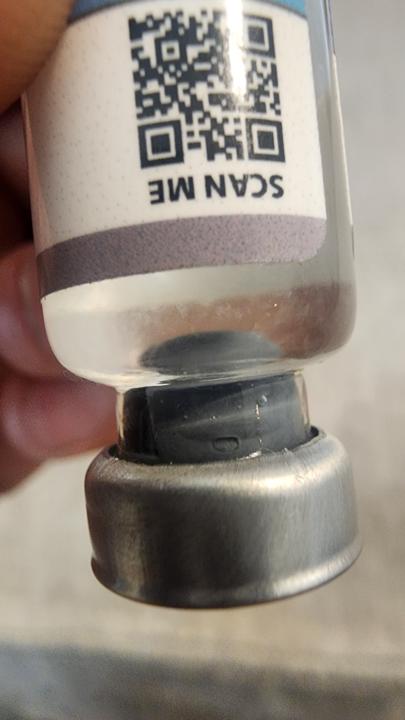
Any advice on reta? Got a 30mg vial, how to recon, and how much to use, going up amounts etc, any advice is greatly appreciated
1 like • Jun 1
@Leslie Lyon oh ok ima have to look into that and so happy you sleep well im low key hating lol, but dsip is good but i wouldnt go pass 5 units if you ever try it 10 at the absolute most
1 like • Jun 2
@Leslie Lyon
1-6 of 6
Active 4d ago
Joined May 19, 2026
Powered by