Activity
Mon
Wed
Fri
Sun
May
Jun
Jul
Aug
Sep
Oct
Nov
Dec
Jan
Feb
Mar
Apr
What is this?
Less
More
Owned by Tristian
Helping nature lovers, students, and explorers learn how to identify, forage, and ethically harvest wild plants.
Memberships
Skoolers
195.9k members • Free
34 contributions to The Forager's Guild
3d •
3 day foraging challenge!
I want to present a challenge for you all! A 3-Day Forage Challenge: Find 1 edible, 1 medicinal, and 1 mystery plant. Post all 3! Deadline is 4/21/ 26! Lets goooooo
3d •
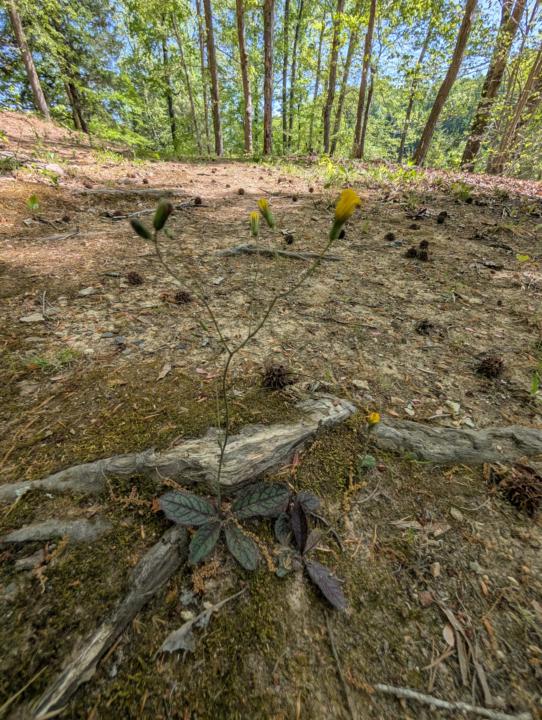
Rattlesnake weed ( heracium venosum )
I found this yesterday while fishing in NC! One of the most common historical uses for this plant was as an expectorant. An expectorant helps your body loosen up mucus so you can cough it up and out. How it was used: People would make a tea (a decoction) out of the leaves or the root. They’d drink this to help with "chest complaints," which we would call a bad cough, bronchitis, or even asthma today. The "Blood Purifier" In older traditional medicine, people talked a lot about "cleaning the blood." They used Rattlesnake Weed as a tonic. The Goal: They believed that if you had skin breakouts, low energy, or were recovering from being sick, the plant could help "reset" your internal system and get your blood moving correctly again. First Aid on the Trail Because the plant is an astringent, it’s great for the skin. Stopping the Bleed: If someone got a small cut or a scrape while out in the woods, they could mash up the leaves into a "poultice" (basically a wet plant-paste) and put it right on the wound. It helps shrink the tissue and stop the bleeding. Removing Warts: The stems have a little bit of milky sap in them. Traditional folklore says if you rub that sap on a wart every day, it will eventually disappear. Traditional Roots: The Snakebite Connection We can't talk about traditional use without mentioning the snakebite history. Native American tribes, including the Cherokee, used this plant frequently. The Method: They didn't just use it for the bite itself; they sometimes used the juice of the plant as a "preventative" or to wash the area. The Theory: While we know now it doesn't actually neutralize venom, the plant's ability to reduce swelling and act as an antiseptic (killing germs) probably helped the wound heal much better than if they had done nothing at all.
1
0
11d •
Took a hike through the east palisades
Whassup yall?! I hope yall having a cool week so far! I wanted to share some cool finds on my hike this morning. A friend of mine invited me out to take a hike in the East Palisades in Vinings, ga. I've never been, so I said sure! I was surprised to find so much diversity out there! It's a goldmine for understory medicine! There was bloodroot, trilliums, wild ginger, green dragons, wild comfrey, rocket weed may apple and soooo much more, I definitely was out there for a few hours just exploring and compiling data! We decided to take a rest on the river and meditate. After my meditation, a bald eagle 🦅 came and caught a fish and flew off. This was a great sight for me as it was definitely a spiritual message! Pic order: green dragon , wild comfrey, wild ginger and wild ginger root.

13d •
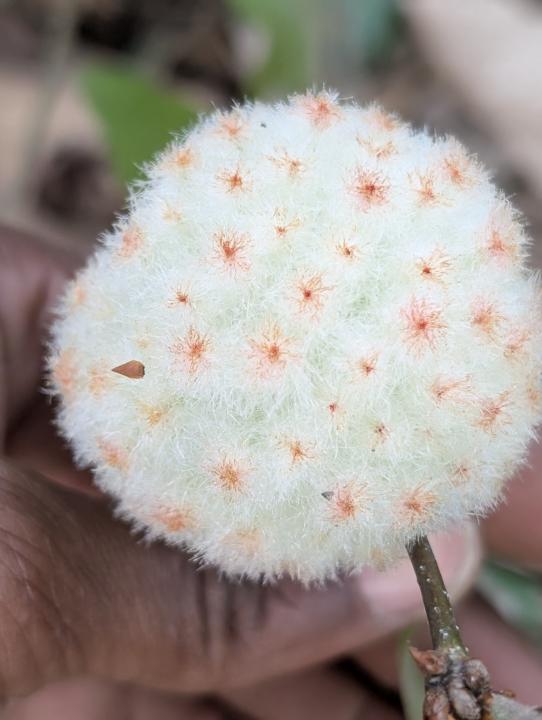
Straight Outta Whoville: The Wool Sower Gall
Peace, Guild! I was out in the woods recently and stumbled across something that made me feel like I had just stepped straight into Whoville. If you’ve never seen a Wool Sower Gall before, you might think Dr. Seuss himself came out and decorated the forest. It looks like a fluffy, toasted marshmallow or a cotton ball speckled with pink and bright red spots, just casually growing right out of the stem of an oak tree. It’s incredibly unique and definitely one of those finds that makes you stop and appreciate the wild art of nature. What exactly is it? That beautiful, fuzzy creation is actually a plant gall, specifically created by a tiny, stingless species of gall wasp (Callirhytis seminator). In the spring, the female wasp lays her eggs on the twigs of a White Oak. The tree responds to the wasp's secretions by growing this incredible, fibrous fluff, which acts as a protective, temperature-controlled nursery for the wasp larvae developing inside. Is it harmful to the tree? Nope! it looks like some kind of alien fungus taking over, yet it’s completely harmless to the oak tree. It’s just a temporary, localized reaction...think of it as the tree throwing a little protective blanket over the wasp's young. Why these wasps matter: It’s easy to hear "wasp" and immediately think of a pest, but these little gall wasps are vital to the ecosystem. They don't sting or bother humans. Instead, they act as a crucial food source for a variety of birds, small mammals, and predatory insects. They are a perfect reminder that everything in the woods has a purpose and a place in the web of life. Next time you’re out scouting around White Oaks, keep your eyes peeled for these little Seussian tufts! Has anyone else in the Guild ever spotted one of these in the wild? Drop a picture in the comments if you have!
0 likes • 11d
Yep! I believe what you're experiencing is the sight! Lol scientifically its called frequency illusion! Look it up!
14d •
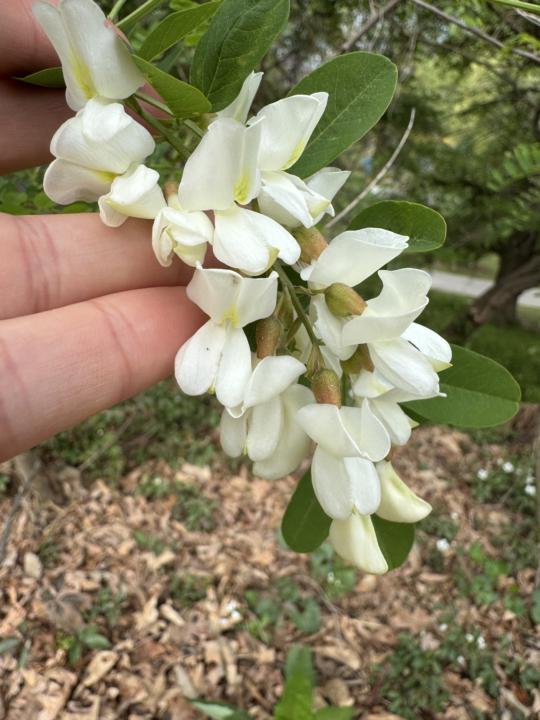
Black locust season - you've got to smell these
These Black locust or Robinia pseudoacacia are blooming in Atlanta right now. Best way to find them is in open fields, near roads, or bridges. They like rocky and recently cleared locations and it can be hard to reach the flowers. They have spikes on their bark. These smell amazing, and they taste amazing too. I put them in my water, banana ice cream, oatmeal and more. They're only ripe for a week or two max and then you'd have to go north to forage them. They're my favorite flower to forage without a doubt for aroma.
1 like • 14d
My papa put me on to these ! I love to eat the insides of the beans! I cant wait till they fruit! Thanks for sharing Josh!
1 like • 14d
@Josh Wayne actually got them confused with the honey locust.... I just looked these up and their seed pods are not the same...but the honey locust beans...you can just open up and eat...tastey as hell tooo
1-10 of 34
@tristian-bowden-3233
Ethnobotanist, agriculturist, herbalist, medicine man, minister, artist
Active 3d ago
Joined Aug 6, 2025