Activity
Mon
Wed
Fri
Sun
Oct
Nov
Dec
Jan
Feb
Mar
Apr
May
Jun
Jul
Aug
What is this?
Less
More
Viral Coach Training Material
29.5k members • Free
Jack Vs. AI Workflows
17.7k members • Free
Max Business School™
266.2k members • Free
TotalThreat Free
1.5k members • Free
AI SaaS Launchpad
2.3k members • Free
NextGen AI
54.4k members • Free
Imperium Academy™
75.2k members • Free
THE SKOOL HUB
5.6k members • Free
Clief Notes
47.2k members • Free
4 contributions to 🎙️Skool Summit Stage🎙️

4h •
5 tools I’d use to become more visible without being everywhere at once
Getting noticed online isn't just about posting more. You need content worth sharing, a way to stay consistent, people to connect with, and a system that keeps all those moving pieces from becoming overwhelming. A simple stack can help: - ChatGPT / Claude — brainstorm content angles, turn your ideas into posts, prepare speaking topics, and help you get past the “what do I even post?” stage. - Canva — create polished social posts, presentation slides, lead magnets, and summit materials without needing to be a designer. - Loom — record quick educational videos, speaker introductions, tutorials, or personalized messages that let people actually hear and see your expertise. - Notion — organize content ideas, speaker opportunities, collaboration notes, event planning, and resources so good opportunities don't get lost. - Floment — keep the execution organized with projects, tasks, progress updates, and AI assistance so you can actually follow through on your visibility and content goals. But tools are only part of the equation. Visibility grows when you combine the tools with real human connection. That's what makes communities like this interesting. You can discover speaking opportunities, learn from guest experts, get feedback on your content, connect with other creators, and find potential collaborations, instead of trying to build your visibility completely on your own. If you're a coach, creator, business owner, or aspiring speaker who wants to be more visible, create consistently, and build genuine connections, I'd start here. Check out the workshops, meet the people inside, and see where you can contribute. You don't have to be an established expert to start putting yourself out there. What's harder for you right now: creating content, getting comfortable being visible, finding speaking opportunities, or making the right connections?
0
0

🔥
Jul 1 •
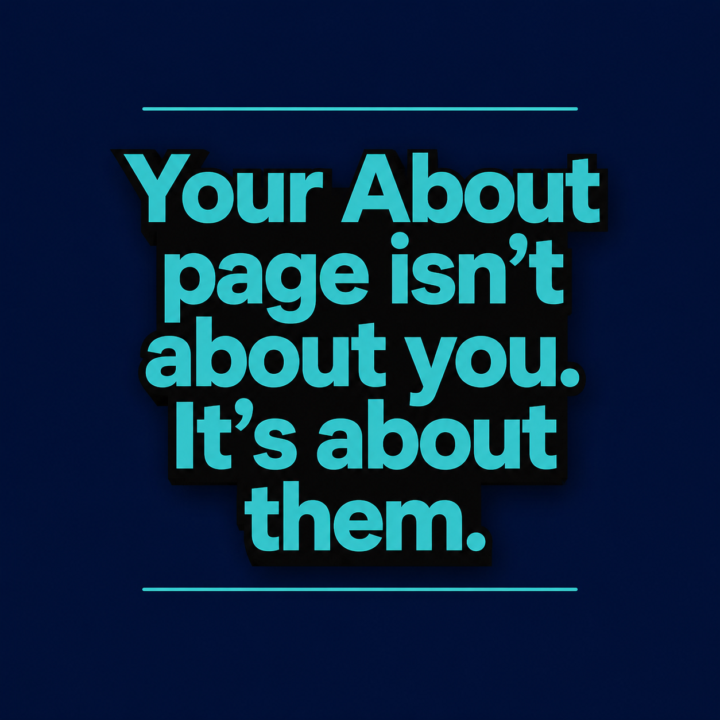
Your About page isn’t about you. 👀
It’s about them. The second someone lands on your Skool community, they’re asking one question. “Is this for me?” Most About pages answer the wrong one. They list features. They talk about themselves. They say things like “a community for people who love [niche].” That tells someone what you are. It doesn’t tell them why they should stay. Here’s what actually works. Call out who it’s for, specifically. Name the problem they’re already feeling. Show them what their life looks like after they’re inside. Example “This is for the burnt-out fitness coach who has clients but no community holding them accountable between sessions.” That one sentence does more work than three paragraphs of features. I’ve gone deep on this, pulling apart what makes About pages convert versus ones people scroll past. The pattern is always the same. Get to the point fast People just need to know who it’s for, what they get, and why they should join and stay. Nothing else really matters. Your About page is your first impression and your first sales pitch. Most people set it once and never touch it again. 🚨 I’ll pin 📌 a prompt from my Ultimate Skool Playbook AI prompt bank that’ll help you write a high converting About page. If you use the prompt and tweak yours, drop your about page text below with your community link 🔗 I’ll give you some feedback, and you might find someone it speaks to.
Poll
27 members have voted
1 like • 14d
Great breakdown on focusing on transformation over generic features! I usually draft out my community positioning copy in Google Drive before setting up the actual space. For communities focused on real output, pairing a clear About page with Floment using project cards and task tracking helps new members immediately start building instead of just consuming content. Having that clear path to daily action from day one makes long term retention so much easier.

25d •
Stay focused on one skill
First, choose one practical skill and stick with it instead of getting distracted by constantly switching between different ideas. Skills like content creation, basic marketing, or digital communication grow faster when you give them consistent, undivided attention. Second, consistency matters more than intensity, and it also helps protect you from distraction. Small daily actions—like learning, practicing, or posting—build momentum over time, while jumping between tasks or interests slows progress and creates confusion. Third, build simple systems that keep you focused rather than overwhelmed. A repeatable routine, even something you can do from your phone in short sessions, helps reduce distractions and keeps you moving in one clear direction.
2 likes • 24d
I keep my high level learning roadmap organized in Notion, but I use Floment to handle my actual daily execution. Setting up small project cards and to dos for short sessions makes it easy to stay focused without getting overwhelmed. Logging those small daily wins directly on the feed builds that momentum you mentioned and keeps the habit going.
1 like • 23d
@Madelein Basson Totally worth it

26d •
How I made AI feel simple again
The AI world moves fast. Every week there's another launch, another comparison, another reason to feel behind. For a while, I tried to keep up with all of it. Eventually I realised something. My business wasn't changing every week. So why was I trying to learn a completely new tool every week? Now I start with the business. Only then do I decide if AI belongs.
1 like • 24d
I fell into that exact trap of testing new apps every week until I finally anchored my setup. Now I map out high level strategies in Notion and run my daily execution inside Floment using project cards. Having native AI through Flowie right inside the workspace saved me from constantly chasing new standalone tools. It really helped shift my daily focus back to actually building the business.
1-4 of 4

@tony-iverson-7089
Building things online and trying to optimize my daily workflow. Here to learn from founders who are a few steps ahead.
Online now
Joined Jul 4, 2026
Powered by