Activity
Mon
Wed
Fri
Sun
Oct
Nov
Dec
Jan
Feb
Mar
Apr
May
Jun
Jul
Aug
Sep
What is this?
Less
More
AI Masters Community with Ed
23k
Free
DIGITAL PROFITS COLLECTIVE
2.4k
5.0
Free
Easy Creator
10.8k
Free
Ninjas AI Automation
5.2k
5.0
Free
AI Sales Agency Launchpad
15.7k
Free
Free AI OFM Course
4.8k
Free
Sell & Scale (Free)
7.5k
Free
Business Ownership Academy
1.4k
Free
AI Agent Builders
8.7k
Free
17 contributions to ChatGPT Users

1d •
One problem I keep having with ChatGPT is getting a genuinely useful answer... then completely forgetting about it a week later 😅
I've started separating things a bit: chatgpt.com - brainstorm, research, and work through problems notion.com - save anything I might want to reference later floment.ai - I've been testing this for ideas that actually turn into projects and need next steps It's helped me use ChatGPT less like an endless chat history and more like the starting point for actual work. What do you guys do with your best ChatGPT outputs after the conversation ends?

May 26 •
How to use ChatGPT as a 'second opinion' before you make a business decision
Most people use ChatGPT to generate ideas. That's the easy part. The more useful play is to use it as a second opinion on a decision you've already half-made. When you're about to raise a price, ship a new offer, or send a long email you're nervous about, you don't need more options. You need someone to poke holes in the one you've picked. ChatGPT is good at this if you set it up right. Here's the basic shape. Step 1. State the decision you've already made. Don't ask "what should I do", write out the choice in plain terms. "I'm planning to raise my price from $49 to $79 starting next month. Here's why…" Step 2. Give it the context. Customer base, recent feedback, what your competitors charge, why the timing feels right. Two or three short paragraphs is enough. Step 3. Ask it to argue against the decision. Try this line: "Argue against this decision as if you were a sceptical advisor who has seen plenty of similar plans fail. Be specific." That last word matters. Without "be specific" you get generic risk-talk. With it, you get the actual second opinion you came for. Step 4. Decide what to do with what comes back. Some of the pushback will be useless. Some of it will land. The point isn't to follow the AI's advice, it's to surface the angles you hadn't considered before you commit. This pattern earns its keep most on pricing changes, hiring decisions, big emails, and anything where you've already mostly made up your mind. The "give me 10 options" pattern is better suited to early-stage brainstorming. What's the next decision you'd run this on? Drop it below.
0 likes • 1d
Running decisions through a critical lens first saves so much second guessing after the fact. Once I finish poking holes in an offer or pricing change, I push the finalized execution steps into Floment AI task tracking and keep raw customer feedback references in Google Docs. Having the resulting action items organized immediately stops the discussion from turning into another delayed launch.

14d •
From Custom GPTs to Apps — Has Anyone Made the Move?
I’m looking for practical experience from anyone who's already traveled this road. I built a suite of 21 custom GPTs focused on authors, publishing, and book marketing—tools for opportunity research, reader pain points, competitive gaps, book positioning, and related publishing workflows. Each was designed as a focused tool, not a general chatbot. My original plan was simple: distribute individual GPTs by direct link, with customers using them inside their own ChatGPT accounts. Then the ground shifted. OpenAI has ended new GPT creation and publishing on personal accounts. Existing GPTs still work, and ChatGPT Business may preserve some link-sharing options, but that feels more like a bridge than the long-term destination. So I’m now exploring the next question: What is the best way to turn an existing custom GPT into a standalone App or web-based tool? Ideally, I’m looking for a path that: - preserves the GPT’s instructions and workflow rather than rebuilding the concept from scratch; - gives authors and publishers a simple interface without requiring them to understand prompts; - allows me to control access and eventually sell individual tools; - does not require maintaining an elaborate SaaS operation. I’m not wedded to any particular platform. I’m interested in what people have actually built and deployed—whether with the OpenAI API, ChatGPT Apps, WordPress, no-code/low-code platforms, or another approach entirely. If you’ve converted a custom GPT into something customers can use outside the GPT Store ecosystem, what path did you take, and would you choose it again?
1 like • 9d
Rebuilding twenty distinct workflows into standalone tools can turn into massive scope creep if the roadmap stays disorganized. Whenever I map out multi-step system architectures, I keep my core logic and schemas in GitHub while tracking migration tasks and milestones directly in Floment AI. Having a clean project view makes it much simpler to ship one modular tool at a time without feeling overwhelmed by the entire suite.

0 likes • 15d
Deciding between projects and custom GPTs usually comes down to whether you are managing ongoing reference files or running a specific repeatable task. Once I figure out the direction with AI, I pull the actual execution steps into Floment and store my main notes in Notion so everything stays organized. Finding the right split between your AI workspace and your task tracker makes a huge difference.
19d •
My ChatGPT chats were becoming a graveyard of good ideas
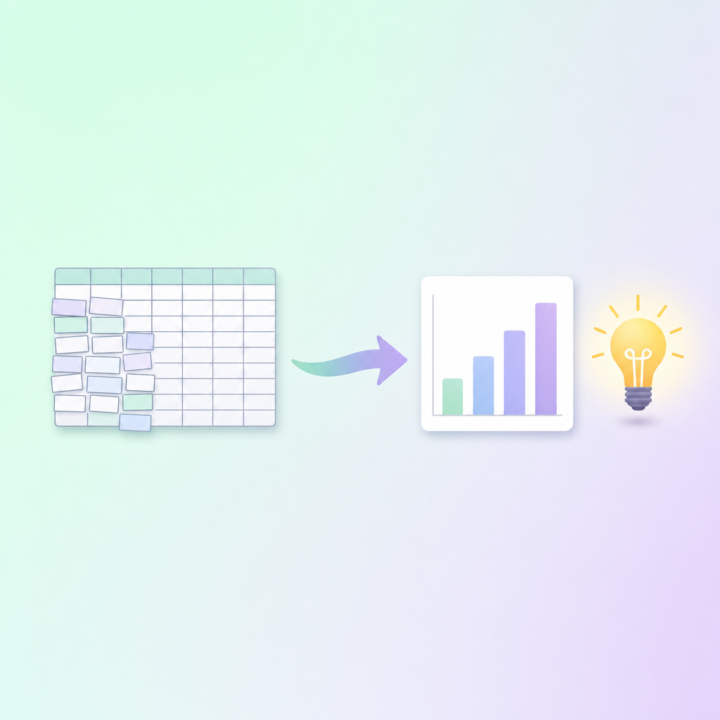
I use ChatGPT constantly for brainstorming, researching ideas, breaking down problems, and figuring out how to approach projects. The problem was what happened afterward. I’d have a genuinely useful conversation, leave with 5–10 things I wanted to do… and then three days later that chat was buried underneath 20 new ones. What’s been working better for me is separating thinking from execution. ChatGPT → brainstorm, research, solve problems Floment → turn the useful stuff into projects and actual tasks Notion → keep anything I’ll want to reference long-term It sounds ridiculously simple, but having somewhere for the output of my AI conversations has made them much more useful. Otherwise I feel like it’s really easy to become great at generating ideas and terrible at actually finishing them. How do you guys manage the useful stuff that comes out of your ChatGPT conversations?
0 likes • 17d
@Jason West Yess. Having that quick parking bay makes all the difference so the ideas do not just sit there gathering dust.
1 like • 16d
@Briana White Building your own tool to fix that exact bottleneck is awesome. Having something directly point you to the next step makes it so much easier to actually follow through instead of getting stuck deciding what to tackle first.
1-10 of 17

@tony-iverson-7089
Building things online and trying to optimize my daily workflow. Here to learn from founders who are a few steps ahead.
Active 8h ago
Joined Jul 8, 2026
Powered by