Activity
Mon
Wed
Fri
Sun
Apr
May
Jun
Jul
Aug
Sep
Oct
Nov
Dec
Jan
Feb
Mar
What is this?
Less
More
Owned by Dr. Tim
Blending AI innovation with smart course design—leadership, best practices, ethics, and fresh ideas for future-ready adult learning.
In a religious word obsessed with doing, 40 Days Projects empowers believers refocus on being. Open to anyone on a journey of transforming deeper.
Memberships
The Skool Hub
5.1k members • Free
Skool Growth Free Training Hub
6.6k members • Free
11 contributions to RUI L&D AI LAB

28d •
Guest on the AI in Education Podcast
Just got off of the AI in Education Podcast. I will post it once I get the final version. Exciting times!
0
0

28d •
Chris had a great idea!
So @Christopher Kees gave me a great idea last night about writing a course on building simple agents. I am on it! Keep your eyes open. Thanks @Max Cropper for a great meeting last night.
0
0

29d •
PREMIUM -Only Access: RUI AI Campus Podcast Studio
I’ve unlocked something special for our PREMIUM members. You now have access to RUI AI Campus Podcast Studio — a structured podcast writing system built specifically for students, faculty, and serious academic creators. This isn’t a generic AI prompt. It’s a guided framework that helps you turn one idea into: • A compelling, platform-ready episode title • A strong teaser and full description (Spotify/Apple optimized) • A natural, spoken intro script • A complete episode script or detailed segment outline • Six polished social posts to promote your episode It’s designed for clarity, depth, and credibility — not hype. If you’ve been wanting to: • Share your research • Build authority in your field • Launch a campus podcast • Document your learning journey • Create thoughtful public-facing content This gives you a repeatable structure to do it well. As a PREMIUM member, you get first access.Use it. Test it. Build with it. And when you draft your first episode, post it in the group — I’d love to hear what you create.
0
0

Jan 21 •
My Process for Designing Learning Outcomes That Drive Student Success and Retention
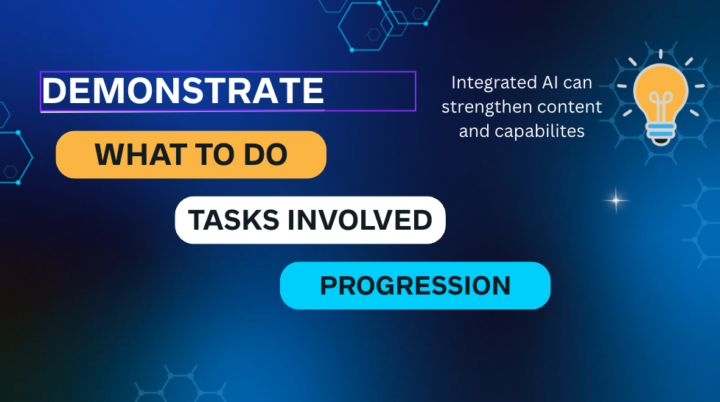
One of the most effective tools in my teaching and training toolkit is a deceptively simple but powerful process: how I design learning outcomes. Over the years, this framework has not only helped improve retention in programs but has also driven measurable learner outcomes—from university students to corporate training cohorts. Here’s the method I use every time I craft a learning outcome: 1. Start with the End in Mind: I ask, “What do I want learners to be able to DO?” Learning is not about what they remember—it's about what they can demonstrate. 2. List the Tasks: I break that desired skill or competency down into all the sub-tasks, knowledge areas, or skills that a person would need to show mastery of that demonstration. 3. Design a Progression of Problems: I build a scaffold—from the simplest to the most complex version of the skill—that allows the learner to grow in sophistication over time. 4. Craft the Outcome: Only after this process do I formally write the learning outcome—now backed by authentic, observable, and assessable behaviors. The result is an outcome that isn't just aspirational—it's actionable. This approach keeps learning grounded in real-world application and ensures our instructional design is aligned with both learner needs and institutional or organizational goals. It’s part of the reason students not only stay—but succeed. If you're building a course, training, or professional development initiative, I’d love to hear how you approach outcome design—or if you’ve used something similar.
0
0
Jan 16 •
Hot Box Friday: Free Evaluation Tool Demo
In this Hot Box Friday video, I demonstrate the free Course Evaluation tool that is available to all members.
0
0

1-10 of 11

@timothy-stafford-4547
I am an educational futurist who specializes in coaching learning professionals in pathways of becoming thought leaders. And I make AI tools.
Active 22d ago
Joined Aug 9, 2025
INFJ
Central Florida