Activity
Mon
Wed
Fri
Sun
Jun
Jul
Aug
Sep
Oct
Nov
Dec
Jan
Feb
Mar
Apr
What is this?
Less
More
Memberships
Real-Time-Reset
301 members • Free
TE
The Enlightened Circle
2 members • Free
364 contributions to Real-Time-Reset

2d •
WEEK 2 EXPERIMENTS
Bringing this top of mind for everyone: The experiments this week are: 1. Sweet Swaps 2. Portion Size 3. Fantastic Fats 4. Sleep and Glucose 5. Meal Timing Which experiments are you trying this week? Share your findings :) My birthday cake experiment coming up!
1 like • 2d
@Romina Farrell They are in the classroom tab. Click on the reset course. All experiments and resources are listed on the left hand side.

6d •
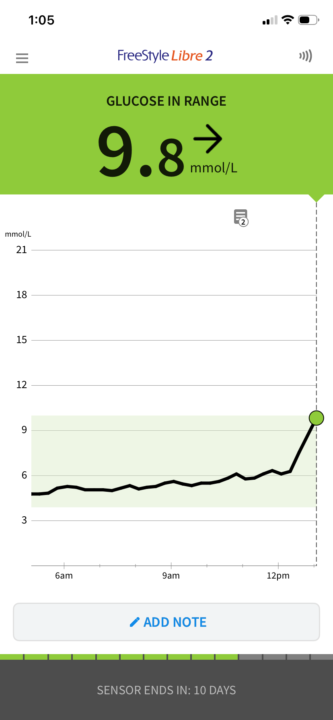
Olive Oil Before Coffee
This morning had a tbsp of olive oil before coffee then normal breakfast of bran flakes, blueberries and hemp seeds. Spike highest yet
0 likes • 2d
Hi Michael, I missed this message prior. Interesting! You had the opposite effect. Okay - now let's do protein before the bran. Let us know how that goes.
1 like • 2d
On researching this further - When fat doesn’t help (or backfires) In real life meals: 1. Low protein + high glycemic carbs - Bran flakes + fruit = still fast glucose entry - Fat alone isn’t strong enough to offset that 2. Small amount of fat - 1 tbsp olive oil may be too little to meaningfully change the curve The hierarchy (this is the key): If we rank what matters most for glucose control: 1. Carb quality & quantity (biggest driver) 2. Protein with the meal (strong stabilizer) 3. Meal order (protein/fiber first) 4. Movement after 5. Fat - Fat is supportive—but not the main lever Bottom line - protein and fat should make a difference. Keep us posted.
3d •
Can protein actually help your stress response? 🍳🧠
After our conversation on stress + glucose…this is the next powerful layer 👇 Because what you eat doesn’t just affect your glucose—👉 it affects how your body handles stress 1. Stress drains your system When stress hits: - Cortisol ↑ - Adrenaline ↑ Your body is in output mode, and over time, this can: - increase blood sugar swings - break down muscle (to create glucose) - deplete key nutrients needed for resilience 2. Protein = your stability anchor Protein gives your body the raw materials to stay steady under stress It helps: - stabilize blood sugar - reduce big spikes and crashes - keep energy more consistent 👉 So instead of: “stress → glucose spike → crash → cravings” You get: “stress → supported → more stable curve” 3. Amino acids support your nervous system Protein breaks down into amino acids—and these are critical for: - Neurotransmitters (like dopamine + serotonin) - Mood + focus - Stress resilience 👉 Without enough protein, your body has a harder time adapting 4. Protein helps buffer cortisol’s effects When protein is low: - your body may rely more on breaking down muscle - blood sugar becomes more reactive - you feel more “wired and tired” When protein is adequate: ✔️ better blood sugar control ✔️ improved recovery from stress ✔️ more grounded energy 5. What this looks like in real life Instead of:☕ coffee → stress → no food → crash Try:🥚 protein-based breakfast → steadier start Instead of:🍪 carb snack under stress Try:🧀 protein + fat pairing The takeaway msg: 👉 Protein doesn’t eliminate stress…👉 but it changes how your body RESPONDS to it Your experiment 👇 On a higher stress day: - prioritize protein at your first meal - include protein at each meal Then watch:👉 your energy👉 your cravings👉 your glucose curve Share your “before vs after” observations—I’d love to see your data 👀
1 like • 2d
@Josmar Gomez yes we will be sending out the recap link :)
3d •
Why did my glucose spike… I didn’t even eat? 🤔🔥
This came up on our call today and it’s an important “aha.” Because your CGM isn’t just tracking food…👉 it’s tracking your physiology 1. Stress = a glucose rise (even without food) When your body perceives stress—(emotional, mental, lack of sleep, rushing, overwhelm) It activates your fight-or-flight response This means: - Cortisol ↑ - Adrenaline ↑ Your body is essentially saying:👉 “We need quick energy to handle this.” So your liver: - releases stored glucose - may even make new glucose 📈 Result: your blood sugar rises… even if you haven’t eaten 2. Heat (sauna / hot shower) can do the same thing 🔥 Heat is actually a controlled stressor When you’re in a sauna or hot shower: - heart rate increases - your body works to cool itself - stress hormones rise temporarily 👉 Same signal: “We need energy” So again: - your liver releases glucose - you may see a temporary bump on your CGM 3. This is NOT a bad thing (context matters) Your body is designed to do this 👇 Short-term:✔️ Helps you respond✔️ Fuels your brain + muscles✔️ Supports adaptation But… If stress is happening all day, every day➡️ glucose can stay elevated more often than we want 4. The key takeaway 👉 Not every glucose rise is about food 👉 Not every spike is “bad” Your CGM is showing you: - stress - recovery - environment - physiology in real time This is a good reminder to shift our mindset to this: “This isn’t good or bad… it’s information.” Your experiment this week 👇 Pay attention to: - stress moments - rushing / multitasking - hot showers / sauna And ask: 👉 “What is my body responding to right now?”
4
0
1-10 of 364

@tara-campbell-4365
Hi!
I am grateful to be your guide in our HH community where we will be championing your Highest Health with Mindset. Movement and Micronutrients.
Active 14h ago
Joined Jan 25, 2024