Activity
Mon
Wed
Fri
Sun
Aug
Sep
Oct
Nov
Dec
Jan
Feb
Mar
Apr
May
Jun
Jul
What is this?
Less
More
Memberships
AI Automation Society
423.5k members • Free
AI Automation Agency Hub
328.6k members • Free
15 contributions to AI Automation Agency Hub

Mar '25 •
The EU AI Act: What It Means for Your Business in 2025
AI is transforming industries worldwide, and Europe is no exception. However, with rapid technological advancements comes the need for robust regulatory frameworks to ensure ethical and safe AI deployment. Enter the European Union’s Artificial Intelligence Act (AI Act), a landmark legislation poised to reshape how businesses operate within the EU. As we live in 2025, it’s crucial for businesses to understand the implications of this Act and prepare accordingly. Understanding the EU AI Act The EU AI Act, adopted by the European Parliament in March 2024, is the world’s first comprehensive law regulating AI. Its primary objective is to ensure that AI systems used within the EU are safe, transparent, and respect fundamental rights. The Act employs a risk-based classification system, categorising AI applications into four distinct risk levels: softwareimprovementgroup.com - Unacceptable Risk: AI systems deemed a threat to individuals or society, such as those manipulating vulnerable groups or enabling social scoring by governments, fall under this category. These systems are prohibited within the EU. softwareimprovementgroup.com - High Risk: This category includes AI systems that significantly impact safety or fundamental rights, such as applications in healthcare, education, or critical infrastructure. Businesses deploying high-risk AI systems must adhere to stringent requirements, including risk assessments, conformity assessments, and continuous monitoring. softwareimprovementgroup.com - Limited Risk: AI systems with limited risk are subject to specific transparency obligations. For instance, users should be informed when interacting with AI systems, allowing them to make informed decisions. softwareimprovementgroup.com - Minimal Risk: Most AI applications, such as spam filters or AI-enabled video games, fall into this category. These systems are largely unrestricted under the Act, though providers are encouraged to adopt voluntary codes of conduct. softwareimprovementgroup.com


0 likes • Mar '25
"High Risk critical infrastructure", what defines exactly? You will not able to use AI at all, not even partially? They will fine you based on what?

⭐
Mar '25 •
Reflections From Arizona 🇺🇸
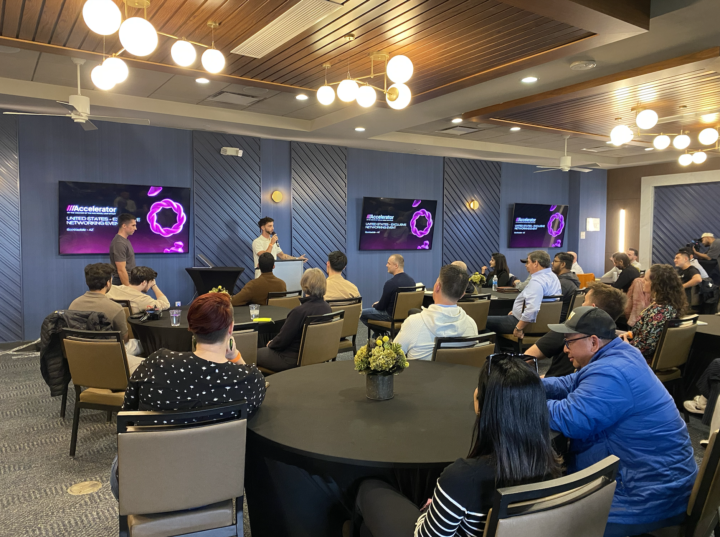
Hey team, Josh and I hosted our second Accelerator Meet-Up in Scottsdale, Arizona. 70+ Accelerator members flew in from across the world to connect, learn and network with fellow AAA founders. As I reflect on our meet-up, my mind keeps coming back to this moment. I was standing at the back of the room watching everyone connect with each other, and it hit me like a wave. This is what's been missing. After living in Dubai for two years and then eventually moving back to New Zealand, I've learned the importance of community the hard way. Despite all the success and opportunity, there was always a sense of isolation and emptiness. It's something I don't talk about much publicly, but anyone who's moved far from home probably understands. There's a difference between being surrounded by people and having a real community. Watching members who'd only known each other through Zoom calls and chats finally meet in person. Seeing them exchange numbers, discuss pricing strategies and AI solutions—reminded me of when I first started my AI Agency in 2023. Working alone until 2am. The self-doubt. Wondering if I was on the right path or just deluding myself. Even now with multiple successful AI businesses, I still remember how lonely those early days were. That's honestly why these in-person gatherings mean so much to me personally. Yes, Josh and I prepared what we thought was a solid presentation on scaling AI businesses (and I think it delivered), but that wasn't the real magic. It was watching people find their people. While the human connections were the highlight, Josh and I shared our best insights from scaling to $500K/month. I know not everyone could make it to Arizona. Travel, timing, life happens. So, I'm going to share with you the key takeaways from the event: 1. Most founders have it backwards: Build your network and authority FIRST, then create services based on actual demand. Your brilliant AI solution means nothing if nobody knows or trusts you.
0 likes • Mar '25
@Robert Timmons Abso-lutely!!
Mar '25 •
Opinions on brand video?
Any thoughts? 🤔 this is v.2, as I decided to redo the audio based on the feedback. And v.3 with some minor tweaks here and there, mainly with sync and flow.
2 likes • Mar '25
Very well done, but I would do something more fast paced.

Mar '25 •
Cold Calling n8n
Has anybody put together a workflow for cold calling prospects as part of N8N sales workflow?
1 like • Mar '25
@Sebastian Schieke yes please, let's use this thread to have some basic guide.
1 like • Mar '25
@Muhammad Asif thank you, even if......... community should be about sharing openly with the others, LOL
Mar '25 •
Cool Chat Widget, where I can found one?
Where I can found some cool Chat Widgets to embed my chatbot? I see that you can pretty much go two routes : - Build your own widget and connect it to the webhook. - Use a Chatbot already done and use your workflow in a webhook At the moment I'm using ChatBots from Chat-Data and I "borrowed" Wayne Simpson widged, script and JS, I modified it a little bit, but it's still basic. Are there any template out there that I can use?
1
0

1-10 of 15

@sergio-longhi-9967
Experienced e-commerce entrepreneur specializing in AI solutions and digital marketing, focused on growth and lead generation.
Active 7d ago
Joined Feb 23, 2025
Royal Palm Beach, FL
Powered by