Activity
Mon
Wed
Fri
Sun
Jul
Aug
Sep
Oct
Nov
Dec
Jan
Feb
Mar
Apr
May
Jun
What is this?
Less
More
Memberships
Streetwise Spirituality
1.7k members • Free
Not a "PERSON"
414 members • $11/month
18 contributions to Not a "PERSON"

8d •
Using the office of executor with effect
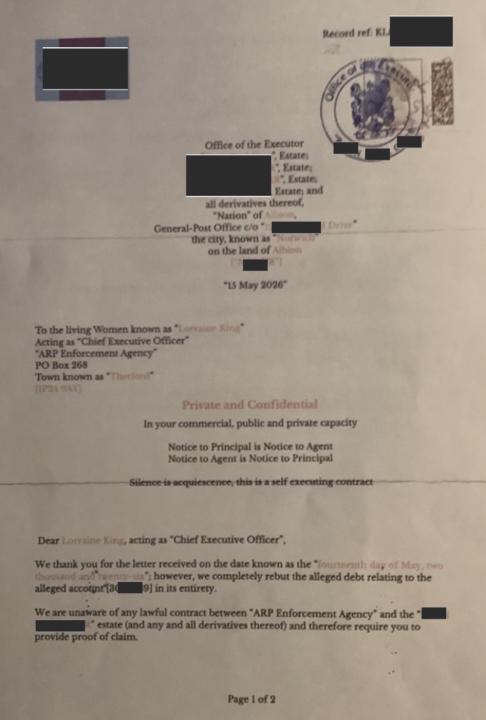
So I have used the office of executor twice now, once for a FOI with a response for LED lighting where they have both wrote back to Office of executor and a second letter where they wrote back to Ryan R./Executor. This I haven’t had a response but I have also not had a visit, this was a response sent the next day for unpaid council tax to the enforcement company any thoughts welcome including what I could have done better?
1 like • 2d
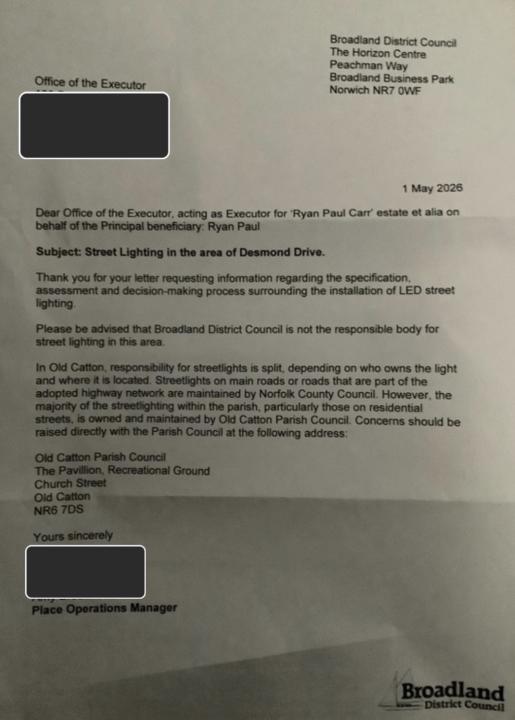
@Gazza P due to a non response from ARP I sent another letter back to the council to adjust their ledger accordingly it arrived today so will see how it goes. I have had a letter from the council sent to the office of the executor, they responded to how I signed as executor Ryan R. Which was interesting. I have also had another letter where they sent a letter to Office of the executor, which would be the same as “Broadland district council” that’s the office for them also when I sent a letter back they didn’t respond to it as I corrected the record. I then got a response much later regarding the initial letter in which they sent had said basically it had nothing to do with them and pointed me towards Norfolk county council. Anyway will update with what they respond back with.

26d •
Post # 1840 – By Bill - Courts and Securities
I have been sent this today and thought it might be interesting to some, maybe thinking of going to Court, to 'have their day' and to face them. Not advice, just learning together! Did you know that an arrest warrant and a summons are vouchers seeking a bank's consent to transfer Estate (private) funds to the Court's depository account to pay for the Case Bond? Let's examine a standard check deposit at a bank. The bank endorses the check PAY TO THE ORDER OF XYZ BANK, which is a banker's acceptance by the Payee's bank that monetizes the instrument (converts it to money of account). The bank then steals title to the funds by issuing credits to the depositor's account (a general account). It places a hold on the credits and forwards the check to the Payer's bank for authorization to release the hold. If funds are available, the Payer's bank will endorse the check (yet another banker's acceptance) and return it to its customer, the Payer (at least they used to). If funds are insufficient, the bank will cancel it's endorsement and RETURN THE CHECK TO THE DEPOSITOR / PAYEE. Notice that the credits move to the Payee and the security moves back to the issuer who issued the security. You can always return to this transaction to understand most any event in the world around you. For instance, a case in an incorporated Court. The Court (JUDGE ROSE WILLIAMS) deposits the Indictment by endorsing it "FILED IN CASE NO. 1:10-CR-123456." THE STAMP IS A BANKER'S ACCEPTANCE. Doesn't it signify acceptance, opening of an account, issuance of a number, and a deposit? Doesn't the indictment have a Payer (strawman), Payee (Plaintiff), implied amount (penal sum on the charges), a date, signature, and place of payment (the Court)? Doesn't the Court maintain securities accounts in its normal course of business, making it a securities intermediary per s. 1 of the Securities Transfer Act (Canada provinces) / UCC 8-102(a)? What else could it be if not a banker's acceptance?
2 likes • 25d
My Son had to go to court, when I sent his evidence bundle to the solicitors I put “for the matter of [BD] No: Case number” just to let them know I know how this is going down BD means bond for short legally it’s weird because when we went to court for an indictable offence it should have went straight to crown but it was dropped to a lesser charge and remained in magistrates however once again we didn’t have a magistrate’s we had a judge…. Must have something to do with when I put in the affidavit and office of executor for when I had court 🤷
0 likes • May 12
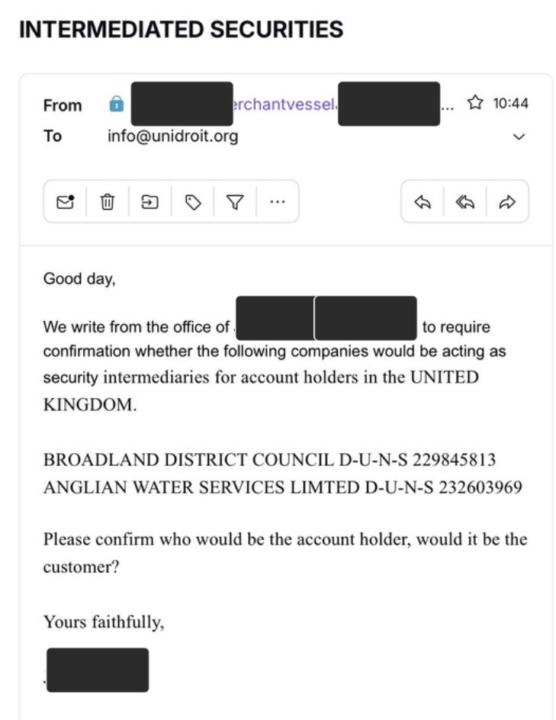
@Gazza P well if UNIDROIT were to confirm this, then you could ask who is the name of the account holder, once they confirm the account holder you could then say great link the response and then make a DSAR for a full forensic report of the account ledger, or ask for it and when they lie then say well that’s not what UNIDROIT has stated.
0 likes • May 12
I’m just trying to figure this stuff out, after I saw the term warehouse lender on a securitised mortage contract by the bank would that make the ALL CAPS NAME the warehouse? Then when reading through the UNIDROITS acts, they talk about Warehouse, Warehouse operators and security intermediaries. They tell us the account is being paid twice, every bill is sent with a positive balance that’s a credit then they want us to use a debt it zero balance it from what I can make out… maybe wrong well if it’s a credit then where is that coming from.
May 2 •
Response to the office of the executor
So the office of the executor has had a response to the address of the “person” from the council does that mean the office is now established 😏 has anyone else ever had a response to the office of the executor?
0
0
Apr 29 •
Water company outstanding balance £984
So im going to challenge the water company, using their legislation against them, inc DSAR, request for water testing, I have ordered a TDS meter and electrolyser as evidence, saved a months worth of empty bottled water stating estimated average cost of £200 per month, inc physical harm as well as financial harm. Will give updates on how it goes, responding as Executive agent for ALL CAPS NAME. Will use a hybrid of “sov cit” and legal for shits and giggles. It seemed to work against the council 🤷
1-10 of 18

@ryan-paul-2396
On a journey of discovery, it has been a rollercoaster of a year.
Active 1d ago
Joined Sep 10, 2025