Activity
Mon
Wed
Fri
Sun
Nov
Dec
Jan
Feb
Mar
Apr
May
Jun
Jul
Aug
Sep
Oct
What is this?
Less
More
InnerDevelopment@Work
521
Free
30 contributions to InnerDevelopment@Work

19h •
Are you joining us tomorrow to discuss a Possible Future?
We're excited for tomorrow's special screening of the documentary The (Im)Possible Future ! Thank you for organizing this, @Andreas Rechter! Here are the details and how you can join: 🎥 Event Details: Community Screening of The (Im)Possible Future - Host: Andreas Rechter & Nadene & Sarah as co-hosts - Date: Tuesday, October 20, 2026 - Time: 12:30 CEST (check your local time) - Location: Online / Zoom - Format & Language: Episodes are screened in Spanish with English subtitles 👉 Click Here to Register for the Screening Below is the trailer and we'll watch the first two episodes together tomorrow - and then discuss! We hope you'll join @Andreas Rechter and fellow members for what promises to be a deeply nourishing and inspiring lunch break of story, imagination, and shared reflection. See you tomorrow, 12.30 pm CET Warmly, Sarah, Nadene & Andreas P.S. turn on the captions so you can read the subtitles in English

3 likes • 18h
From my point of view, this is very important. Thank you for making it possible.

Aug 20 •
Human relationships and how socializing has shifted
The decline of socialising in modern society has been a steady process, but on many measures of isolation a gap really opened up after the pandemic. The FT’s John Burn-Murdoch examines the data behind the damaging “new normal” which raises concerns about inner development and general wellbeing. 🥹 Very curious to hear your perspectives from the community on this Isolation
0 likes • Aug 21
I am sorry, i am on x no longer, although i liked twitter.
1 like • Aug 27
Liane is right, this was the reason for my comment.
Jul 23 •
The Seeds We Sow
How can inner development become a catalyst for societal transformation? This new peer-reviewed paper by Professor Christine Wamsler and colleagues offers compelling evidence that spiritual and awareness-based practices can strengthen resilience, agency, hope, and engagement in the face of today's polycrisis. It's encouraging to see rigorous research exploring how inner transformation and systemic change can reinforce one another. A valuable contribution for anyone working in regenerative leadership, systems change, climate action, or the Inner Development Goals. 🌿 Paper

1 like • Jul 24
Thanks a lot. I am curious about their thoughts.
Jul 9 •
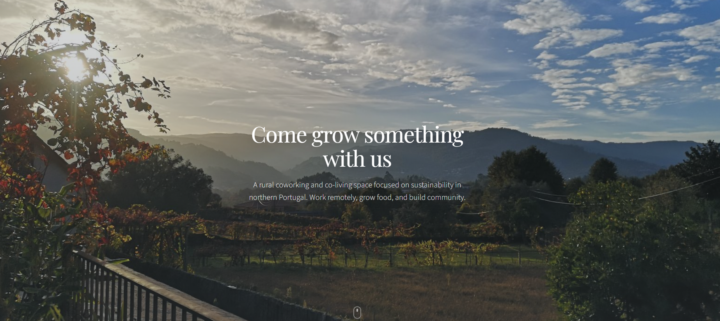
Come Grow Something With Us!
Hi community! the above title is on the home page of @Maria do Céu Bastos website and the tagline for her rural coworking and co-living space! And yes, we want to invite you to Come Grow Something With Us in Portugal, > this September (21st till 27th)! 🌞🌱< Besides helping with the farm, preparing for Saturday's European Day of Sustainable Communities event and cooking, dancing & laughing together we also want to talk about about how we can actually grow something together. And for everyone who can't join us (there are 4 available bedrooms) we will livestream the first Organizational Impact call with @Maria do Céu Bastos live from Portugal, about the topic of Regenerative Farming & Survival Skills. Here's more information on the location & venue: https://nowhere-desk.com/ Any questions? Share them in the comments! We await with curiosity who's feeling called to join us! Warmly Sarah & Nadene
2 likes • Jul 11
Really a great invitation. I am really sorry that i cannot join you.
0 likes • Jul 12
@Sarah Santacroce i hope so
Jul 1 •
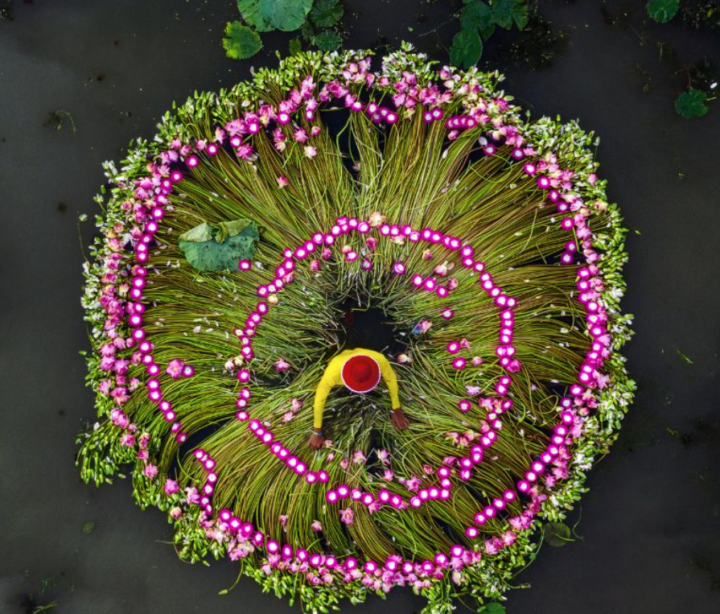
Three ways humans are embedded in the biosphere
Humans are not separate from nature. We are part of it. Our cultures, economies, and social structures are deeply embedded in the biosphere – the living fabric of Earth that makes human life possible. A new paper in Cell Reports Sustainability argues that treating humans and nature as separate is a serious barrier to building sustainable futures. The authors introduce three ways to understand how humans are embedded in nature: • Compositional – we are made up of and shaped by the living world around us • Relational – our actions transform nature, which in turn transforms us - ‼️ • Evolutionary – human and ecological change unfold together over time Recognising this embeddedness can help science and policy better address sustainability challenges and move beyond the old divide between humans and nature. Thank you to https://www.stockholmresilience.org/ for your important work Learn more: https://buff.ly/y83KGX3
1 like • Jul 6
This suits perfectly with my book-project. Great to read that others think in the same direction.
1-10 of 30

@ruth-habermehl-4661
I am an organizational psychologist, member of Psychologists for Future, Germany.
I am living in Frankfurt, Germany.
Active 18h ago
Joined Oct 17, 2024
Powered by