Activity
Mon
Wed
Fri
Sun
Oct
Nov
Dec
Jan
Feb
Mar
Apr
May
Jun
Jul
Aug
Sep
What is this?
Less
More
Hacksmith's Free Peptalk Group
2.5k members • Free
BC
Bio Collective
244 members • Free
Peptide of The Week Community
16.2k members • Free
Research Peptide Community
1.9k members • Free
Orion Peptides
384 members • Free
Pretty Girl Peptides
180 members • Free
Food Freedom GLP-1 LAB
647 members • Free
Cale's Peptide Guide
3.1k members • Free
RealTalkByNewMe
709 members • $7/month
7 contributions to Food Freedom GLP-1 LAB

🔥
16d •
What is the 30/30/3 Way of Eating?
The 30/30/3 way of eating is a simple framework that helps you prioritize what your body needs—without counting calories or cutting out food groups: 🥩 30 grams of protein at each meal 🥦 30 grams of fiber throughout the day 💧 Three 32-ounce bottles of water each day It isn’t a diet or a list of foods you can’t eat. It simply encourages you to build your meals around protein and fiber first, stay hydrated and then enjoy carbs, fats and the foods you love in amounts that feel good to your body. It’s about creating balanced, sustainable habits—not eating perfectly! 🧡 Check out the CLASSROOM section HERE for more information.


1 like • 12d
I struggle getting enough fiber and stay with in my calories
🔥
21d •
KPV - the Inflammation fighter!
Got Inflammation? Wow. Dr. Froese does it again. She explains chronic inflammation in a simple, understandable way and how KPV is the peptide that helps fight it. This 16 min video is well worth watching.
3 likes • 20d
I’m excited, waiting for my first batch to come. Tirz I noticed lots gone. I was hoping BPC157 and TB500 would heal what I have going on so maybe all together it will be a power house.

26d •
Peptide Purity Degradation Studies
I'm an outside-the-box thinking overachiever who likes to push boundaries, so of course I wondered: do peptides REALLY ACTUALLY TRULY degrade, or is that an urban legend? I mean, if the company ships them without ice packs, then why do I need to store them in the freezer? Never really made sense to me. I'm getting closer to the answer. GOOD NEWS! I just discovered some studies on the degradation rates! The studies were done over three months on RECONSTITUTED peptides, comparing refrigerated vs. non-refrigerated. I've attached the available study they conducted for Tesamorelin as an example... AND I've attached a study they did on a sample that got lost in the mail for TWO YEARS! If you go here, you can read the others I've listed in #1 below --> https://peptidecrafters.com/peptide-experiments-studies/ WARNINGS: 1. You do have to get yourself a user account to access the studies. They've done MOTS-C, BPC-157, GLP-1, TB-500, Tesamorelin, NAD+, GHK-CU 2. This is a "shopping" site, so use caution not to get distracted. I can assure you, Diane's prices are far more affordable. The moral of most of these studies is that a reconstituted, refrigerated peptide degrades very little in the first thirty days and declines only marginally in the second month...although the results differed for each specific peptide.
0 likes • 22d
I received a constituted tirz from someone and it was a big vial 50mg- it was taking me a long time to use it and I felt like it was not as good later on. It’s actually still sitting in my fridge as there is so much and I paid a lot of money. I found a new supplier now but they swore it doesn’t degrade -
🔥
Jun 1 •
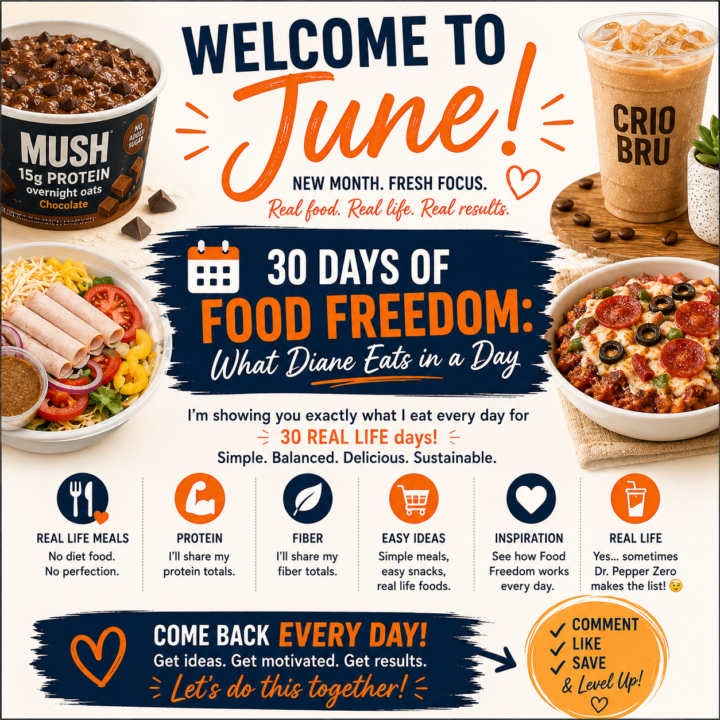
🍴 30 DAYS OF FOOD FREEDOM:“What Diane Eats in a Day"
🎉 WELCOME TO JUNE! 🎉 And you know what that means… 👀 🍴 30 DAYS OF FOOD FREEDOM: “What Diane Eats in a Day” starts NOW! This is probably the #1 question I get asked: 👉 “But what do you ACTUALLY eat?” So...for the entire month of June, I’m taking you behind the scenes and showing you REAL LIFE food. 🧡 No diet foods. No cold chicken & broccoli I packaged the day before. No perfection. Each day I'll take a picture of the food I ate and make it into a post it for you to see. Day #1 will be posted tomorrow! I eat simple, balanced, realistic meals that help me: ✅ Hit my protein ✅ Increase fiber ✅ Stay consistent ✅ Feel GOOD ✅ Lose weight WITHOUT dieting Inside this group I’ll be posting: 🥗 My meals 💪 Protein totals 🌱 Fiber totals 🛒 Easy meal ideas 🍓 Snacks 🍕 Real life foods 😂 And yes… sometimes Dr. Pepper Zero You’ll see exactly how I make Food Freedom work in REAL life. ✨ The best part? Most meals are simple. No fancy recipes. No complicated meal prep. No perfection required. I eat a lot of things over and over. So make sure you: ❤️ LIKE the posts 💬 COMMENT on your favorites 📌 Save meal ideas you want to try 🔥 Use the posts to LEVEL UP in the group And trust me…you’re going to leave June with SO many easy meal ideas. 🙌 You ready?!?! (Give me a thumbs in the comments!) Let’s do this together! 🎉
2 likes • Jun 1
👍
🔥
May 10 •
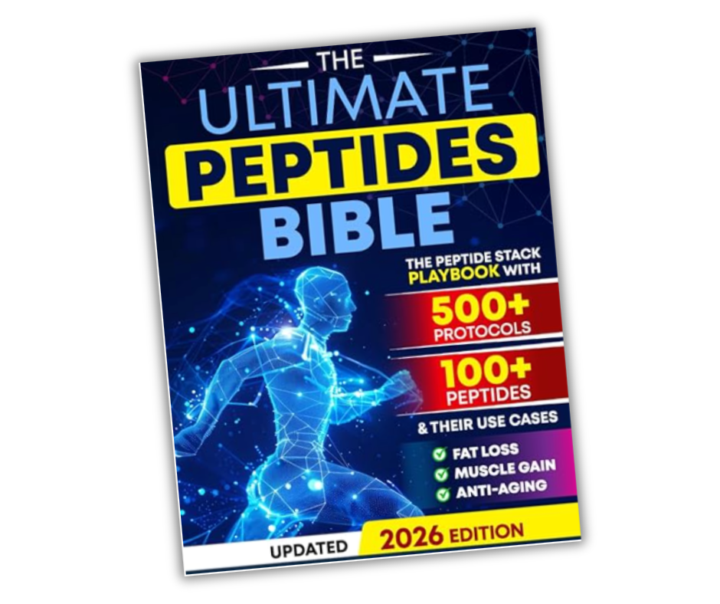
🧬 Before You Ask Me What Peptide to Use for ______… Read This First
Looking for information on specific peptides, stacks, research, or protocols and want an easier way to learn without spending hundreds of hours researching online? 👉 Get a good book. The one I recommend below has been my FAVORITE resource by far. I’ve read many books, watched videos, researched online, listened to podcast, been on peptide groups and yet...THIS BOOK is the resource I come back to over and over again because it has EVERYTHING and explains things in a simple, easy-to-understand way. You can: ✔ Look up specific peptides ✔ Search by topics or goals ✔ Learn about stacks ✔ Read the science and research ✔ Understand things without feeling overwhelmed A lot of people ask me what they should use for specific situations, and I truly can’t answer that. I’m not a doctor, and I don’t give medical advice or individualized recommendations. But if you want one resource that helps you learn and understand this space better, THIS is the book I recommend most. I honestly wish I had found it sooner. 😊 Here's the LINK
0 likes • May 10
Thanks I just got it!!
1-7 of 7
Active 10h ago
Joined May 10, 2026
Powered by