Activity
Mon
Wed
Fri
Sun
Jul
Aug
Sep
Oct
Nov
Dec
Jan
Feb
Mar
Apr
May
Jun
What is this?
Less
More
Memberships
3D Maker Lab — Print With Us
250 members • Free
KRISTINA’S PEPTIDE JUNKIES 24
1.1k members • Free
Peptide University
571 members • Free
Pretty Girl Peptides
68 members • Free
Pep Talk - For Better Health
3.1k members • Free
Peptides4Power 🫑
1.9k members • Free
DivineBougie
1.8k members • Free
3 contributions to KRISTINA’S PEPTIDE JUNKIES 24

May 10 •
NOW AVAILABLE IN MY PJ24 STORE: RU-58841 FOR HAIR LOSS
PEPTIDE JUNKIES 24 SHOP: https://peptidejunkies24.shop USE THE DISCOUNT LINK: https://peptidejunkies24.shop/discount/MOMGLOW30 OR USE THE DISCOUNT CODE AT CHECKOUT: MOMGLOW30 ENJOY 30% OFF YOUR ENTIRE PURCHASE THROUGH MAY 31ST ☺️ RU-58841 is a non-steroidal anti-androgen originally developed as a topical treatment for androgenic alopecia (pattern hair loss). • It’s not FDA-approved • Classified as a research chemical • No officially published human clinical trials How it works: RU-58841 works at the hair follicle level, not systemically: • Blocks androgen receptors in the scalp • Prevents DHT (dihydrotestosterone) from binding • Stops the miniaturization process that shrinks hair follicles Key difference vs finasteride: • Finasteride lowers DHT in your whole body • RU-58841 blocks DHT locally at the follicle without lowering systemic levels The role of DHT in hair loss: Hair loss (especially pattern hair loss) is driven by how DHT interacts with your hair follicles. Here’s the process: DHT binds to receptors in scalp hair follicles Over time, it shrinks (miniaturizes) the follicle Hair grows: thinner shorter weaker Eventually, the follicle stops producing visible hair Potential benefits of RU-58841: Based on mechanism + early research + user reports: 1. Targets the root cause of androgenic hair loss • Directly blocks DHT at the follicle • Theoretically preserves hair density 2. May improve regrowth + thickness • Animal studies showed increased hair growth cycles and growth rates 3. Localized action • Doesn’t significantly reduce systemic DHT (in theory) • Appeals to people avoiding finasteride side effects 4. Often stacked with minoxidil • RU = blocks damage • Minoxidil = improves blood flow/growth → complementary approach The reality: Potential systemic effects • Some reports of: o chest pain o brain fog o heart palpitations How it’s typically used: Applied topically to the scalp


0 likes • 17d
@Kristina Marie I absolutely will.
0 likes • 13d
I received my order yesterday and used it this morning so, fingers crossed.

22d •
Reta & Tirzepatide
I have been looking for research on using the 2 together. I am not interested in using the blend. I have both… I like the results I have found… but have not been able to find dosing suggestions. Any direction or experiences would be great!!! I have been stalled for a while and need something to break it. I have 30lbs more to lose. HELP… ***side note: active perimenopause and on HRT … so weight loss has been a struggle***
0 likes • 16d
@Kristina Marie Ohhh. Is it working out? I'm going to try it TODAY!
0 likes • 16d
@Kristina Marie Good to know. I bought some Reta but was reluctant to add it, you know, the unknown. Tirzepatide I know but wanted to see what else could work.
17d •
WHAT ACTUALLY HAPPENS WHEN YOU REPEATEDLY PUNCTURE THE PEPTIDE VIAL STOPPER?
What happens to the peptide vial after repeated puncturing: Repeatedly puncturing a peptide vial stopper with a very fine 31G needle may seem harmless because the needle is small, but over time it can still create several important problems — especially with multi-dose peptide vials. 1. Loss of Sterility Each puncture creates another opportunity for contamination. Even tiny needle entries can: - Introduce skin bacteria - Push microscopic debris into the vial - Allow environmental contaminants to enter - Increase biofilm formation risk over time This becomes more concerning when: - The vial is stored for weeks - Refrigeration is inconsistent - Nonsterile handling occurs - Alcohol prep is inadequate - The stopper is touched repeatedly With peptides, contamination risk matters because many are reconstituted with bacteriostatic water and stored for extended periods. 2. Coring / Rubber Fragment Risk Although a 31G needle is less likely to core than larger needles, repeated punctures in the same area can still damage the stopper. Over time the rubber may: - Become weakened - Develop microtears - Shed tiny rubber particles - Lose elasticity/self-sealing ability If coring occurs, microscopic rubber fragments can potentially enter the solution. This risk increases when: - The same puncture spot is used repeatedly - Needles are inserted at awkward angles - Blunt needles are reused - The stopper dries out or ages 3. Loss of Vacuum/Air Exchange Problems Repeated punctures can compromise the stopper’s seal. Consequences may include: - Slow air leakage - Moisture intrusion - Oxygen exposure - Reduced vial pressure integrity For sensitive compounds, excess oxygen exposure may contribute to: - Oxidation - Reduced stability - Accelerated degradation Some peptides are more fragile than others once reconstituted. 4. Leakage Around the Stopper After enough punctures, especially concentrated in one spot, the stopper may no longer reseal properly.
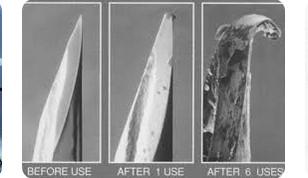
0 likes • 17d
I just decided that for anything I'm pinning several times a week I'm going to switch to pens. Right after I made that decision I see this...
1-3 of 3

Active 4h ago
Joined May 19, 2026
Powered by