Activity
Mon
Wed
Fri
Sun
Feb
Mar
Apr
May
Jun
Jul
Aug
Sep
Oct
Nov
Dec
Jan
What is this?
Less
More
Memberships
Owen Army
98 members • Free
3 contributions to Owen Army
22d •
Life Through Ben’s Eyes | South Memphis | Dope Houses to Hope Houses
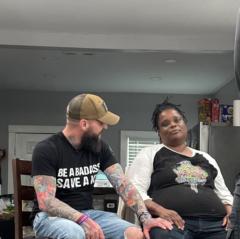
This is what a normal day looks like for me. No highlight reel. No filters. No politics. Just real life in South Memphis—through my eyes. In this episode of Life Through Ben’s Eyes, you’re riding shotgun with me and Cody as we load up at the house and head straight into the hood. You’ll see one of our former dope houses that we shut down and converted into a Hope House—now being prepared for trafficking survivors and kids who deserve a real shot at life. We stop next door to check in on Crecia and her family—equal parts wisdom, chaos, and comedy. If you’ve never heard hard-earned street truth delivered with perfect comedic timing, you’re in for a treat. Then we head downtown to 777 South Main Street, the newest building we’re fighting to turn into a full-scale detox and rehab center—because recovery shouldn’t be reserved for people with money, connections, or clean pasts. This isn’t a documentary. It’s not scripted. It’s not safe. It’s just life—seen from the ground level, where the problems actually live. If you’ve ever wondered what it really takes to change a city, protect kids, and turn hell into something that looks a lot more like hope—this is for you. 👇 If this matters to you: - Like the video - Subscribe to the channel - Share it with someone who needs to see real work being done - Drop a comment—I read them Even monster fighters get tired sometimes. But we don’t quit.

1 like • 22d
I love you sharing this and that building OMG I need to ask Kacey to show me next time I am up there!
Nov '25 •
Preparing for what’s coming by Sarah Superbad Adams
Build It Now, Stay Steady When It Matters Most As we face the possibility of upcoming homeland plotting by terrorist groups, psychological readiness is your foundation. These skills help you stay calm, think clearly, and support each other in any crisis, whether it’s an attack, a natural disaster, or life suddenly going off the rails. If you’ve spent the past year building emergency plans, running drills, and practicing “what if” scenarios, you’re exactly where you need to be. Keep going. You’re not just preparing, you’re building real resilience for yourself, your family, and your community when it matters most. Here’s what we can do next to prepare and stay resilient. Educate Without Fear: When we talk to others about preparedness, the tone matters. The goal is not fear-based. The goal is to give them information, tools, and then most importantly, confidence. Within your family, for example, controlling the narrative means framing the conversation around what you can control, even during something as overwhelming as a terrorist attack. Replace fear-driven talk with practical direction. Use clear, strong language: “Here’s what we do if X happens,” or “We’re safe right now, let’s stick to our plan.” Walk each member of your family through actionable steps: getting to shelter, locking down a workspace, identifying exits, staying put until it’s safe to move. When people have rehearsed actions, their bodies and minds switch into those patterns automatically, even under extreme stress. Helping Children Cope: Children can and do process events very differently, and they depend heavily on the adults around them to set the emotional tone. Keep discussions age appropriate and grounded in the calmest way possible. Do not expose them to graphic news footage or frightening speculation. It overwhelms them and provides no useful information. Instead, focus on safety: who they stay with, where they go, how adults will protect them. Small gestures like holding a hand, offering a hug, sitting beside them all have a very real grounding effect. Use simple, straightforward language: “We have a plan. We know what to do. You’re safe with me.” That sense of predictable structure is what helps kids stay emotionally balanced during and after a crisis.
0 likes • Nov '25
Good stuff for sure.
Nov '25 •
In the news again
Making moves and finally getting a good cadence of recognition going! Eventually, I’m praying funding comes with it 🔥

1 like • Nov '25
Love
1-3 of 3
Active 22d ago
Joined Nov 4, 2025
Powered by